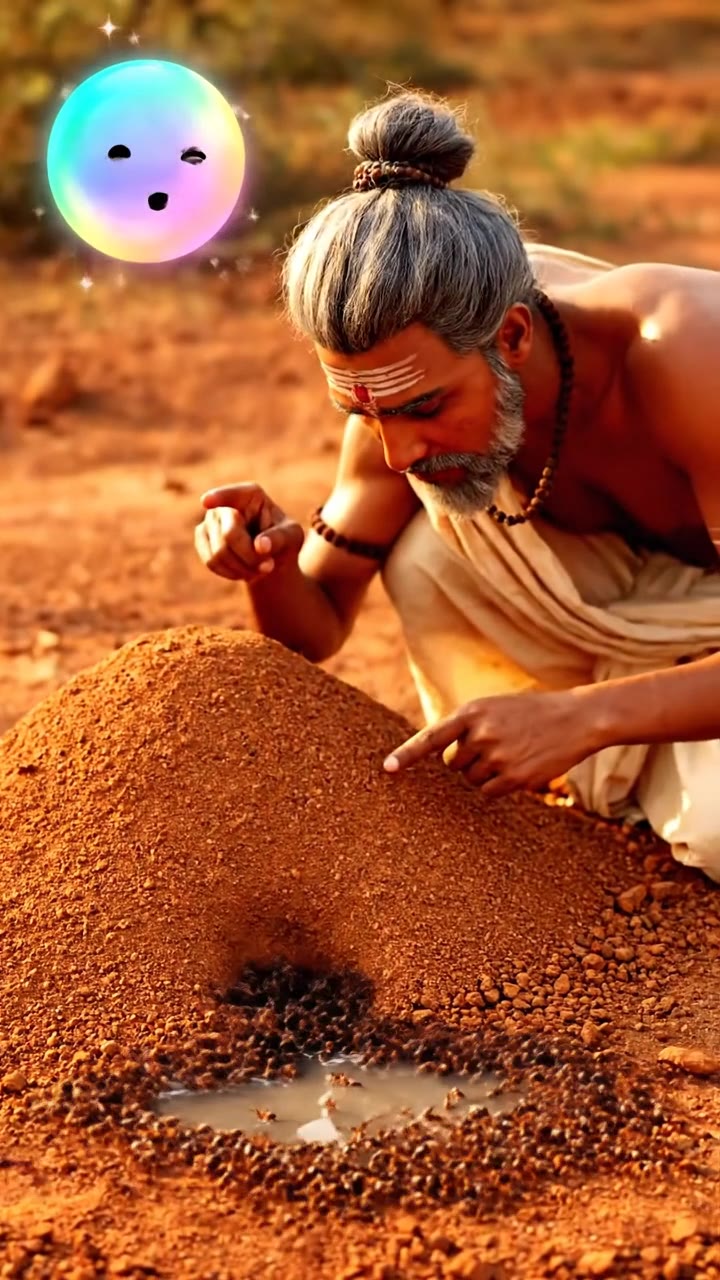
How ancient doctors identified sweet urine
Over 3,000 years ago, Egyptian and Indian physicians noted a mysterious wasting disease. They diagnosed it by pouring urine near ant hills to see if ants gathered. In Sanskrit, they named it 'madhumeha,' meaning honey urine.
The dual agent of the body
The master of sugar control
The ultimate digestive factory
The history of pancreatic discovery
Keeping the pancreas happy

artiteacher In 1922, Toronto researchers extracted insulin from pancreatic tissue, saving a dying teenager and making diabetes manageable.

artiteacher Swipe enzymes and insulin to learn how the pancreas balances sugar and digests food.
artiteacher The history of pancreatic discovery
Take the pancreas out and the sugar runs high! (Oh, it runs so high!) / That's how we learned it rules the body's sweet tide! (Yeah, the sweet tide!)
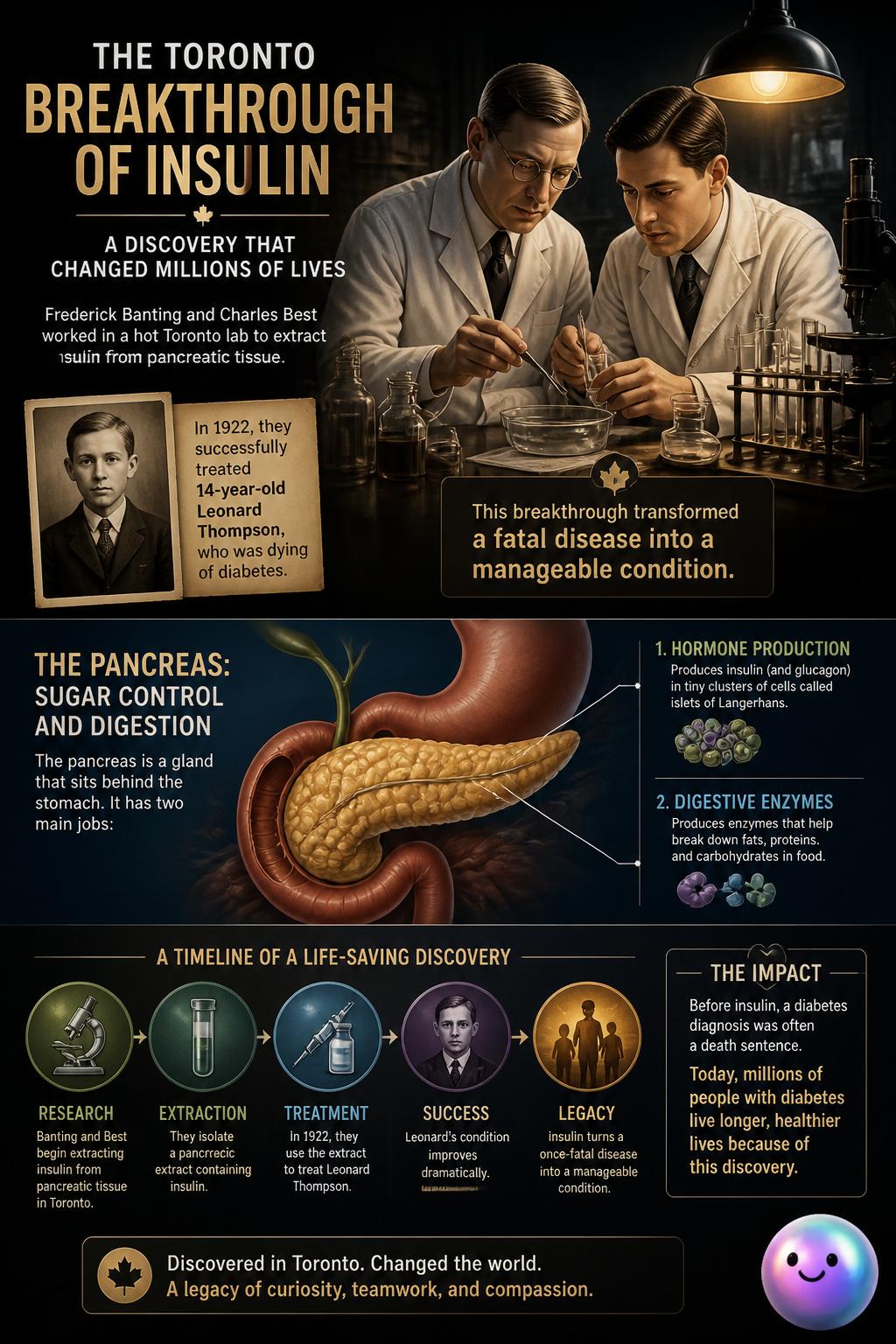
artiteacher In 1921, Canadian scientists successfully isolated insulin for medical use.
Medical bargain: In 1923, insulin's discoverers sold the patent for just one dollar to keep it affordable.
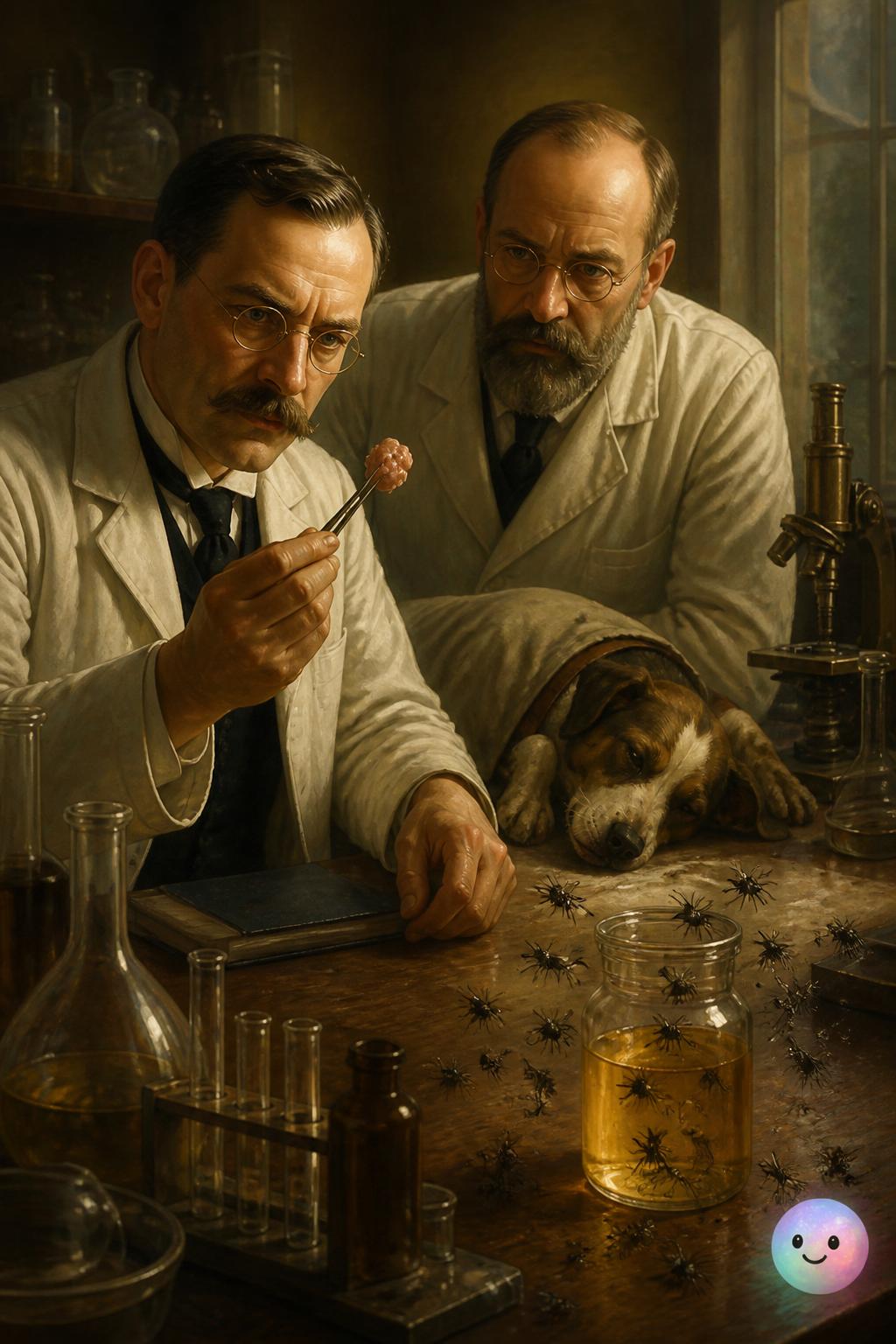
A large gland behind the stomach that secretes digestive enzymes into the duodenum and hormones into the blood. Greek anatomist Rufus of Ephesus first named the organ around 100 AD.
What did ancient Indian medical texts call diabetes due to its sweet urine symptom?
In which year did Frederick Banting and Charles Best successfully isolate insulin?
Which animal was primarily used in the early 1921 experiments to isolate insulin?
How much did Banting and his colleagues sell the original insulin patent for in 1923?
Which hormone did Romanian scientist Nicolae Paulescu isolate in 1916 under the name pancreine?