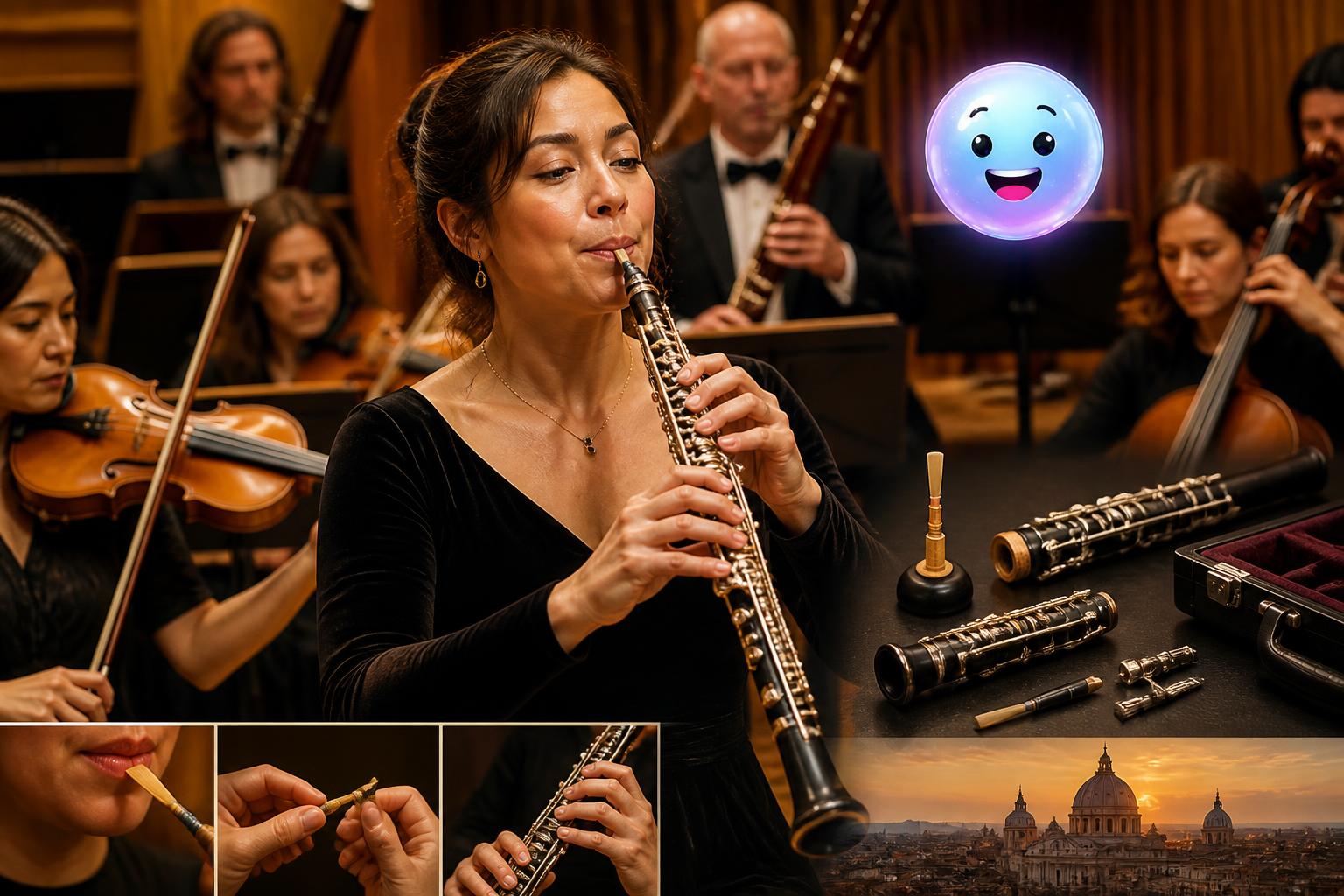
How did the early oboe's volume compare to its ancestor, the shawm?
The physics of the double reed
From noisy outdoor shawms to royal courts
The orchestra's ultimate tuning boss
Oboe secrets and pop-culture crossovers
maestro The modern concert oboe shares acoustic secrets with the Chinese suona, Middle Eastern zurna, and Indian shehnai. Vibrating cane or palm leaves produce their piercing, celebratory music.
maestro Around 1650, Jean Hotteterre split the woodwind into three jointed sections and added keys. This expressive new instrument quickly joined the prestigious court of King Louis XIV.
maestro This keyless instrument produced an intense buzzing sound through its wide bell. Medieval musicians played it outdoors for European military signals and royal festivals.
maestro During the 1800s, French makers built the complex Conservatoire oboe while German creators kept the simpler Viennese design. The Vienna Philharmonic Orchestra still plays this rare instrument today.

maestro Place historical instruments to discover how the oboe traveled from the streets to the symphony.
maestro From Shawm to Oboe
Throw out the pirouette, shave down the wood, let the wild shawm sing indoors!

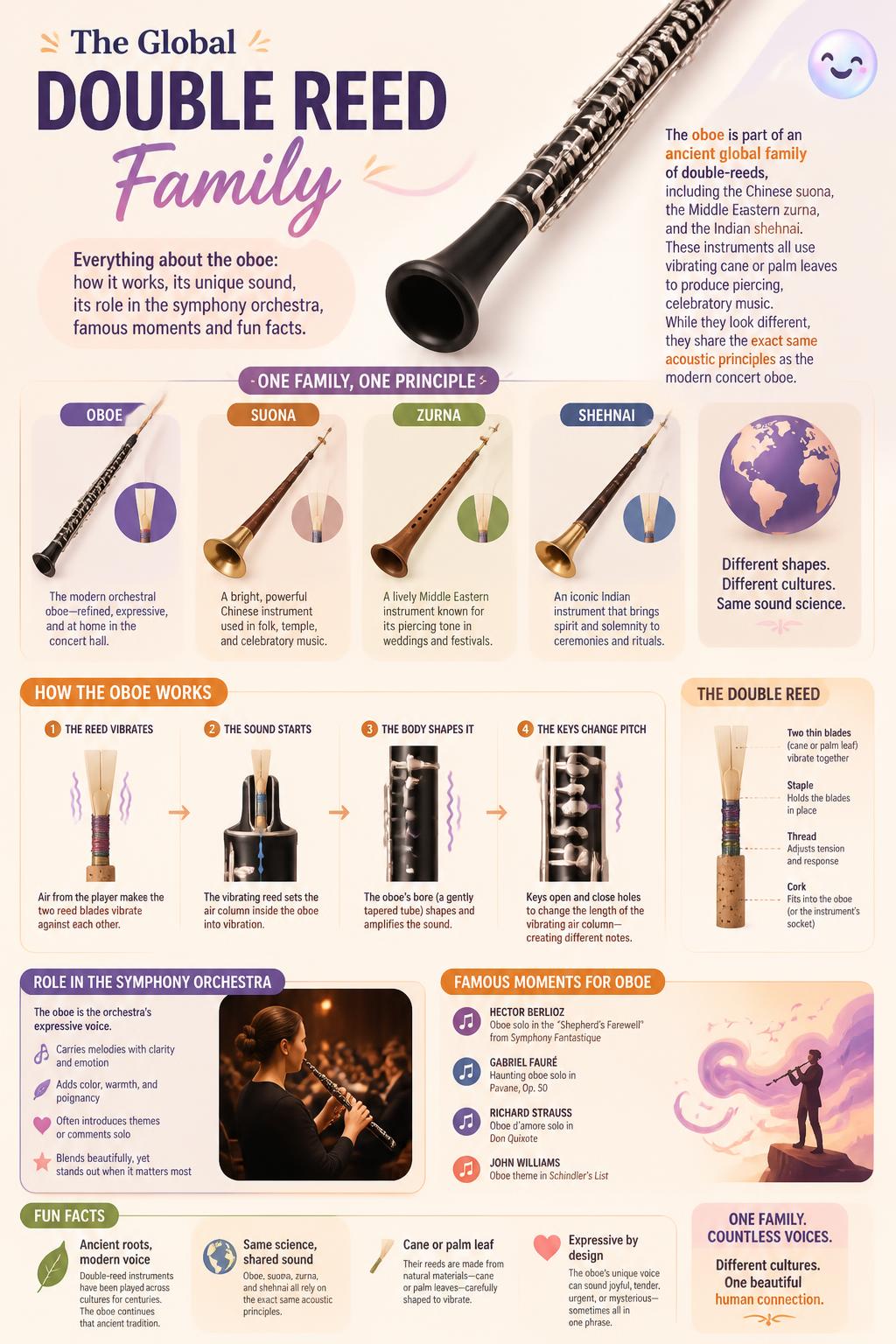
maestro Diagrams display the oboe's inner workings, orchestral position, and global double reed relatives.
Royal marching band: King Louis XIV of France loved the early oboe so much that he hired twelve personal oboists to play during his daily garden walks.

A medieval and Renaissance wind instrument with a double reed and a conical bore. French court musicians Jean Hotteterre and Michel Philidor redesigned the instrument into the baroque oboe around 1657.
What is the name of the traditional Chinese double-reed instrument known for its loud, festive sound?
Which ancient Greek instrument featured a double reed and two separate pipes played at once?