

BETA
artiteacher Astronauts sleep in bags strapped vertically to walls, using fans to prevent carbon dioxide pockets from forming.
artiteacher Parachutes slow the capsule to 15 miles per hour before it splashes into the ocean.
artiteacher During reentry, atmospheric friction creates 3,000-degree Fahrenheit heat that temporarily blocks communication with mission control.
artiteacher In space, fluids shift from the legs to the upper body, causing puffy faces and stuffy noses.
artiteacher NASA Orion Skip Entry
Coming home from the Moon so far, (yeah, yeah!) a skip entry guides the way!
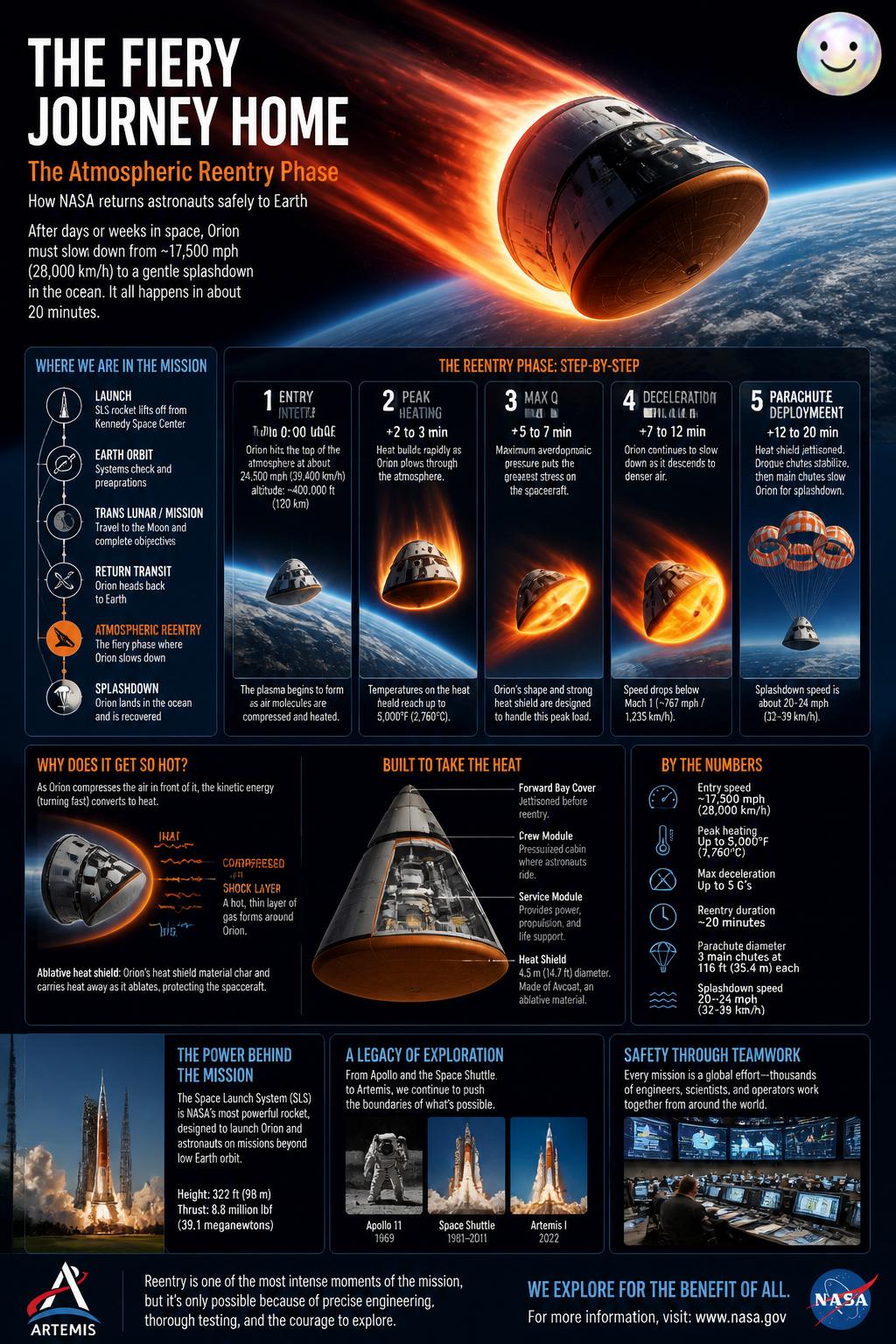
artiteacher Returning to Earth requires slowing down from orbital speeds by slamming into the atmosphere.
Puffy face effect: In microgravity, fluids shift upward, giving astronauts puffy faces and making them feel like they have a cold.
artiteacher Sleeping in microgravity requires anchoring yourself to prevent drifting into walls or equipment.
How long does the communication blackout usually last during a typical NASA capsule reentry?
What causes the fiery heat shield glow and extreme temperatures during a spacecraft's atmospheric reentry?
What is the purpose of the small drogue parachutes deployed before the main parachutes during a spacecraft capsule descent?
Why are fans required inside an astronaut's sleeping quarters on the International Space Station?
How do astronauts sleep on the International Space Station without floating away?
Why must astronauts on the International Space Station exercise for two hours every day?
What natural phenomenon causes a communications blackout when a spacecraft reenters Earth's atmosphere?
Where do modern NASA capsules like Crew Dragon typically land at the end of their mission?