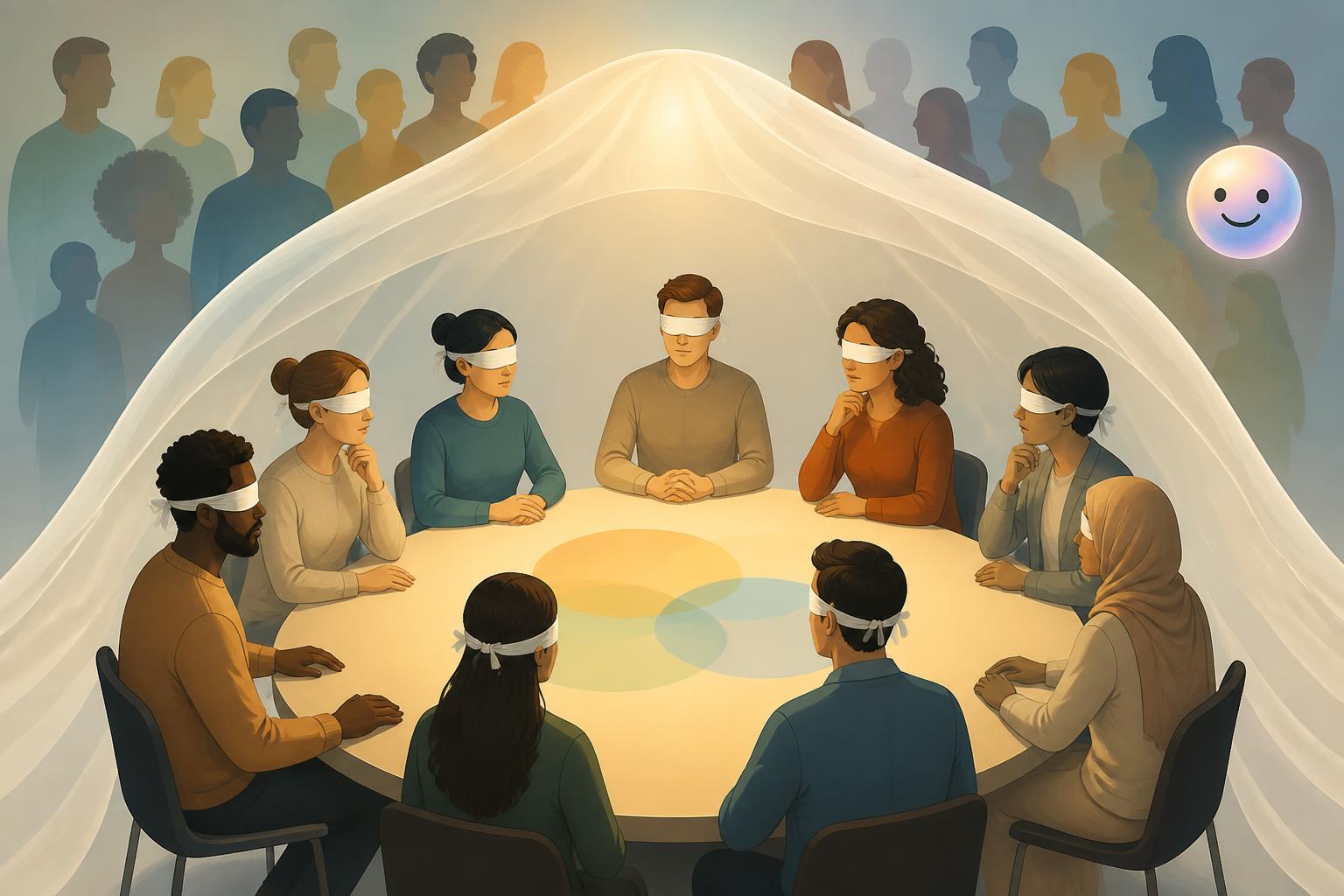
How does the veil of ignorance aid fair trade agreements?
Challenge yourself with this quiz on how John Rawls's veil of ignorance thought experiment applies to creating fair international trade agreements.
The mind behind the curtain
How the experiment works
The two principles of justice
Real world impact and criticisms

marcus Watch this video to explore John Rawls' veil of ignorance thought experiment and discover how it helps us build a fair, connected community.
marcus Explore John Rawls' veil of ignorance thought experiment and learn how this philosophical concept applies to global justice and a fair society today.
marcus Watch this video to explore the libertarian challenge to John Rawls' famous veil of ignorance thought experiment for a fair society.
marcus Learn how to apply John Rawls' veil of ignorance thought experiment to design a fair and equitable school budget in this educational video.
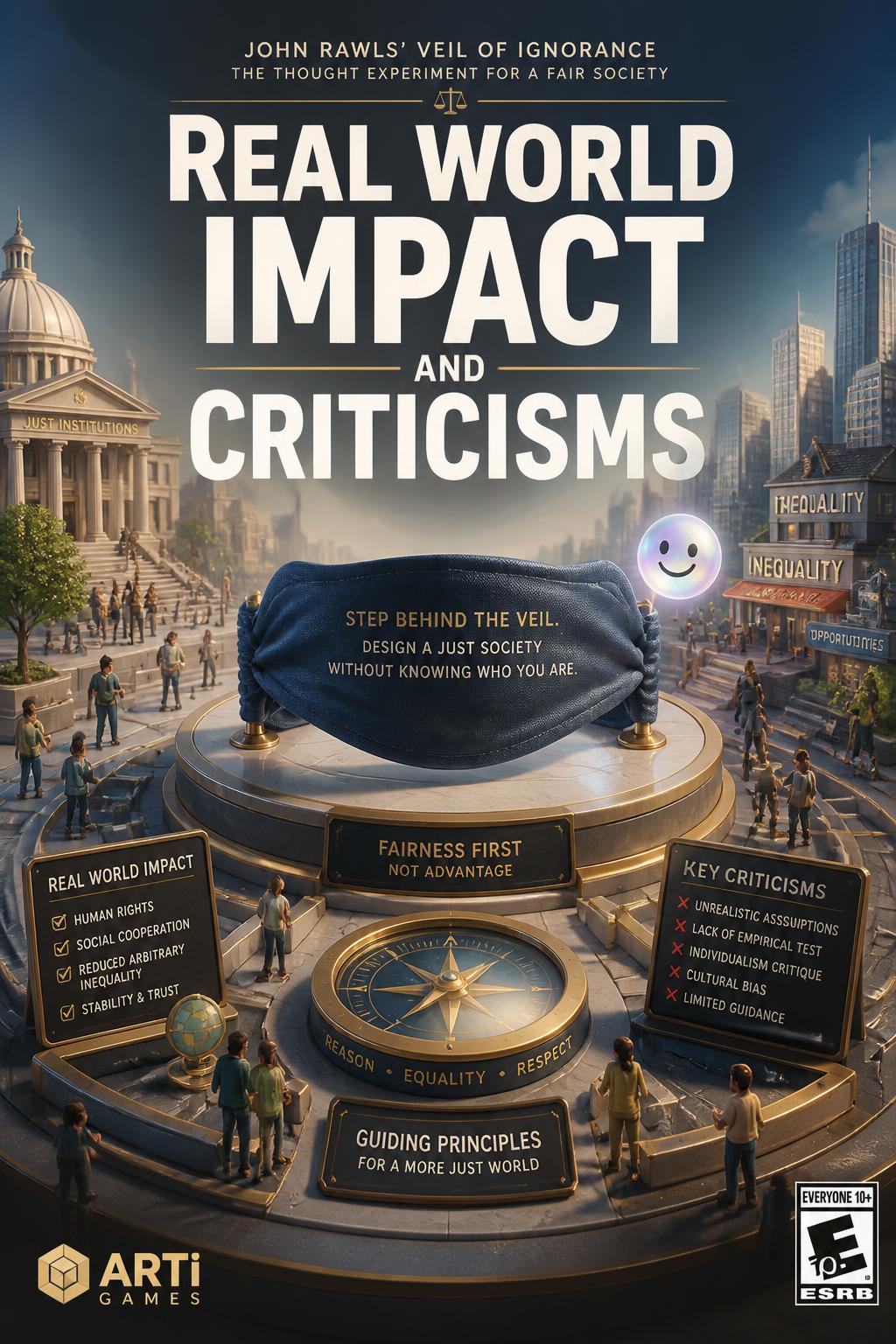
marcus Sort real-world criticisms to discover why a perfectly fair society is hard to build.
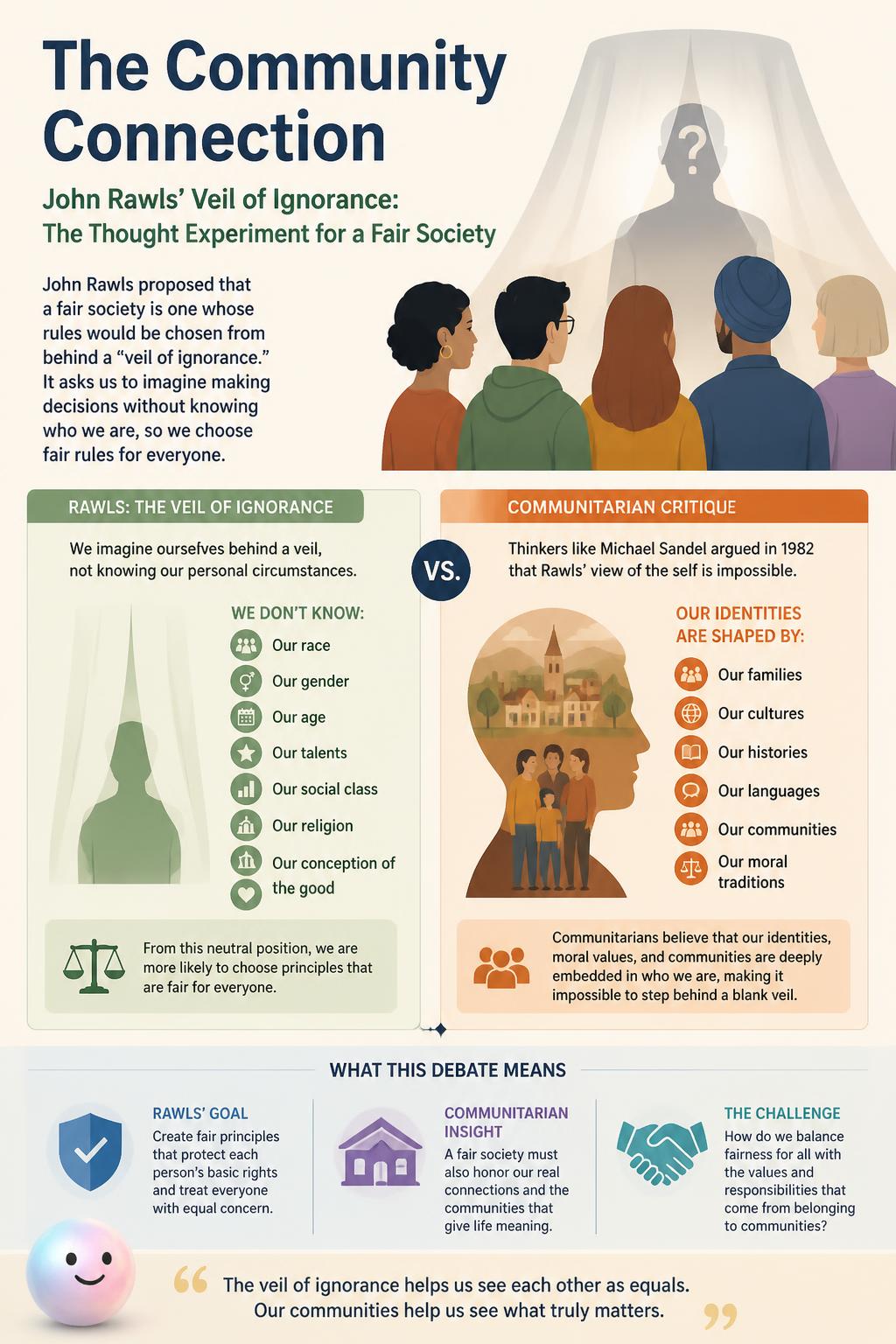
marcus Communitarian philosophers argue that the veil of ignorance is unrealistic because humans are defined by their social ties.
Nozick's friendship: Despite their fierce philosophical debates, John Rawls and his chief critic, Robert Nozick, were close friends at Harvard.

marcus Libertarians argue that redistributing wealth to achieve fairness violates individual rights and personal ownership.
A social philosophy that emphasizes the importance of community and society over individualistic interests. In 1982, Michael Sandel used this perspective to argue that individuals cannot realistically ignore their communal identities.
How do modern environmentalists apply John Rawls' veil of ignorance to the climate change crisis?
Which Nobel Prize-winning economist criticized Rawls for focusing too much on resources instead of what people can actually do?
How does the veil of ignorance help when designing fair international trade agreements?
In real-world policy, what does a 'Rawlsian' approach to public healthcare prioritize?
What is the term for the state of balance Rawls described when our moral beliefs match our philosophical principles?
Which Harvard philosopher and colleague of John Rawls wrote 'Anarchy, State, and Utopia' to criticize Rawls' theory?