BETA
In the 1940s and 1950s, Puerto Rican merchants popularized the term 'bodega' in East Harlem and the Bronx. Later, Dominican and Yemeni immigrants took over many stores, bringing their own cultural traditions. Across all these groups, keeping a shop cat remained a universal, comforting practice.
hank New York Bodega Cat
Through New York City streets, past every corner door, a friendly feline greets ya, they're part of the store. Technically a no-go, but New York loves its bodega cat show!
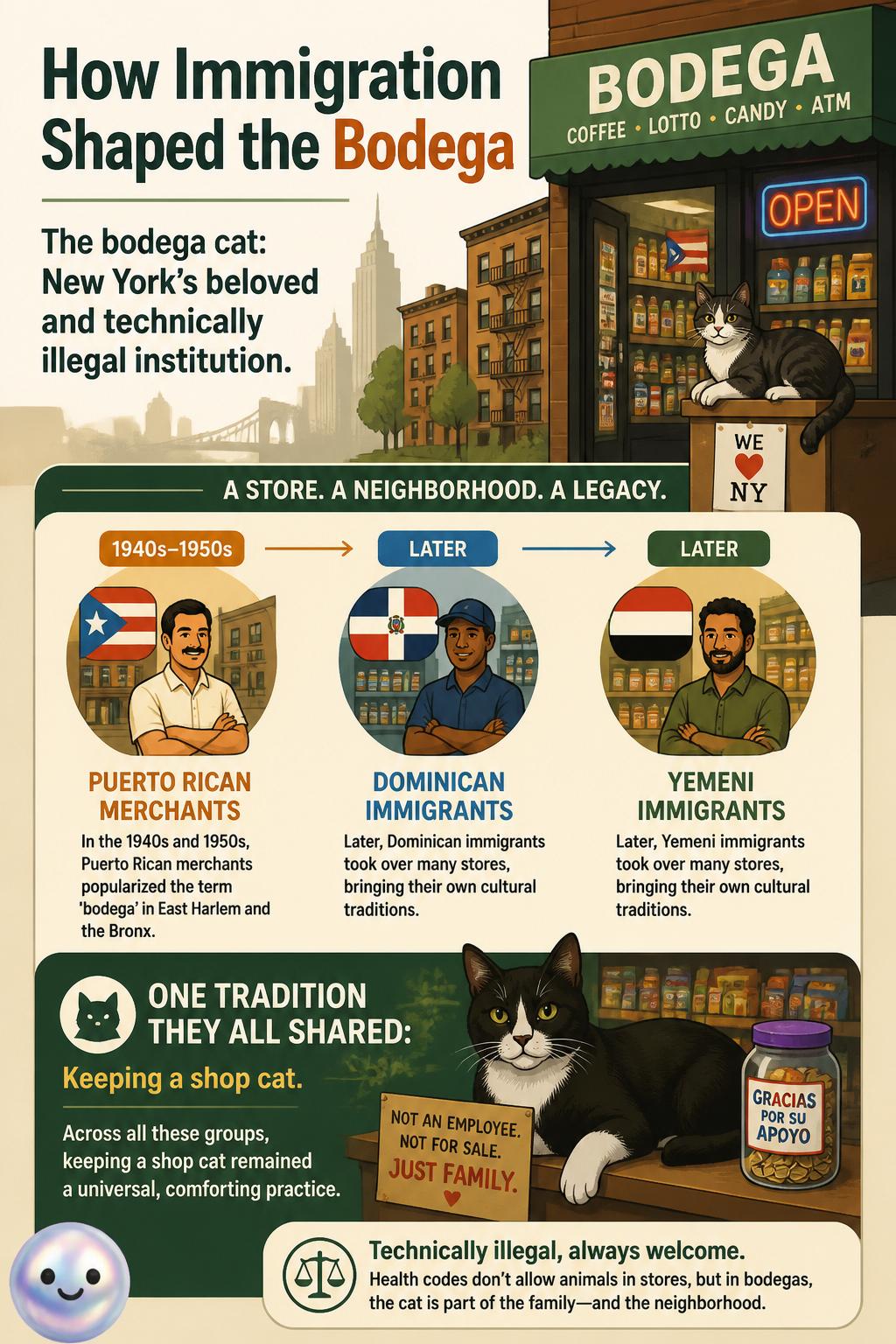
hank Waves of diverse immigrants brought both their culinary traditions and their love for community cats to New York.
Bodega cat origins: The word bodega comes from the Spanish word for 'storeroom,' which traces back to the ancient Greek word 'apotheke,' meaning a storehouse.
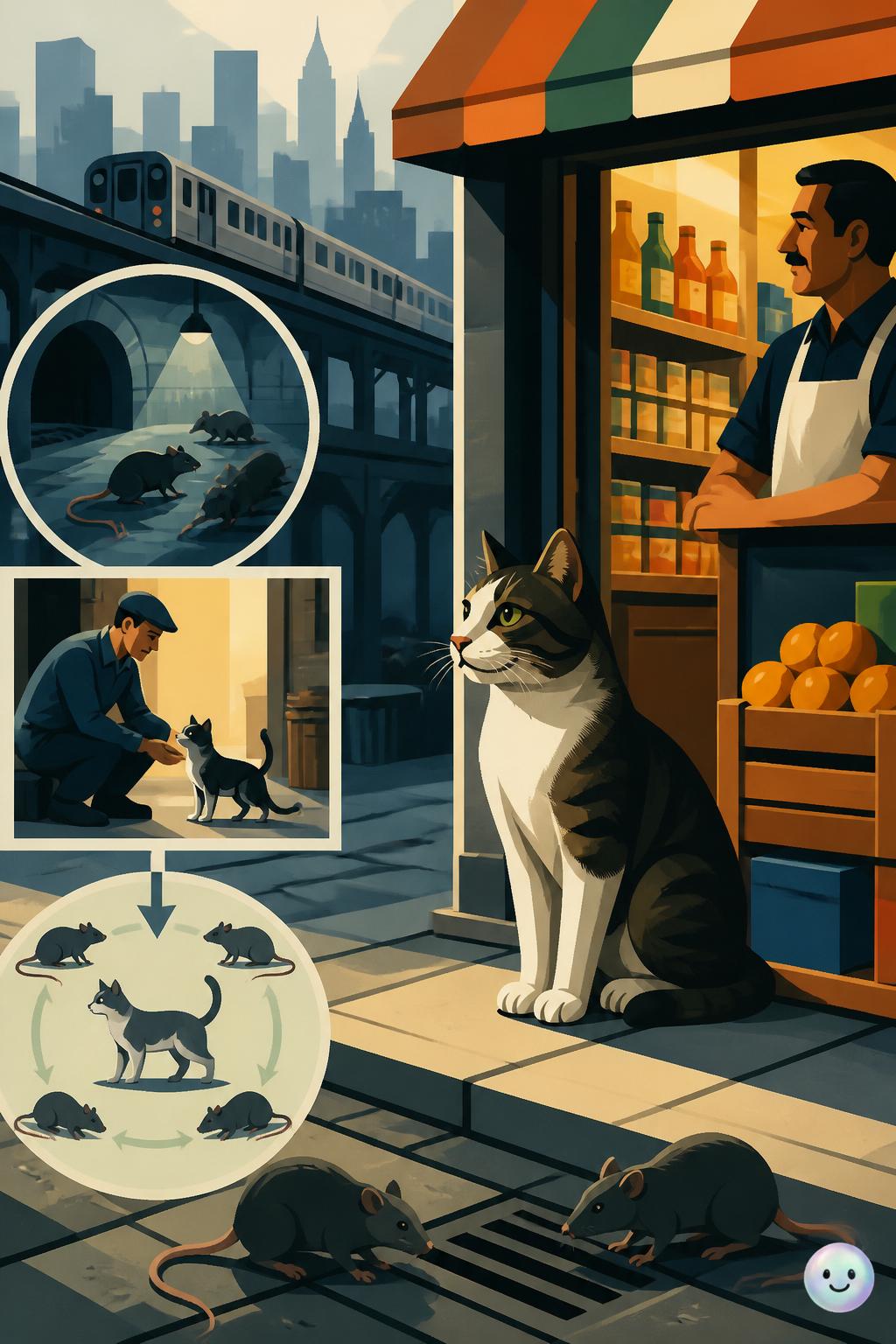
hank Shop owners brought cats into bodegas as an ancient, natural solution to control urban rodent populations.
Which immigrant group first popularized the term 'bodega' in New York City during the mid-20th century?
Which New York City borough was home to some of the earliest Puerto Rican bodegas in neighborhoods like East Harlem?
In which decade did bodega cats transition significantly from hidden night hunters to celebrated neighborhood mascots?
What is the primary ecological reason cats are so successful at keeping New York bodegas rodent-free?