BETA
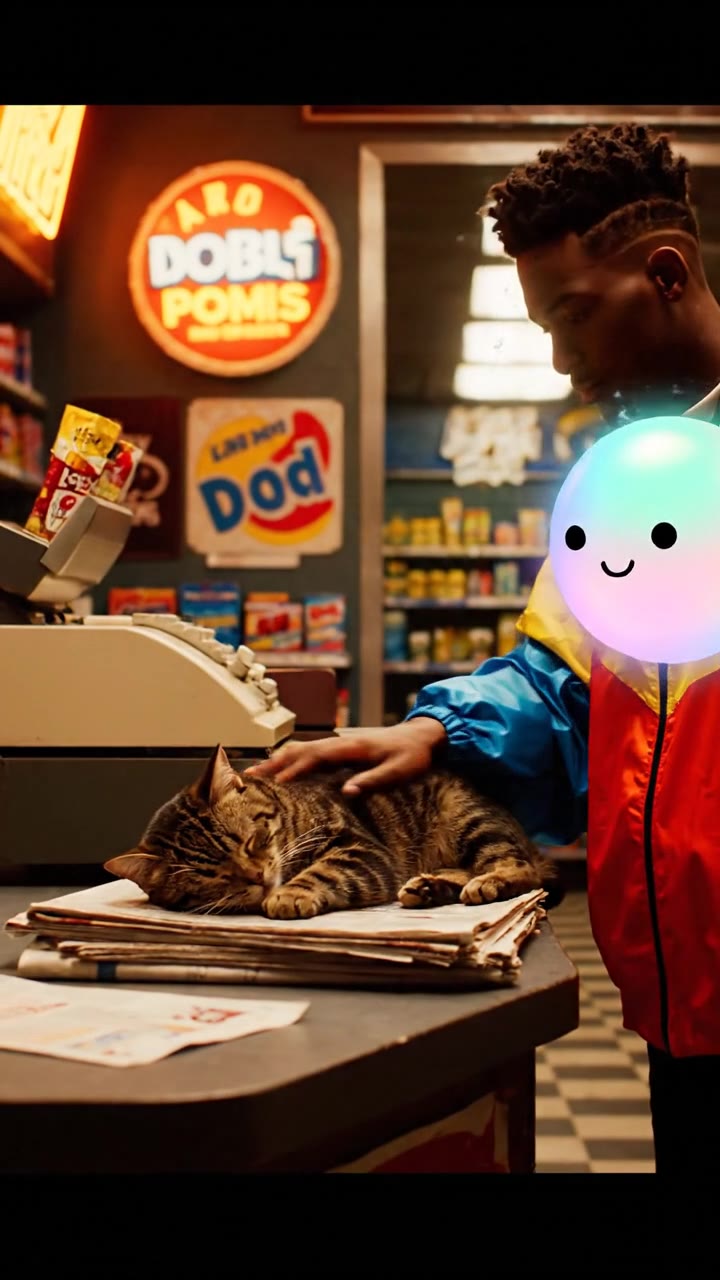
By the 1980s, bodega cats were no longer just nighttime hunters; they became daytime fixtures greeting customers. Neighbors began naming them, buying them treats, and taking photos. This shift turned the animals from utility workers into icons of neighborhood identity and warmth.
hank New York Bodega Cat
Through New York City streets, past every corner door, a friendly feline greets ya, they're part of the store. Technically a no-go, but New York loves its bodega cat show!
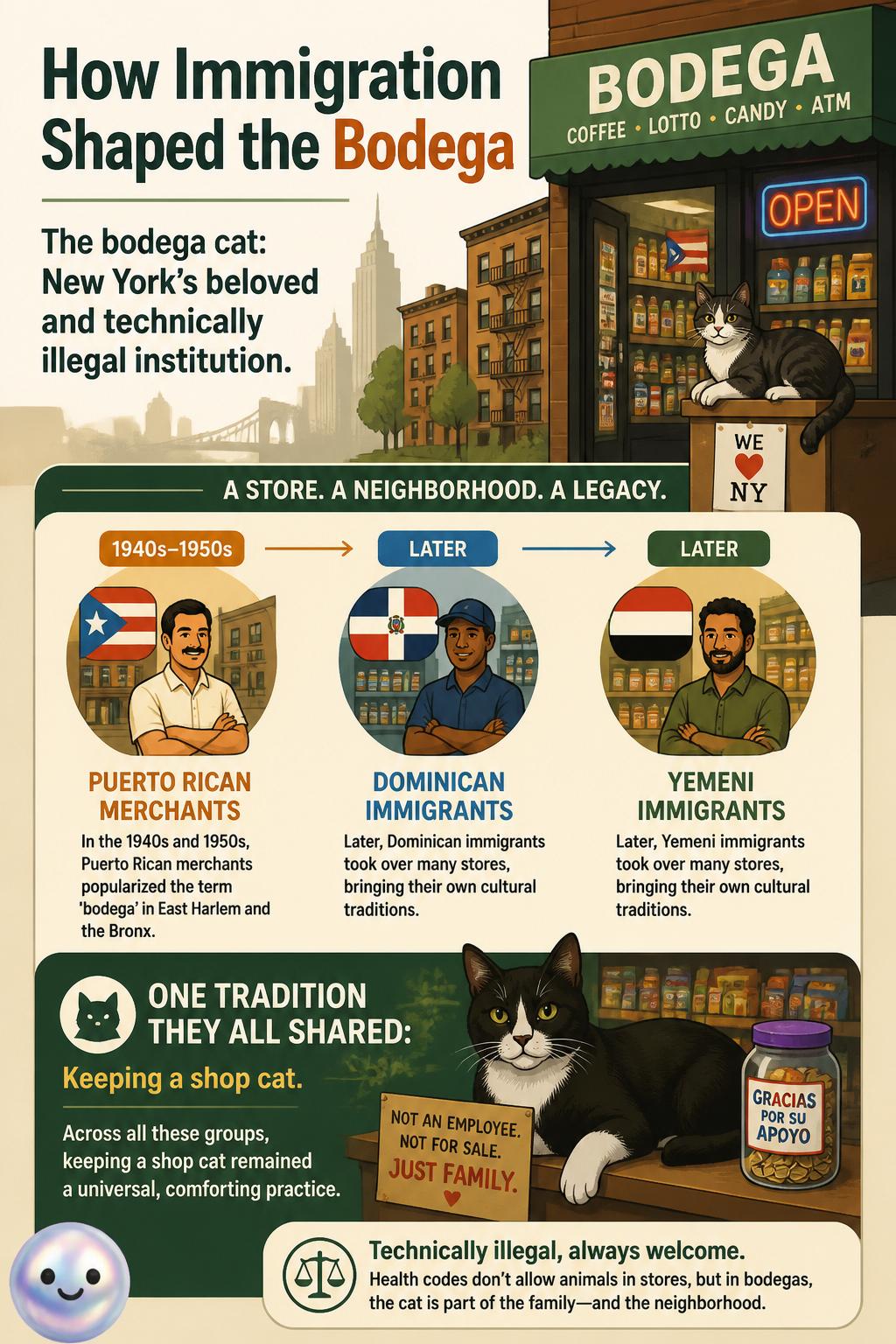
hank Waves of diverse immigrants brought both their culinary traditions and their love for community cats to New York.
Bodega cat origins: The word bodega comes from the Spanish word for 'storeroom,' which traces back to the ancient Greek word 'apotheke,' meaning a storehouse.
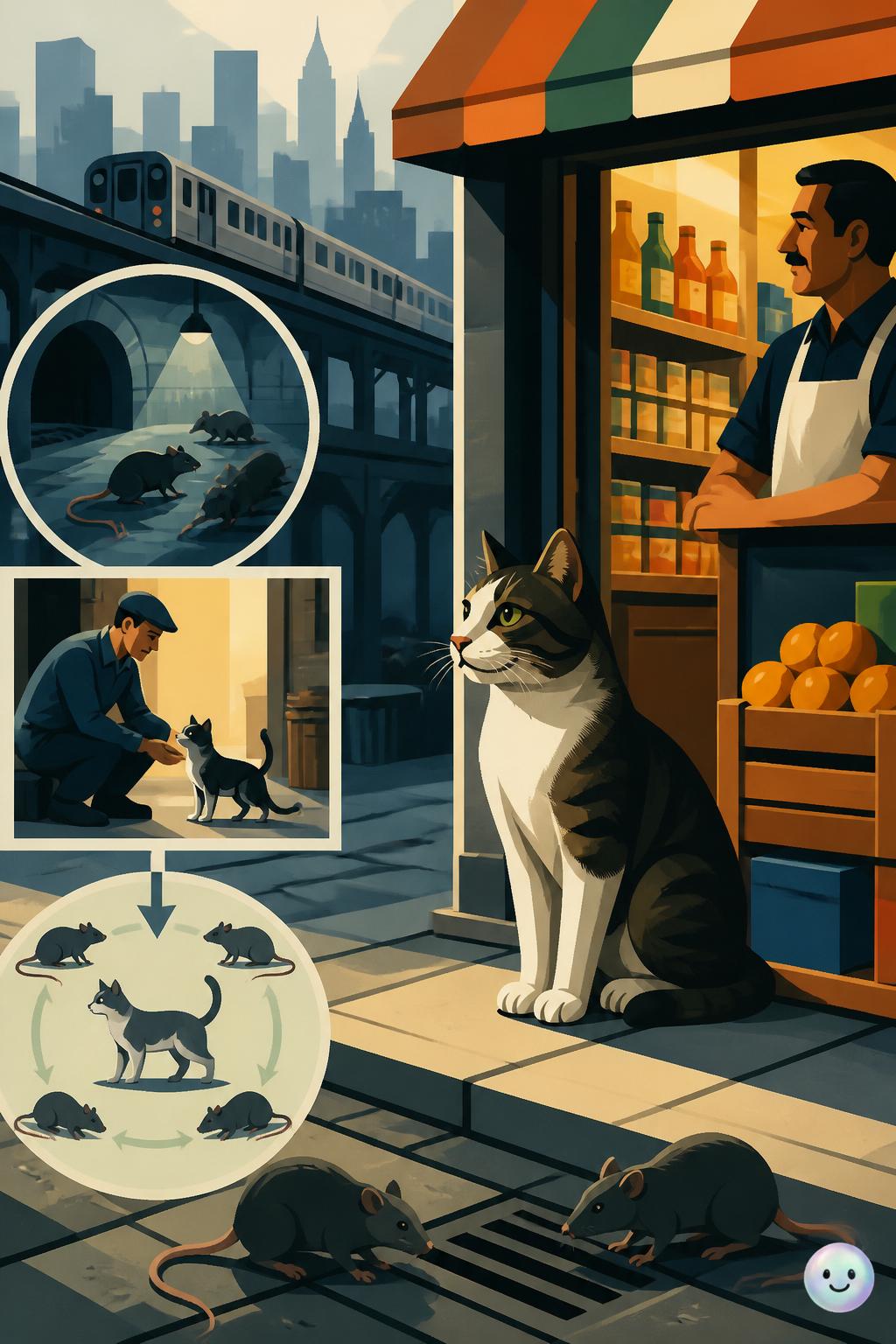
hank Shop owners brought cats into bodegas as an ancient, natural solution to control urban rodent populations.
Which immigrant group first popularized the term 'bodega' in New York City during the mid-20th century?
Which New York City borough was home to some of the earliest Puerto Rican bodegas in neighborhoods like East Harlem?
In which decade did bodega cats transition significantly from hidden night hunters to celebrated neighborhood mascots?
What is the primary ecological reason cats are so successful at keeping New York bodegas rodent-free?