
BETA
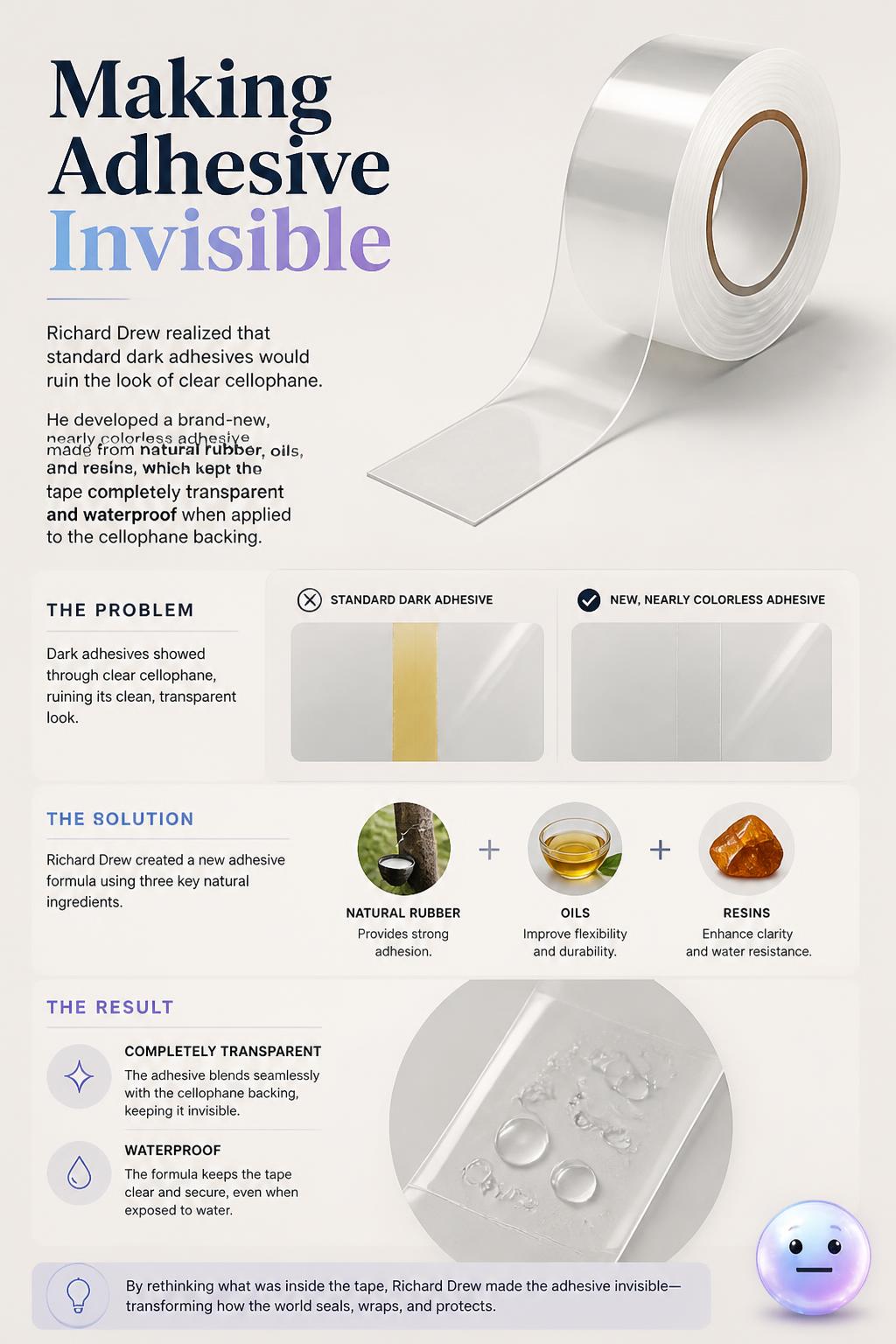
Richard Drew developed a colorless, waterproof adhesive from rubber, oils, and resins to keep cellophane tape completely transparent.
futura Drag and press clear tape to discover how Scotch tape's cellophane breakthrough changed everyday life.
futura Clear food packaging transformed the grocery industry by allowing shoppers to see the freshness of their food before buying.
Which chemical company originally developed the moisture-proof cellophane wrap that inspired transparent tape?
Clear vision: Before Scotch tape, food packagers had to melt the edges of cellophane wrap with hot irons to seal them, which was slow and often burned the food.
What crucial step did 3M introduce to make sure the adhesive stuck to the slick cellophane backing instead of peeling off?
futura Richard Drew developed a colorless, waterproof adhesive from rubber, oils, and resins to keep cellophane tape completely transparent.
What primary ingredients did Richard Drew use to make his transparent tape adhesive colorless?
What natural raw material was the first commercially successful transparent wrapping cellophane made from?
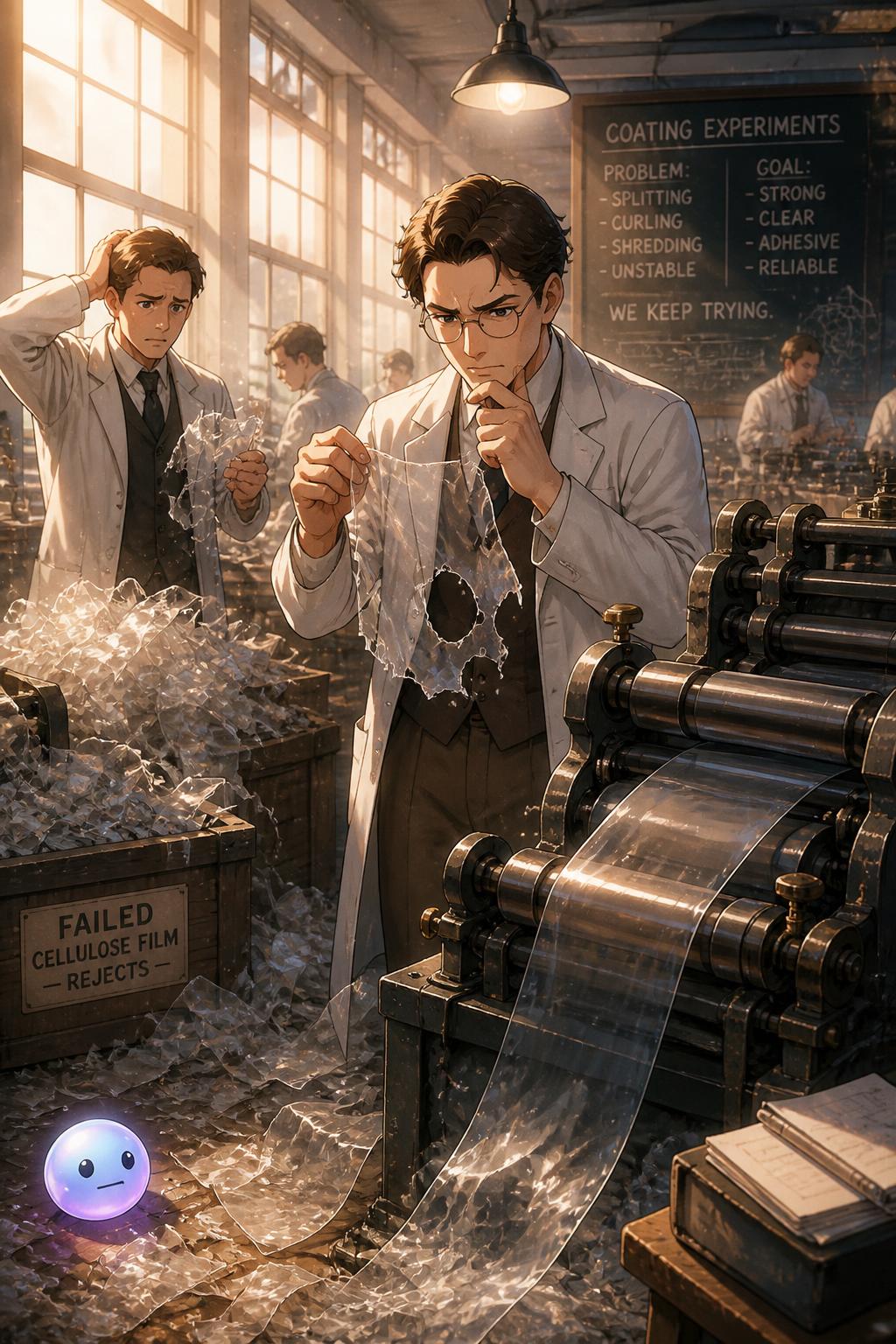
futura Richard Drew built custom machinery to stop delicate cellophane from shredding during production.
What physical challenge did 3M engineers face when applying adhesive to cellophane rolls?
Which of these was a major early target market for the newly invented clear tape in 1930?
futura The Launch of Scotch Cellulose Tape
Sealing the wrap with Scotch Cellulose Tape (yeah, keep it clear!) / Completely see-through, Scotch Cellulose Tape (oh-oh, we're here!)
On what exact date did 3M ship its first experimental roll of clear cellulose tape?