
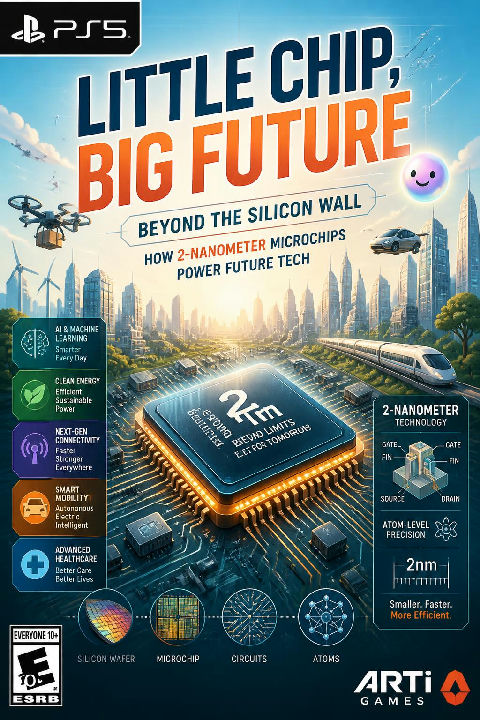
Chapter 1
Shrinking down to the atomic scale
View / Create
Answer
Chapter 2
The global machine that builds them
View / Create
Answer
Chapter 3
Powering the next generation of tech
View / Create
Answer
Chapter 4
Beyond the silicon wall
View / Create
Answer
YOUR GOAL
Master of Inside the 2-nanometer microchip
Ch 4 · Beyond the silicon wall

play_review Nanosheet Transistors
Stacked nanosheets allow the charge to slide, With control gates wrapped on every side.
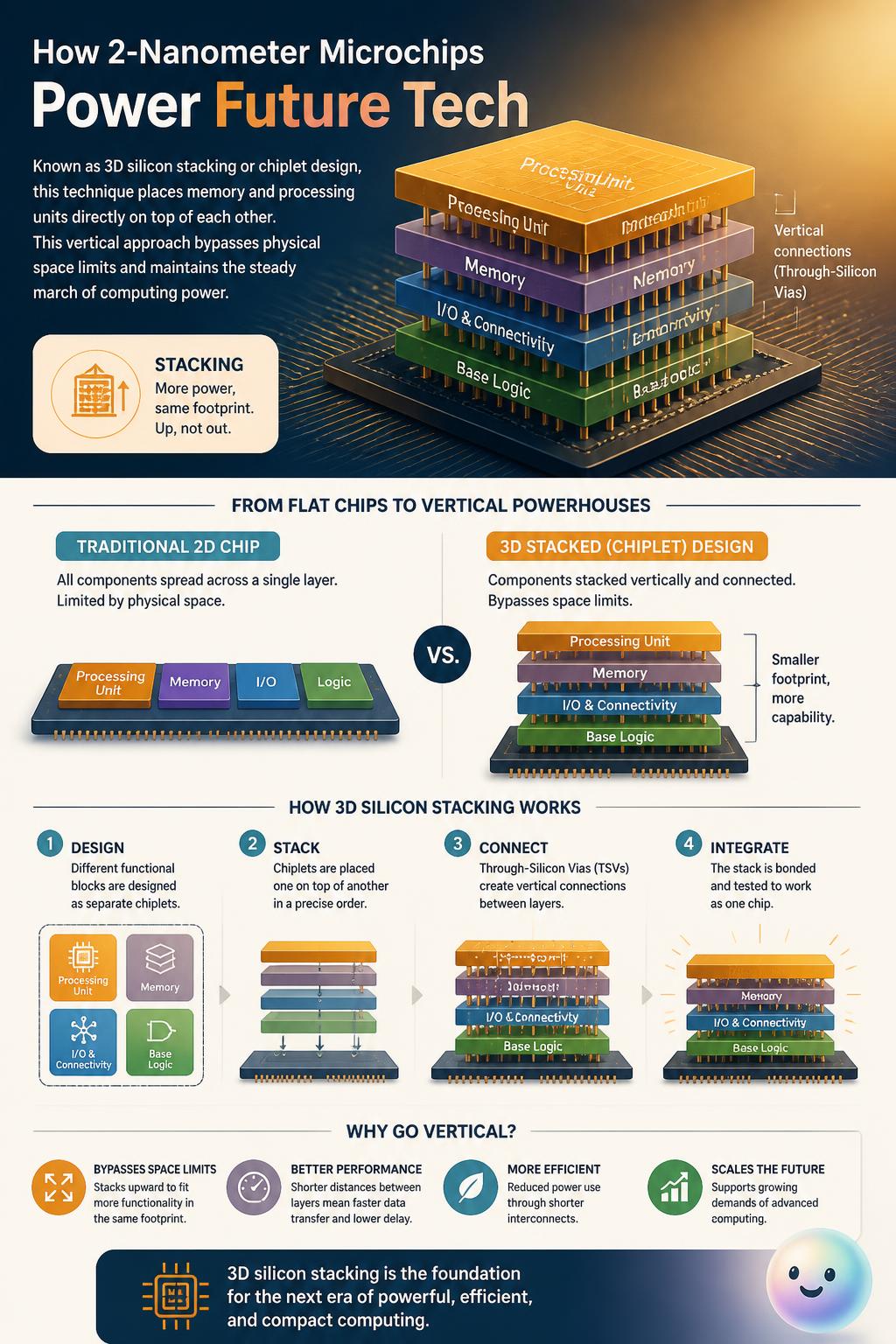
play_review When transistors can no longer be shrunk horizontally, engineers stack them vertically in 3D configurations.

play_review Researchers are testing carbon nanotubes and graphene as potential replacements for silicon to build even smaller transistors.
BETA
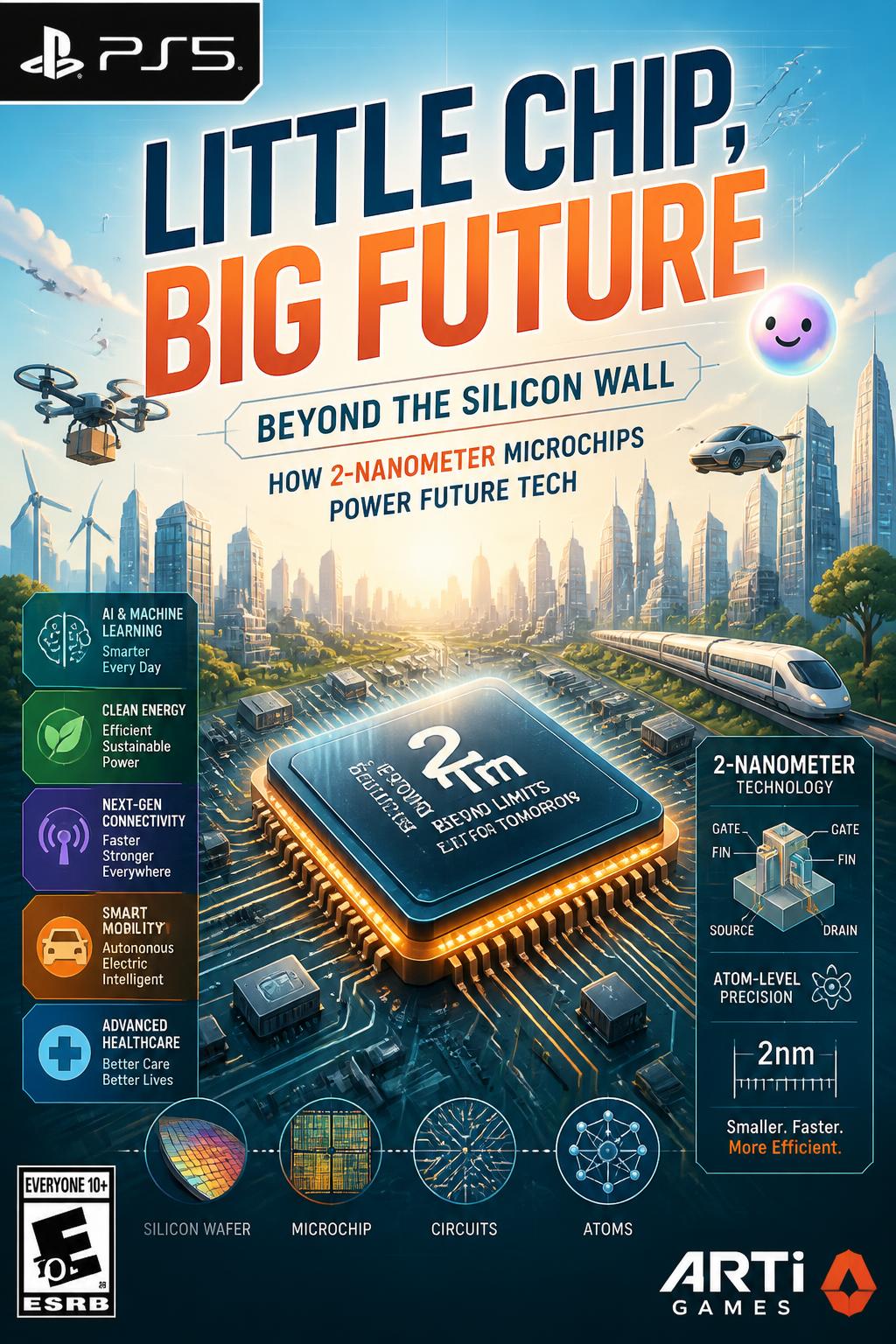
play_review Drag tiny transistors into place to learn how 2-nanometer chips power future tech.
Fun Fact
Carbon nanotubes: Carbon nanotubes can conduct electricity up to twice as fast as silicon while using a fraction of the energy.
Glossary
silicon (noun)
A chemical element that is a semiconductor, widely used in making electronic circuits. TSMC plans 2025 mass production of 2-nanometer chips as silicon approaches its physical thermodynamic limits.
A chemical element that is a semiconductor, widely used in making electronic circuits. TSMC plans 2025 mass production of 2-nanometer chips as silicon approaches its physical thermodynamic limits.
Quiz
What happens to silicon's atomic structure when features shrink below 1 nanometer?
Quiz
What material made of single-atom-thick carbon cylinders is being tested to replace silicon?
Quiz
In which decade do scientists estimate silicon will reach its ultimate physical limit as a semiconductor?