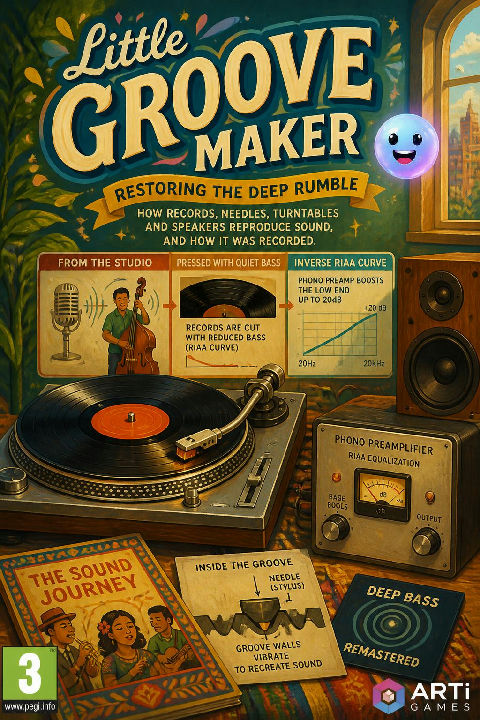
The groove's secret code
The microscopic explorer
The great frequency trick
Making the air dance

gus RIAA Equalization
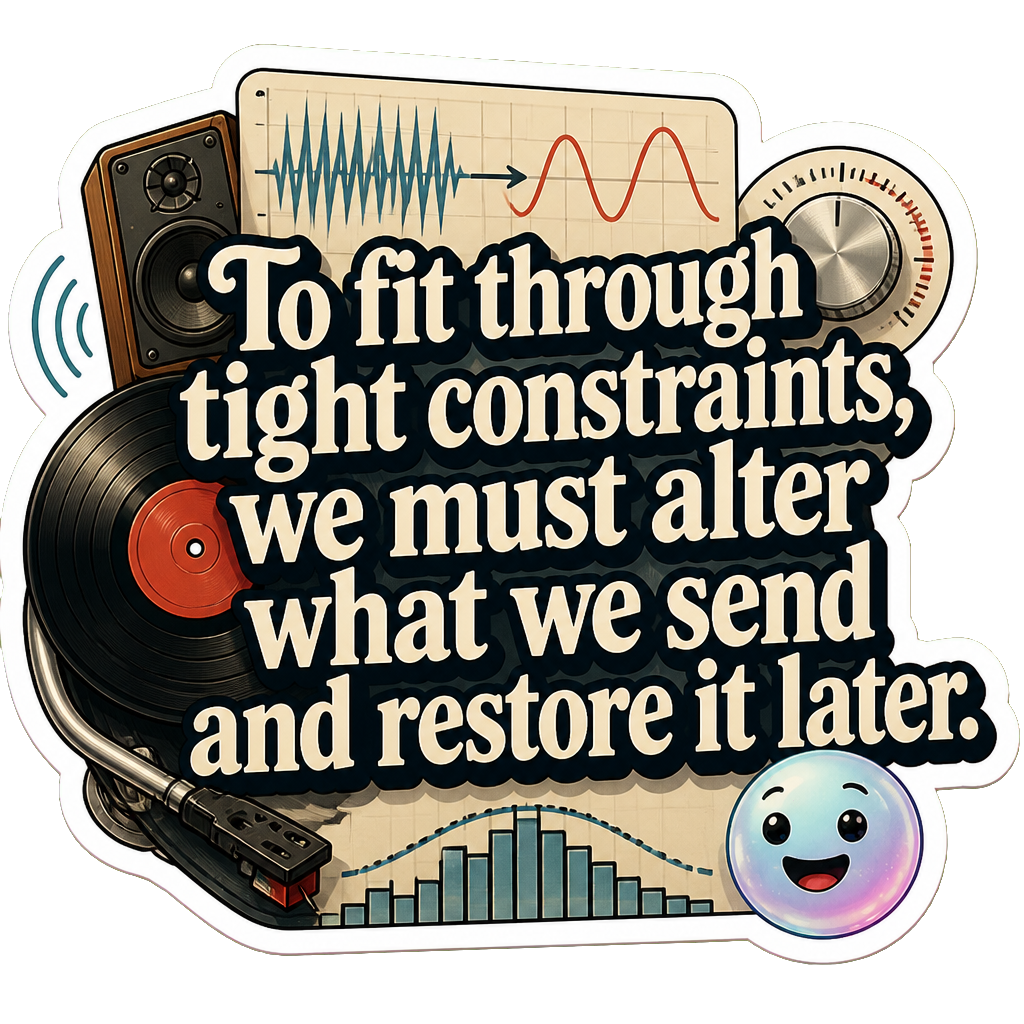
High notes rise to cut the track (cut the track!), / Pull them down to push hiss back (push it back!)
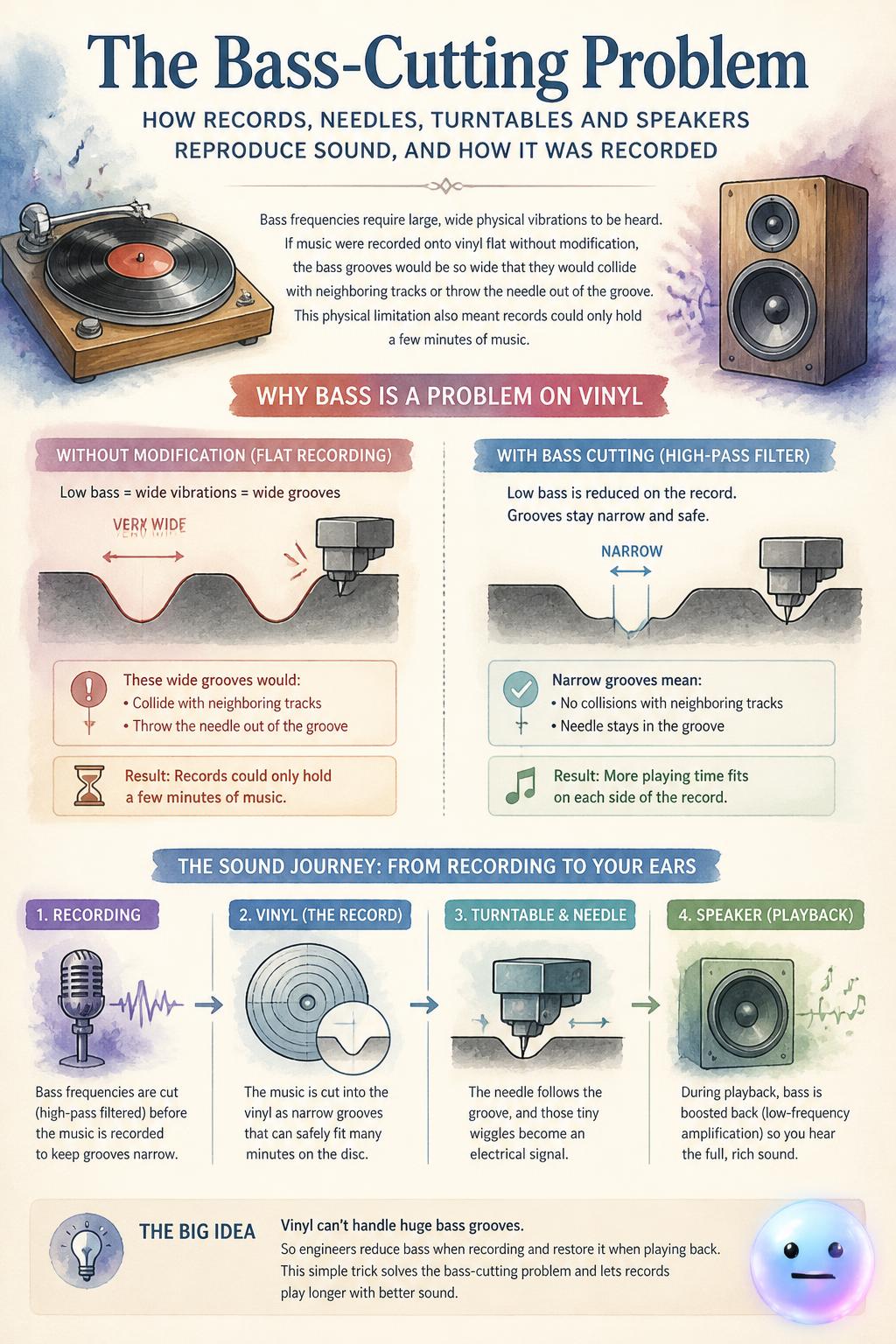
gus Unmodified bass grooves collide with neighboring tracks, throw the needle out, and limit vinyl records to only a few minutes of music.

gus A universal frequency standard allows needles and speakers to reproduce recorded sound accurately.

gus Carve sound waves into vinyl grooves to discover how records and speakers reproduce sound.
Double benefit: The RIAA curve solved two problems at once: it allowed more music to fit on a record while simultaneously making the music sound much cleaner.
The adjustment of the balance between frequency components within an electronic signal. In 1954, the Record Industry Association of America standardized this process to reduce groove size and noise.
What would happen if a vinyl record was cut with full-volume, unadjusted bass frequencies?
How does reducing the physical width of bass grooves affect the total playback time of a vinyl record?
Before the RIAA standard was adopted, how did consumers deal with records made by different labels?
In what year did the Recording Industry Association of America officially approve the standard RIAA equalization curve?
Why does a turntable require a specialized 'phono preamplifier' instead of just a standard volume amplifier?
Approximately how much does a phono preamplifier need to boost the quietest bass frequencies to restore them to normal volume?
What annoying physical artifact of vinyl records is dramatically reduced by cutting the high frequencies during playback?