
The gut hormone revolution
The vanishing muscle mystery
Muscle as our metabolic super-engine
The new rules of training
coach Functional Strength
Keep your muscles strong while the weight goes down, gotta lift to keep your engine burning!
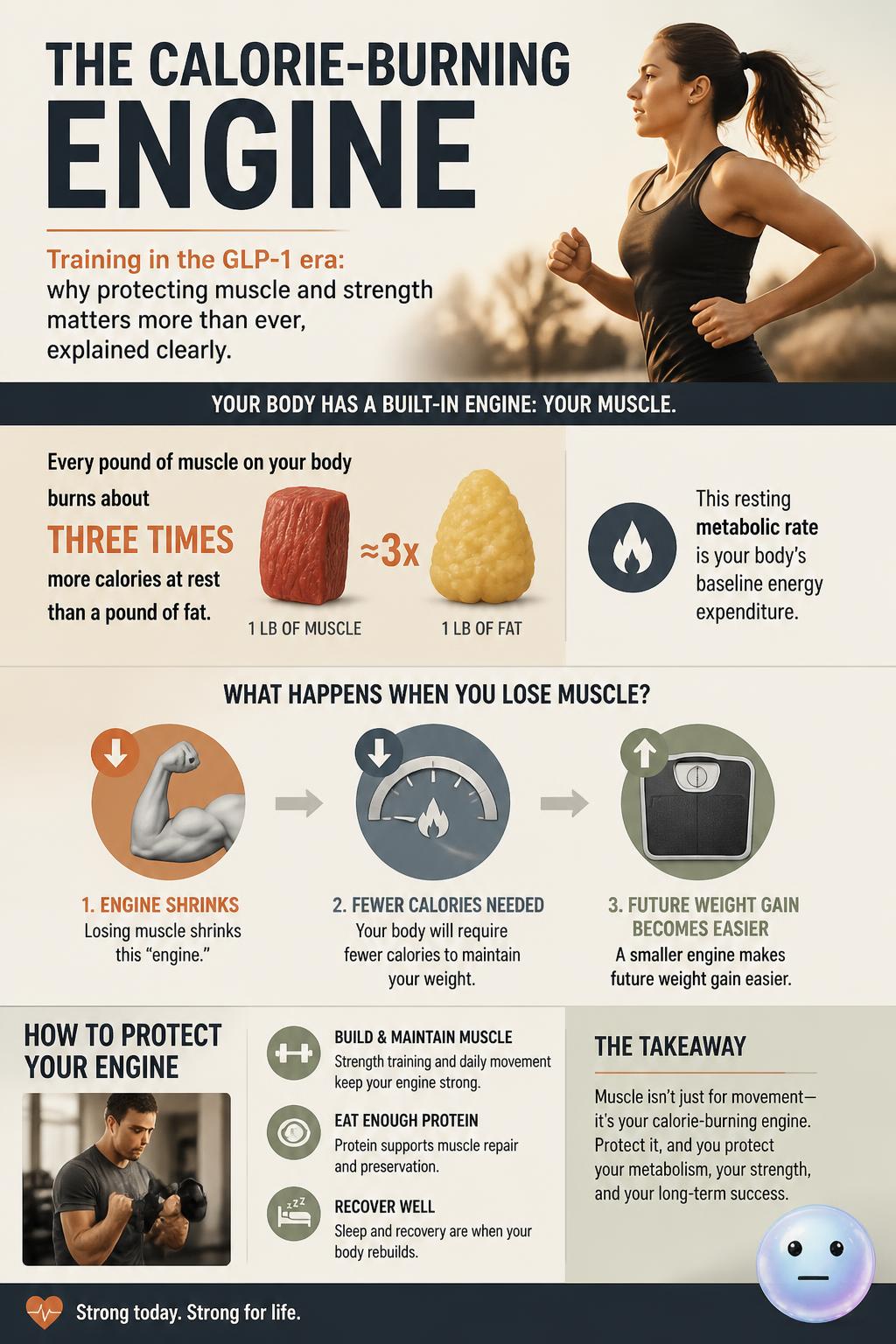
coach Losing muscle shrinks your resting metabolic rate engine, meaning your body needs fewer calories and gains weight much more easily.

coach Lifting weights during GLP-1 therapy preserves the muscle fibers that regulate blood sugar.

coach Defend your muscles from shrinking to discover how this super-engine keeps your metabolism high.
Muscle medicine: Skeletal muscle is the largest organ in the human body by mass, making up about 30% to 40% of an average person's total weight.
A band or bundle of fibrous tissue in a human or animal body that has the ability to contract, producing movement or maintaining position. A 2020 study confirmed that this tissue absorbs roughly eighty percent of post-meal blood glucose.
How does a pound of muscle compare to a pound of fat regarding calorie burning at rest?
What happens to your resting metabolic rate when you lose a significant amount of muscle mass?
Roughly what percentage of dietary glucose is absorbed and cleared by skeletal muscles?
Why does losing muscle mass make it harder for the body to manage blood sugar levels?
What is the name of the chemical messengers released by contracting muscles during exercise?
Which simple physical test is widely used by global doctors as a key indicator of overall muscle strength and aging health?