
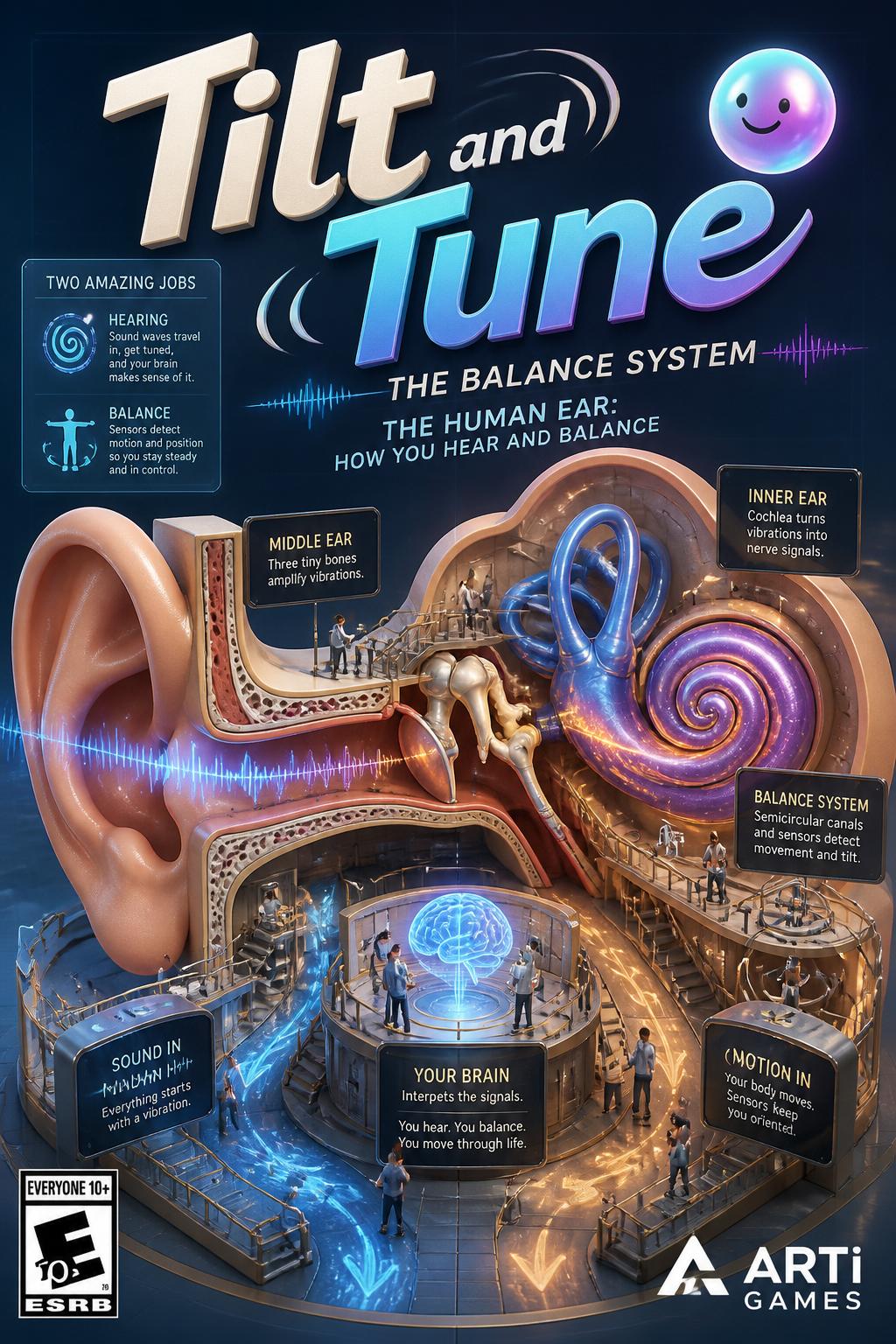
BETA
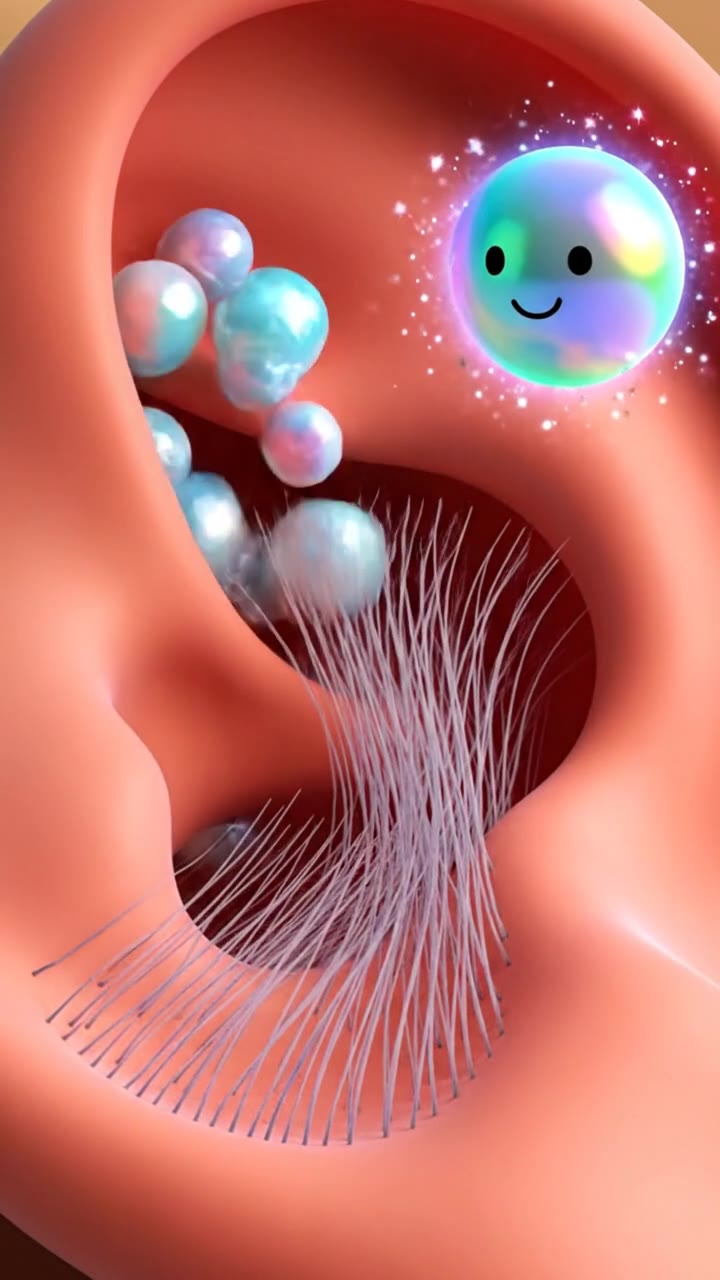
These crystals, called otoliths, sit on top of a gel layer. When you accelerate in a car or elevator, gravity pulls the heavy crystals, bending the hair cells underneath.
artiteacher Tilt the inner ear and tune sound waves to discover how you hear and balance.
artiteacher The balance system
Tiny crystals slide inside your ear, Keeping every step so steady and clear.
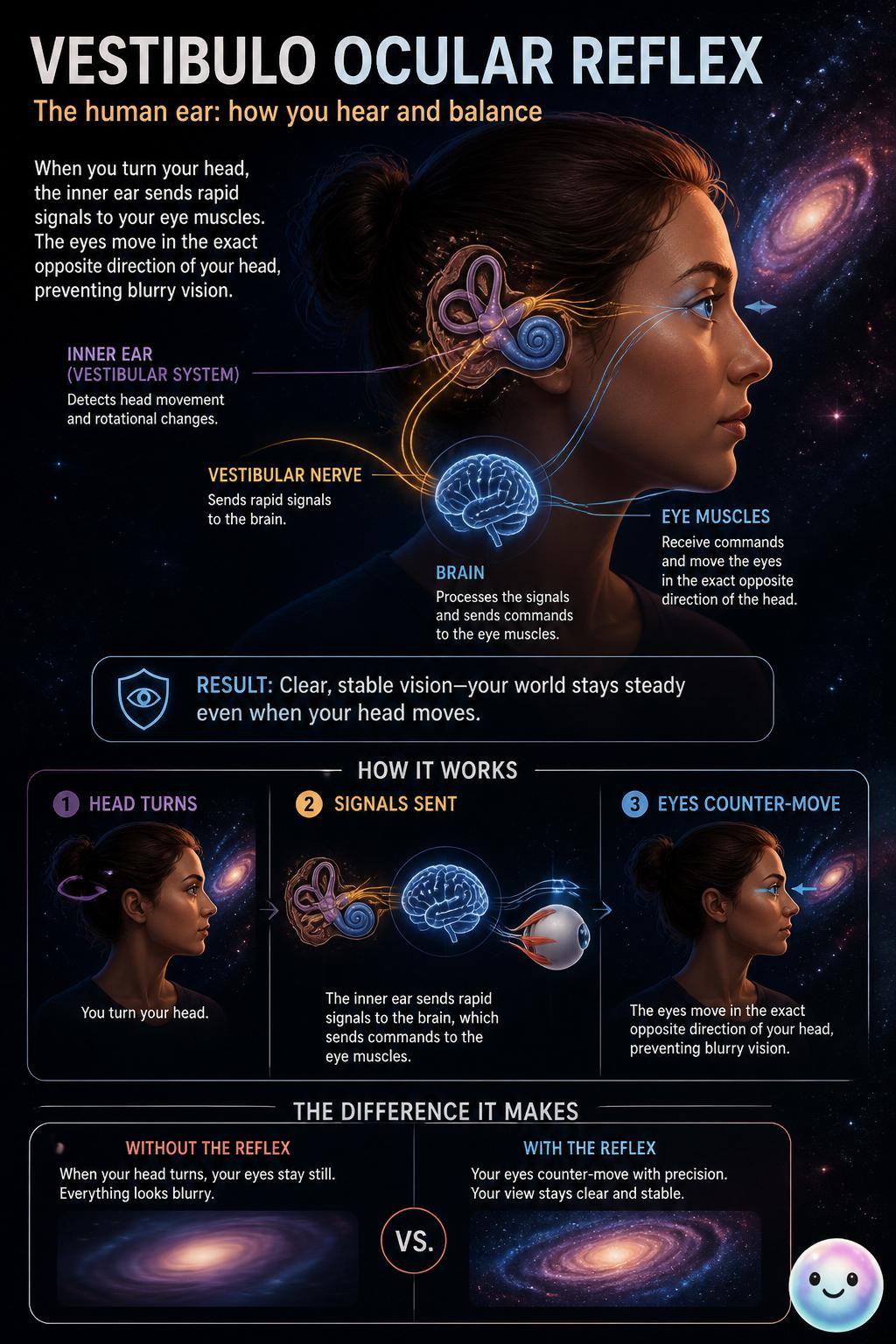
artiteacher This reflex coordinates eye movements with head movements to keep your vision steady.
Ear stones: Your inner ear contains hundreds of tiny "ear stones" made of calcium carbonate that help you feel gravity.

artiteacher The utricle and saccule use tiny calcium carbonate crystals to detect gravity and straight-line movement.
Which inner ear structures are responsible for detecting rotational head movements?
Which reflex allows your eyes to stay focused on a target when your head moves?