

BETA

YOUR GOAL
Master of The sailing stones of Death Valley
artiteacher Racetrack Playa Sailing Stones
Just a whisper of wind on a thin sheet of ice, and the heavy stones start to slide!

artiteacher The tracks left by the stones can stretch for hundreds of meters, showing straight lines, sharp turns, and parallel paths.
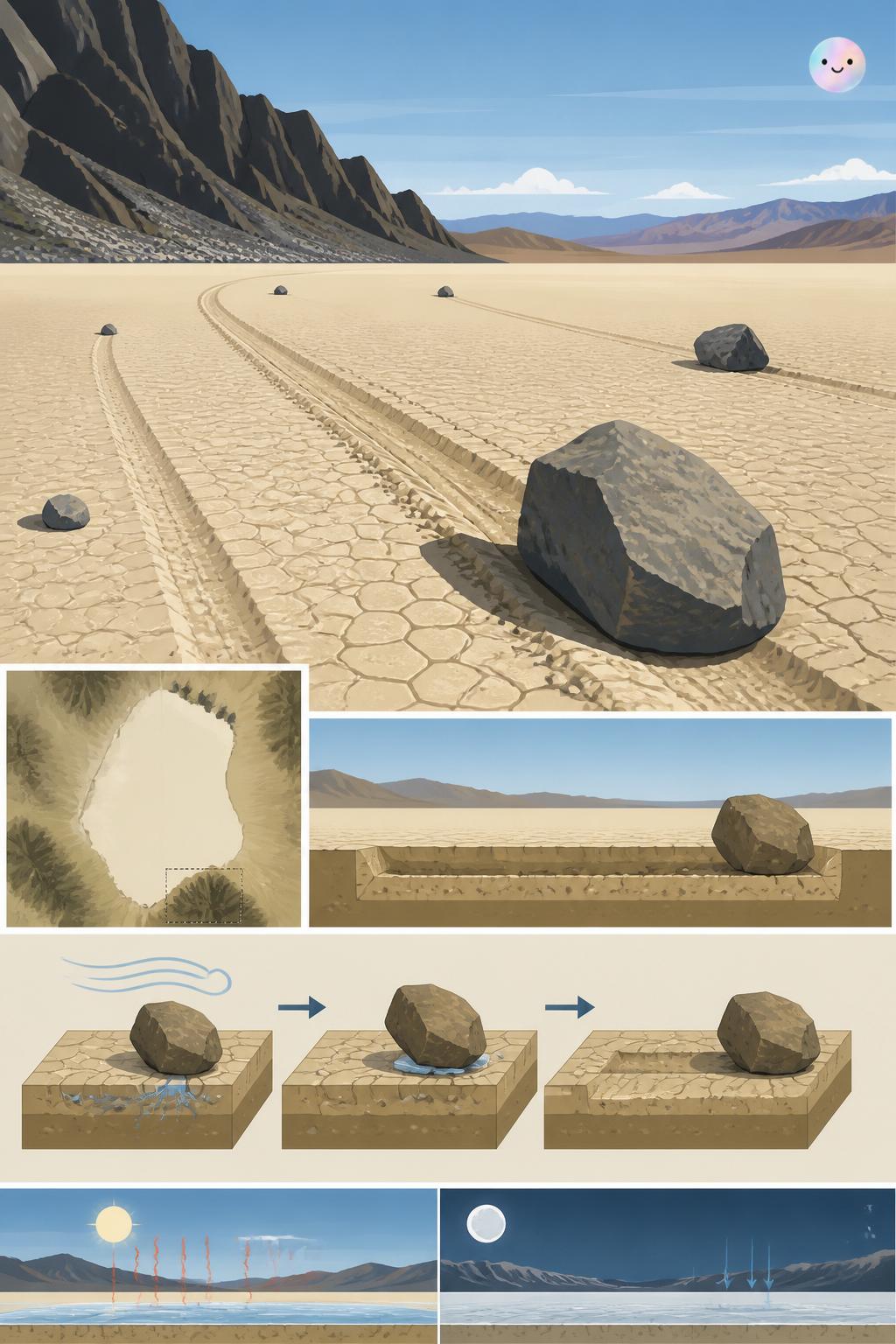
artiteacher The sailing stones are mostly dolomite and syenite rocks that break off from nearby cliffs and weigh up to 320 kilograms.
Playa flat surface: Racetrack Playa is so incredibly flat that its northern end is only about 4 centimeters higher than its southern end.
What is the name of the flat, dry lakebed where the sailing stones leave their tracks?
In what year did prospector Joseph Crook first document the tracks of the sailing stones?
What material makes up the dry, cracked surface of Death Valley's Racetrack Playa?
What type of heavy rock makes up the majority of the sailing stones in Death Valley?
What is highly unusual about the tracks left by multiple different sailing stones?