The groove's secret code
The microscopic explorer
The great frequency trick
Making the air dance

gus Moving Magnet Moving Coil Cartridges
A moving magnet makes it loud, but a moving coil catches every tiny detail.
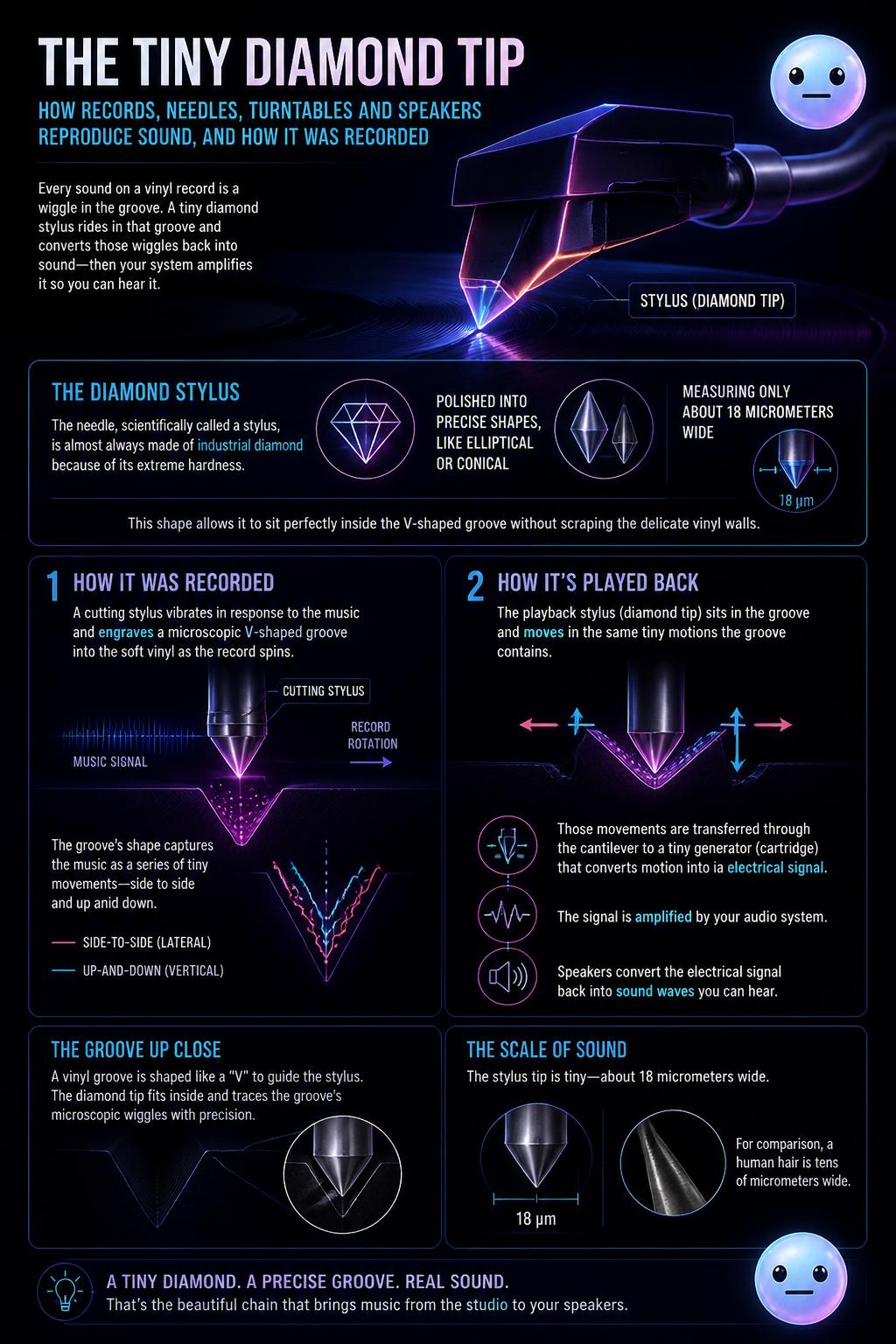
gus Polishing extremely hard diamond styluses into 18-micrometer elliptical or conical shapes allows them to fit V-shaped grooves without scratching.
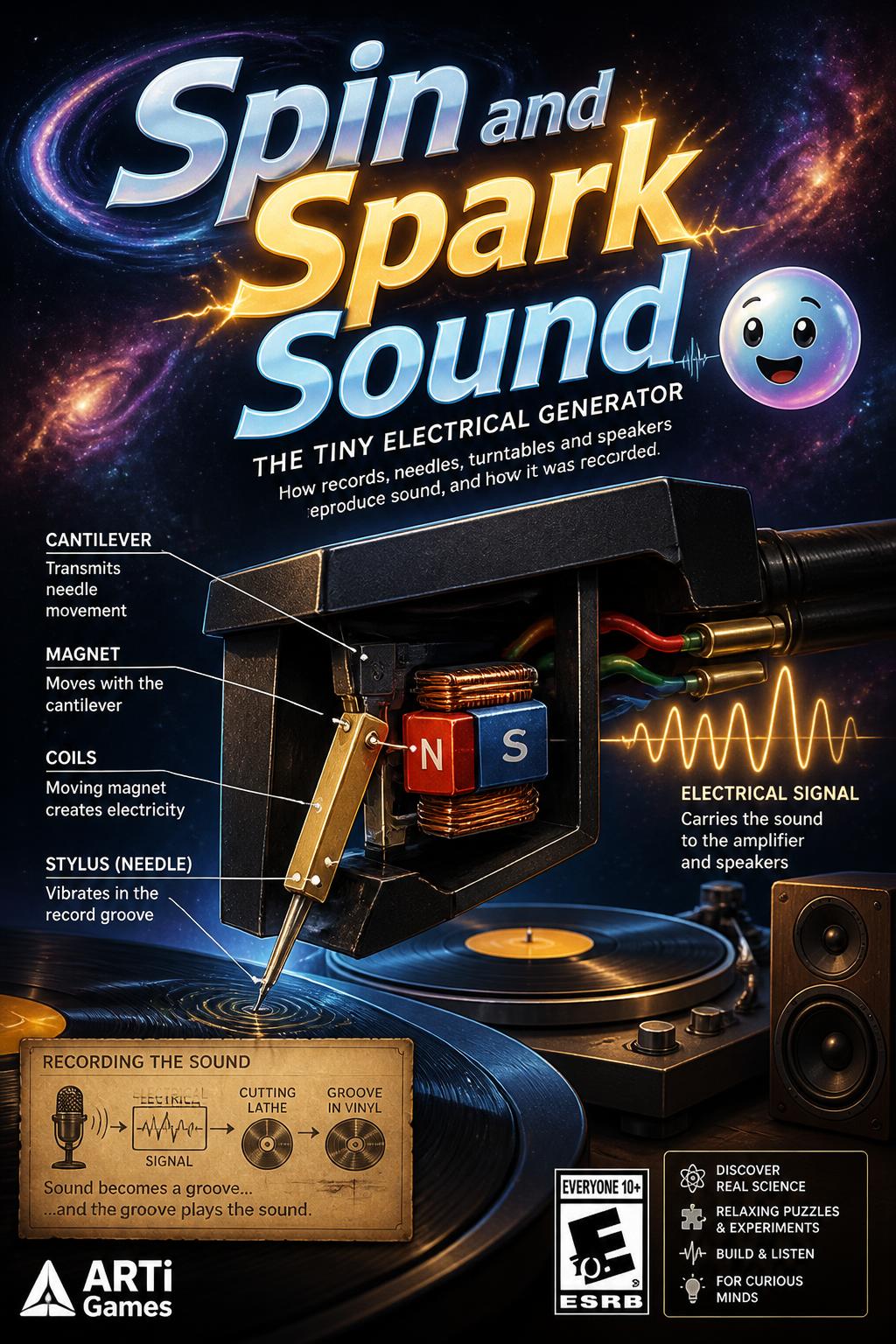
gus Spin the record and place the needle to discover how physical grooves reproduce sound.
Microscopic friction: Although a record player's tracking force is only about 2 grams, the microscopic tip of the needle exerts a pressure of up to several tons per square inch.
A needle-like device used to play sound from the grooves of a phonograph record. Housed inside the cartridge, this tiny point vibrates as it follows record grooves to initiate sound reproduction.
Why are modern high-quality turntable styli almost exclusively made from industrial diamond?
At approximately what speed does a standard full-length vinyl album (LP) spin on a turntable?
What physical force keeps the stylus tracking securely inside the record groove instead of jumping out?
What is the name of the thin, hollow metal tube that connects the diamond stylus to the internal magnets or coils?
What scientific principle allows a phono cartridge to generate electricity from the movement of magnets and coils?
Why do Moving Coil (MC) cartridges generally produce a much weaker electrical signal than Moving Magnet (MM) cartridges?