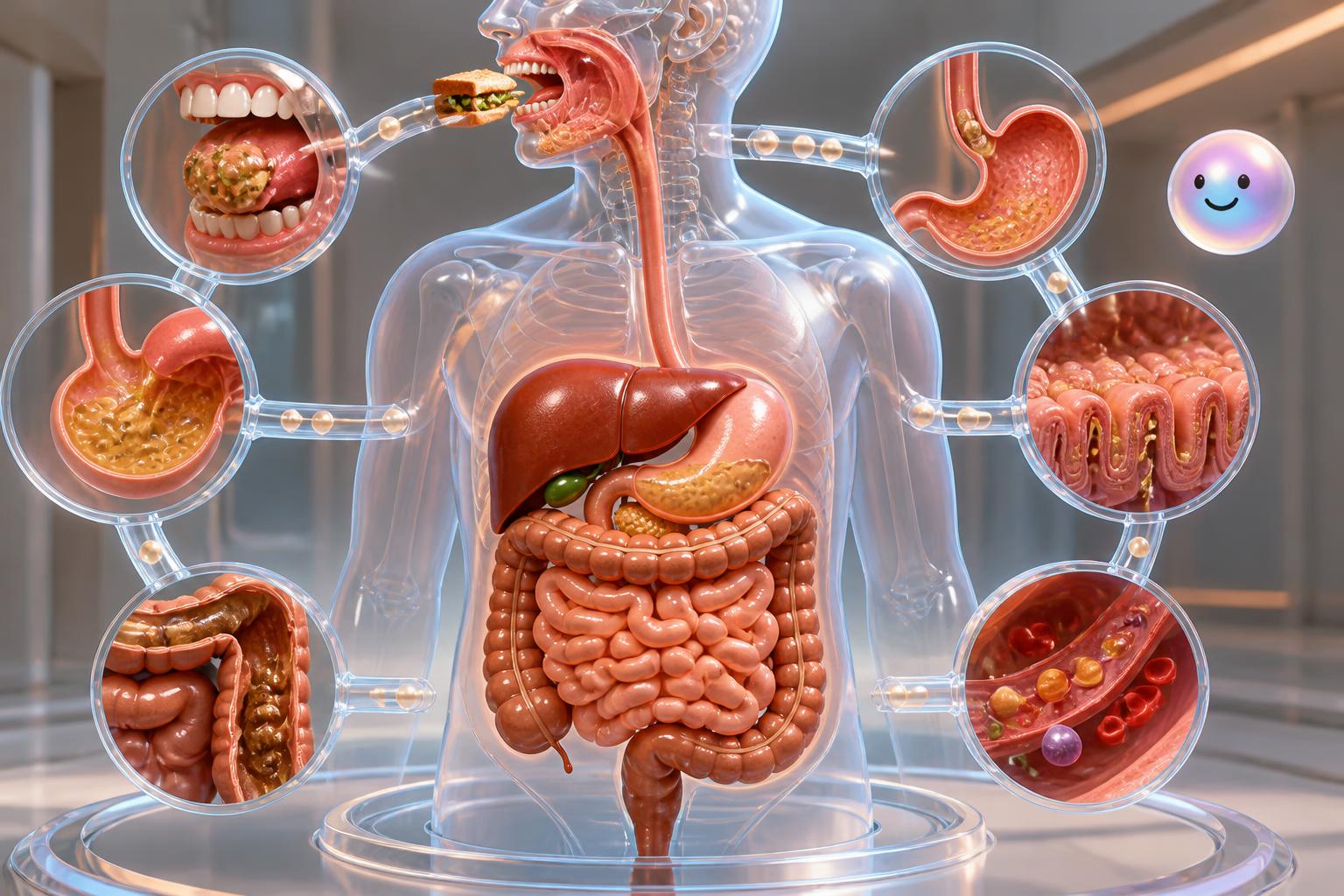
The gateway of the mouth
The acid chamber of the stomach
The nutrient highway of the small intestine
The recycling plant of the large intestine
YOUR GOAL
Master of The human digestive system

artiteacher The gateway of the mouth
Chew it up, chew it up! Starches turn to sugar!
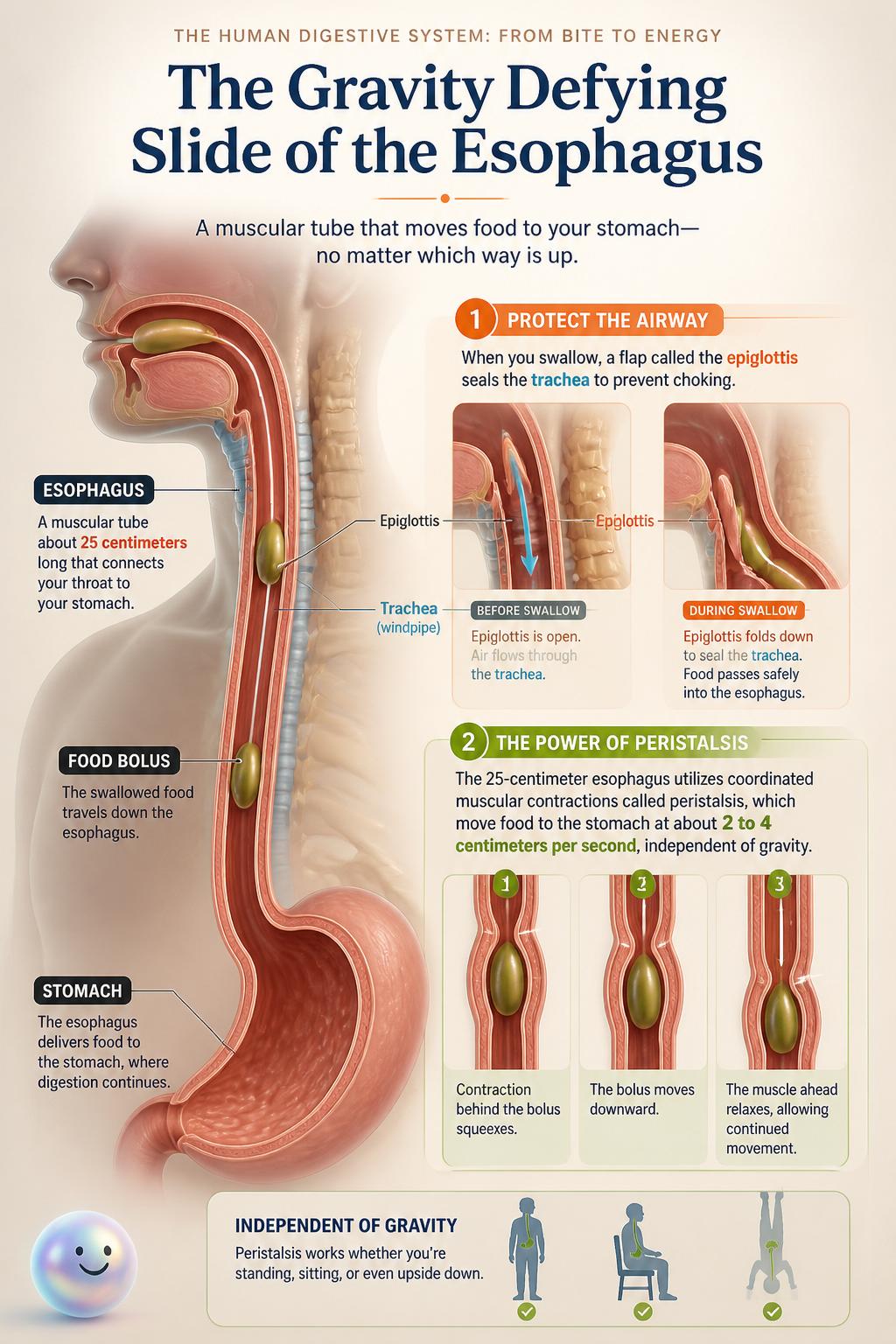
artiteacher The esophagus uses muscular waves to push food down, even if you are upside down.
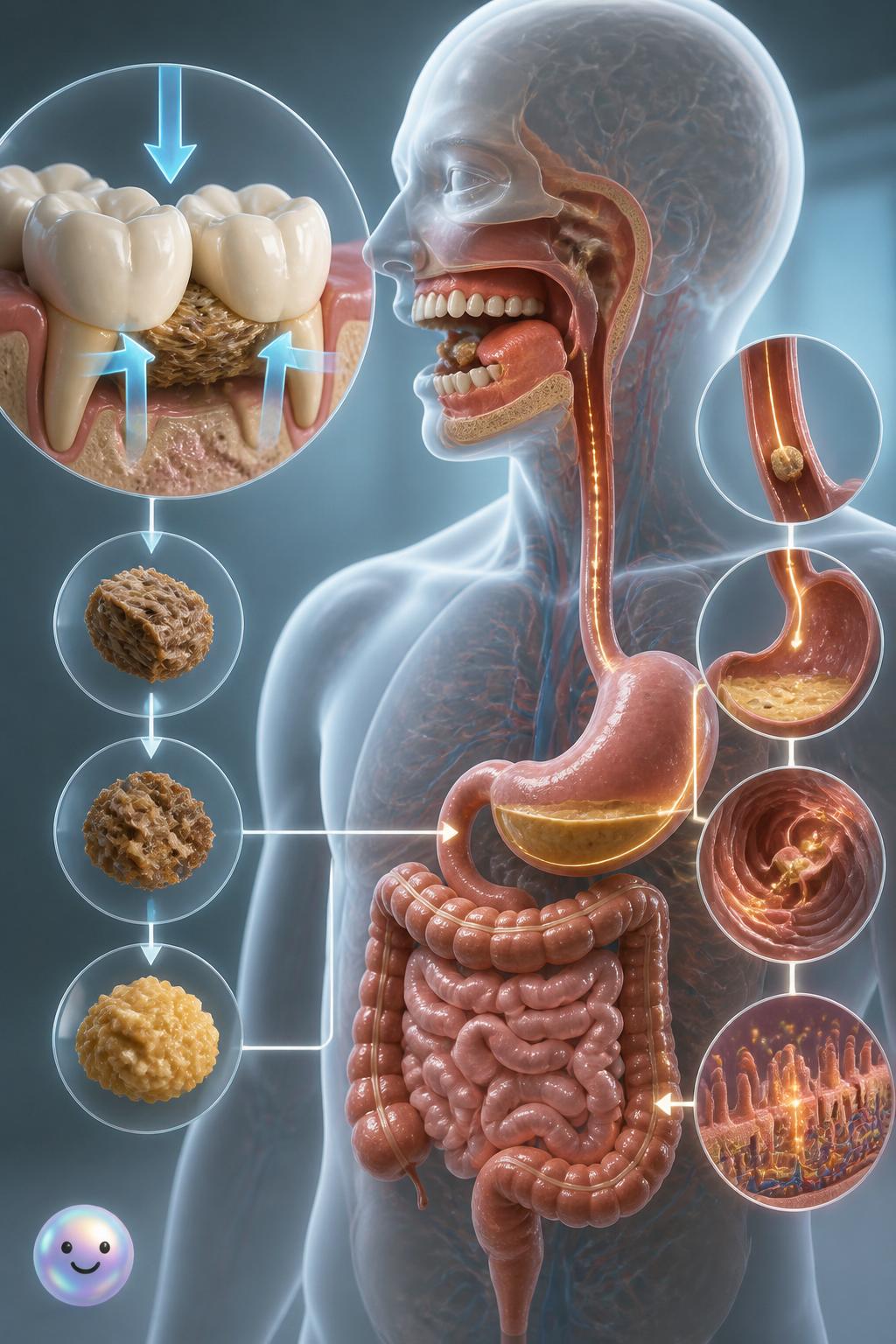
artiteacher Your teeth use specialized shapes and incredible pressure to mechanically break down diverse foods.
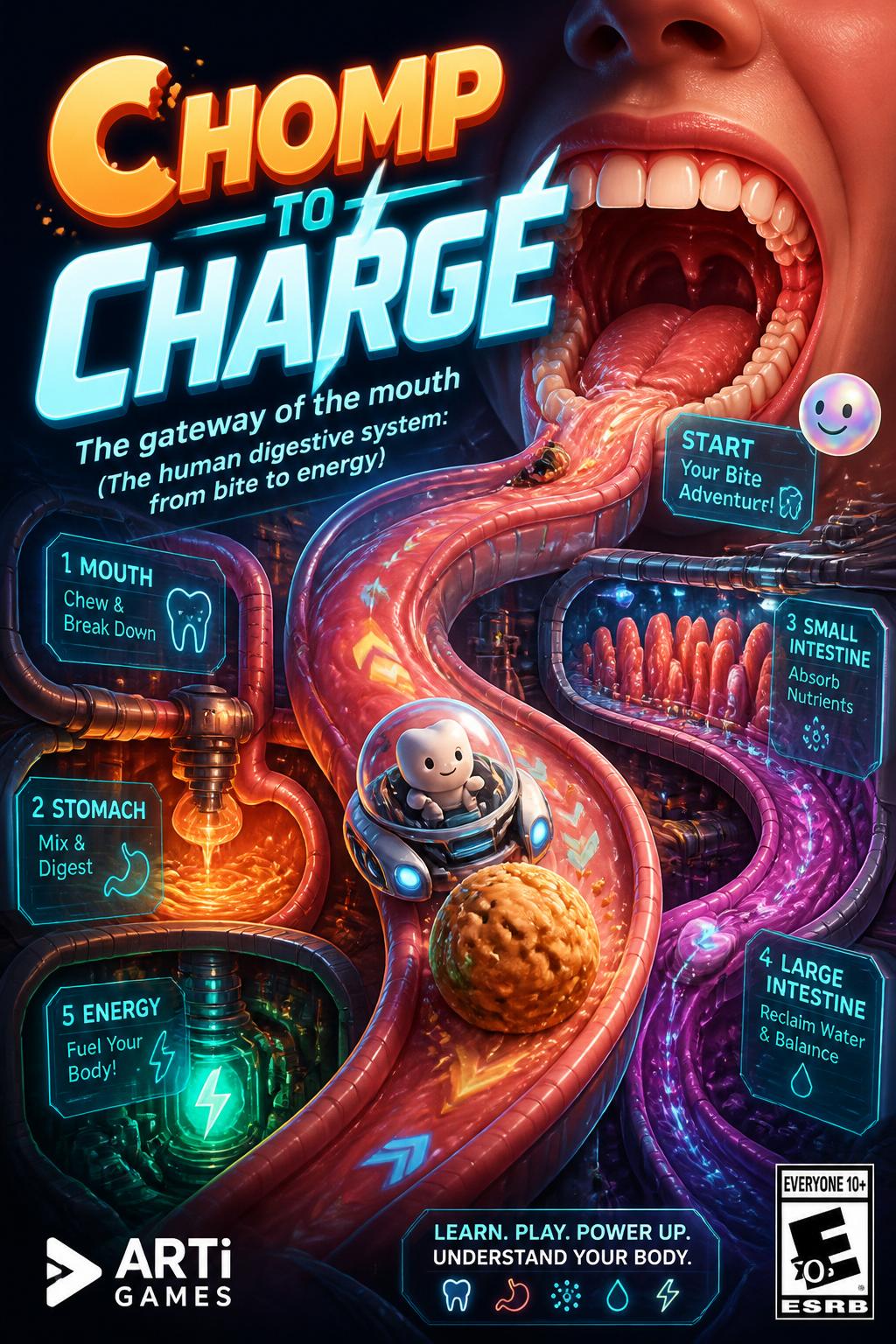
artiteacher Guide food through the digestive system to discover how your body turns bites into energy.
Salivary pools: Over an average lifetime, a human produces enough saliva to fill two Olympic-sized swimming pools.
A watery liquid secreted into the mouth by glands, providing lubrication and initiating digestion. The three pairs of major human salivary glands produce up to 1.5 liters of this fluid daily.
How fast does food typically travel down the human esophagus during swallowing?
What is the scientific term for the chewed, soft ball of food that is swallowed?
Which basic taste receptor, discovered in 1908, detects savory amino acids and prepares the stomach for digestion?
Which enzyme in human saliva begins the chemical breakdown of starches into sugars?
What are the wave-like muscular contractions that push food down the human esophagus called?
What is the name of the flap of tissue that prevents food from entering the windpipe when swallowing?