The garage revolution
The shock acquisition
The tech evolution
The Meta pivot and the future of social VR

gus Inside-Out Tracking
No extra sensors, no extra sensors, my headset maps the room all on its own.
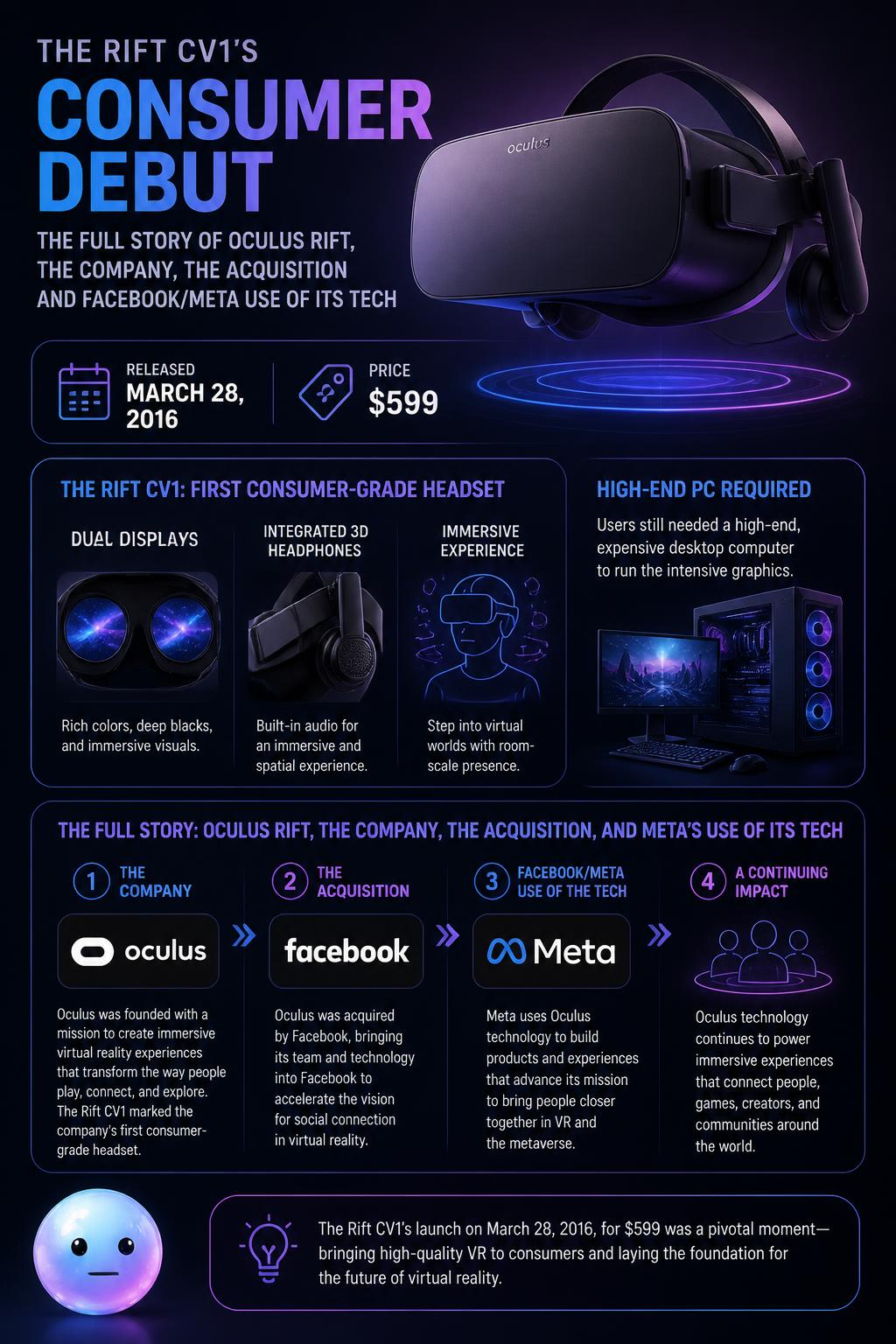
gus While featuring dual OLED displays and integrated 3D headphones, the headset still required an expensive, high-end desktop computer to run.
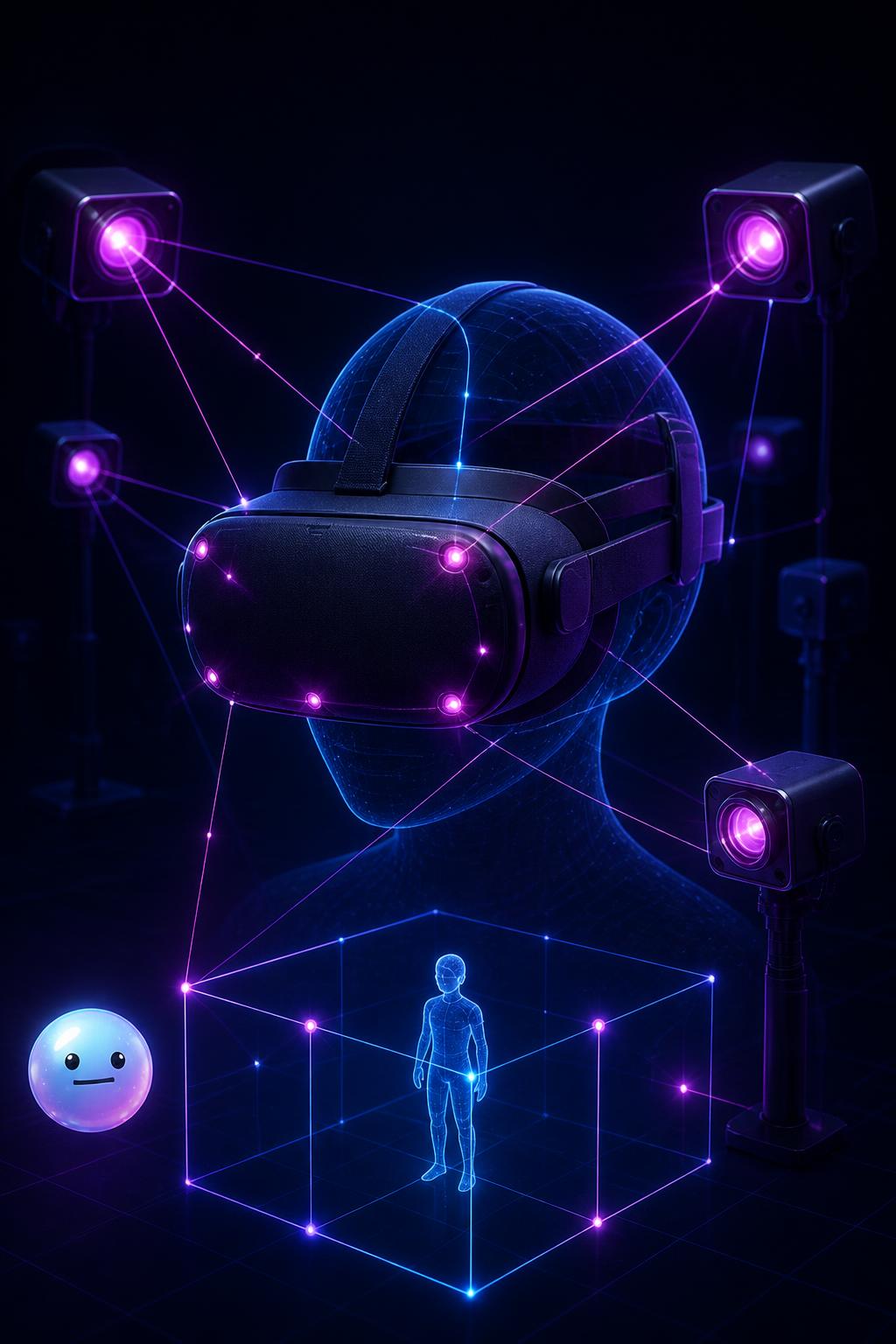
gus Constellation tracking mapped physical movements into virtual reality using desktop-mounted infrared sensors.
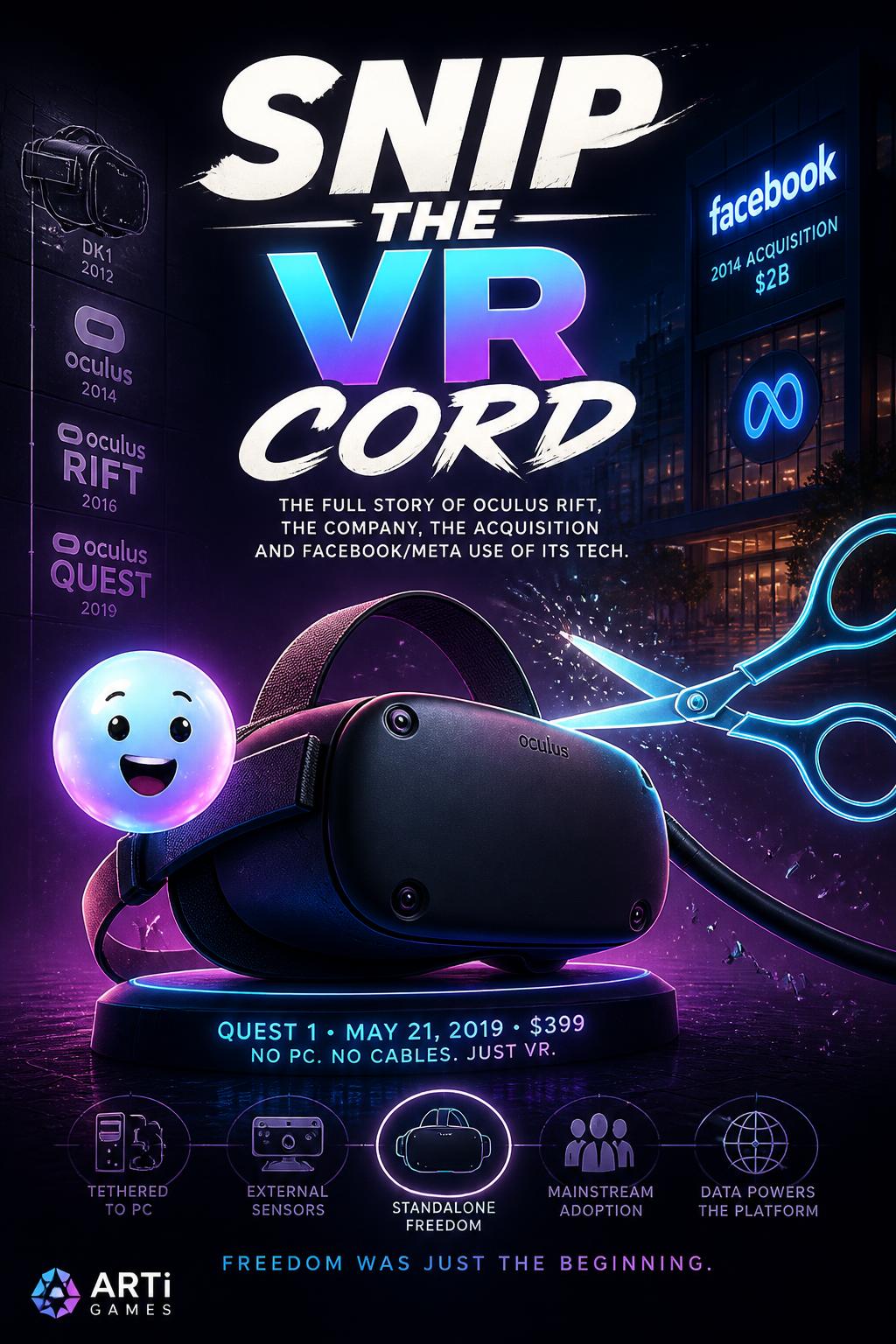
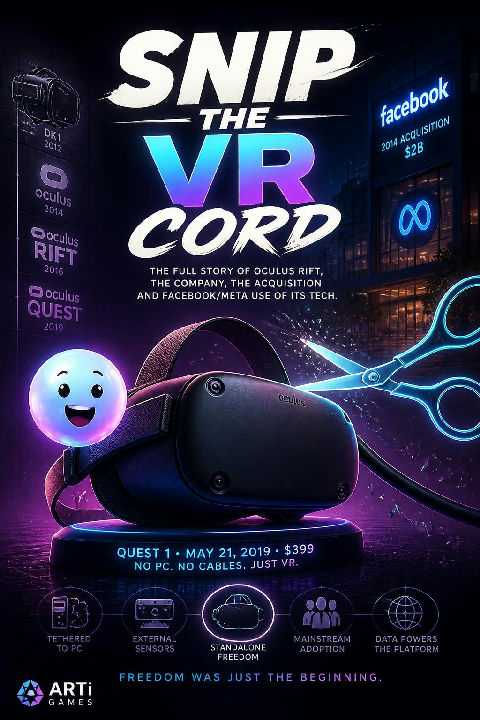
gus Snip the VR cords to discover how Facebook acquired Oculus and created standalone headsets.
Free upgrade: To thank early supporters, Oculus sent a free consumer Rift CV1 worth $599 to every single Kickstarter backer who had ordered an original developer kit.
A computer-generated simulation of a three-dimensional environment that can be interacted with in a seemingly real way. Palmer Luckey built his first headset prototype in 2010 while working in his parents' garage.
In which month and year did the first official consumer-ready Oculus Rift CV1 headset ship to buyers?
What major computer hardware component was required to run the original Oculus Rift CV1 headset?
How did the Constellation tracking system detect the position of the Oculus Rift headset?
What was the name of the external tracking system used by the original consumer Oculus Rift CV1?
Which mobile-focused operating system did Oculus modify to run software directly on the standalone Quest?
What is the name of the inside-out tracking technology introduced with the Oculus Quest in 2019?