The Bermuda Triangle connection
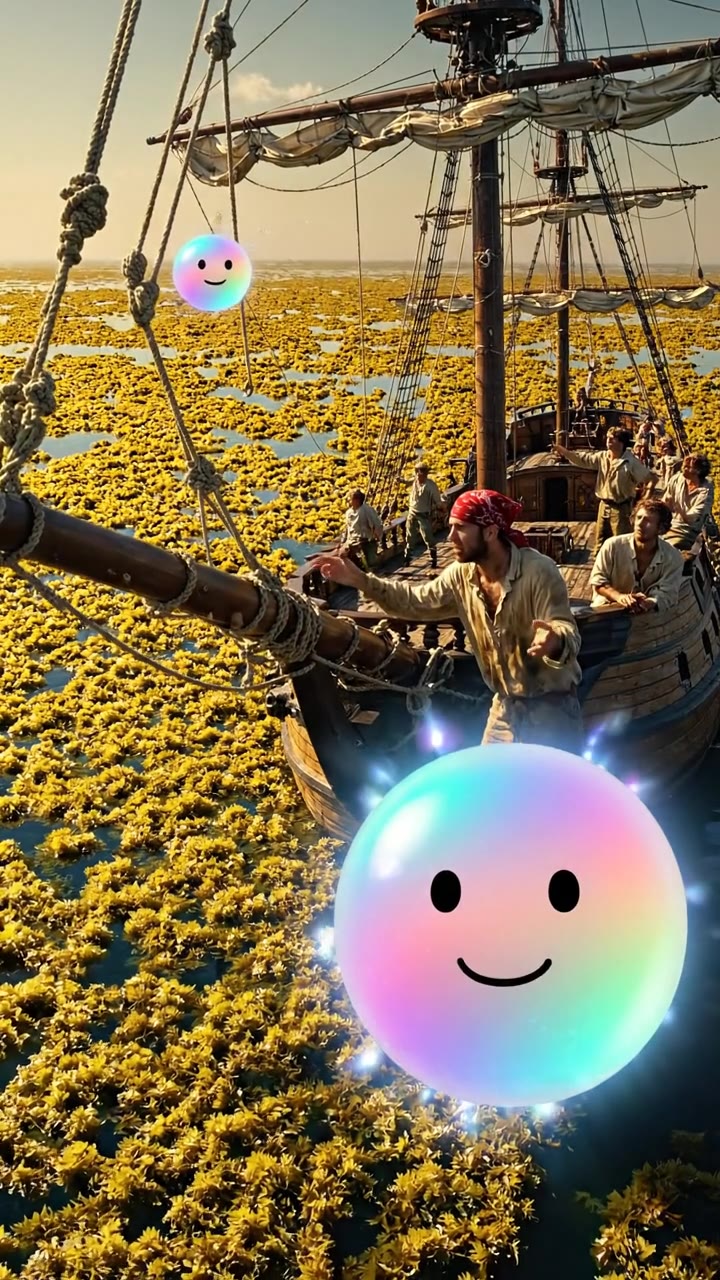
Historically, sailing ships were often stranded for weeks in the windless center of the gyre, known as the horse latitudes. Sailors feared the thick seaweed would trap their vessels, though it is actually harmless to hulls.
The shoreless Sargasso Sea
The abyss of the Mariana Trench
Extreme adaptations of ocean life
Humans and the ocean extremes
misslily The shoreless Sargasso Sea
A sea without a shore— (no land in sight!) / Just four currents spinning— (day and night!)

misslily European and American eels travel thousands of miles across the Atlantic to spawn exclusively in the Sargasso Sea.
Sargasso berries: Portuguese sailors named the sea after sargação, a grape-like weed with air bladders that resemble berries.

misslily Vast mats of golden-brown Sargassum seaweed float on the surface, creating a unique open-ocean ecosystem.
A type of brown seaweed characterized by berrylike air bladders that help it float. In 1492, Christopher Columbus first documented this floating vegetation while crossing the North Atlantic.
What is the main physical characteristic of the water inside the Sargasso Sea gyre?
