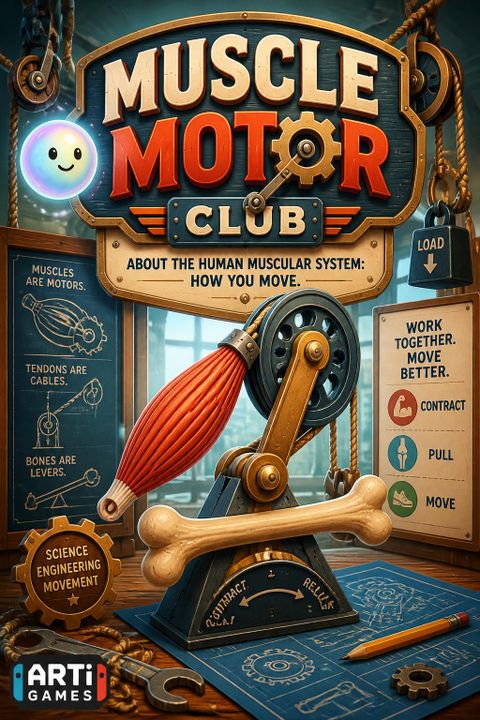
The body's three engines
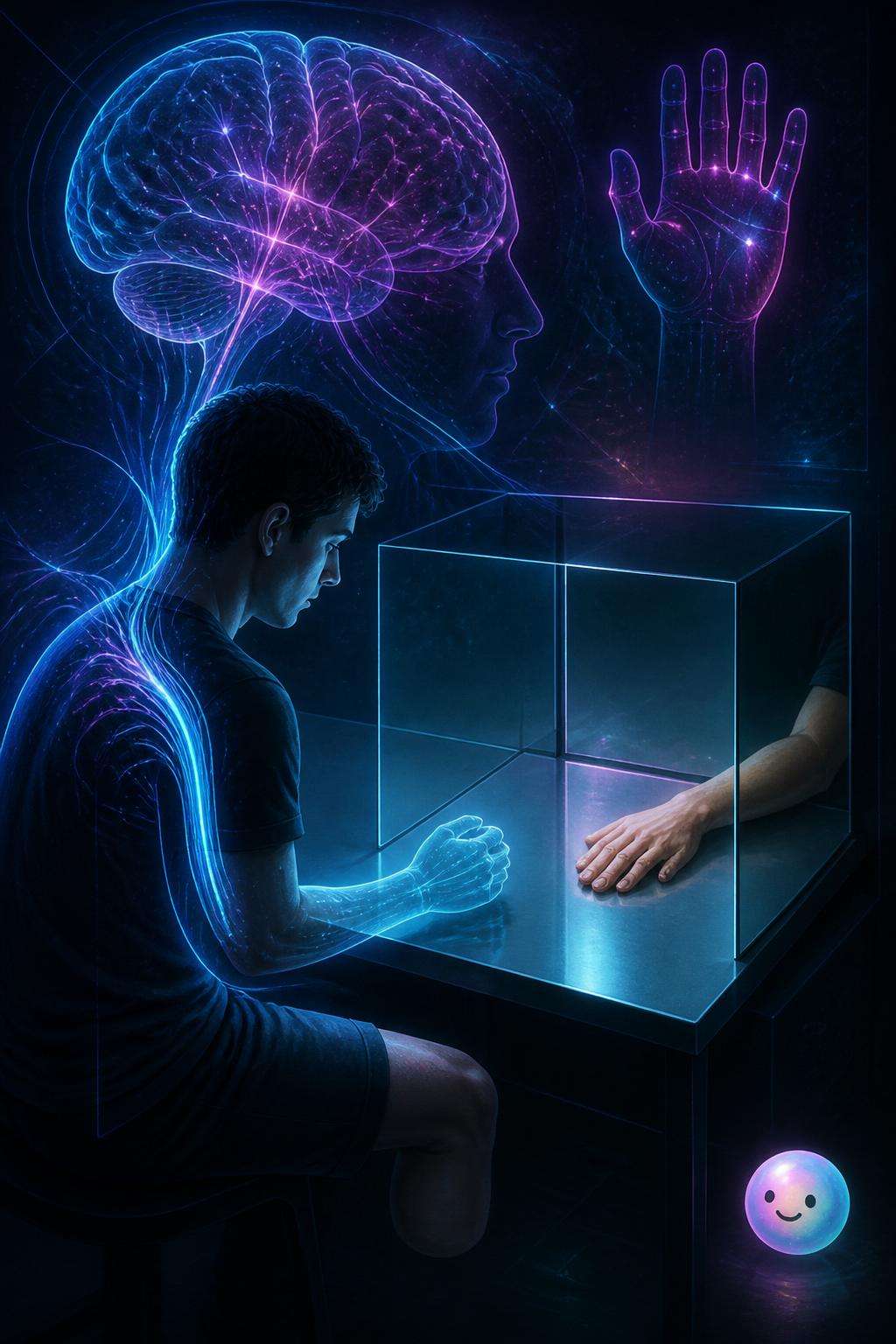
Steer motor signals to the right muscles to learn how your brain controls movement.
The body's three engines
Levers, lines, and brain signals
Fueling the fire
Weird, wild, and ancient muscles
artiteacher Skeletal, cardiac, and smooth muscles make up about 40% of your body weight and keep you moving.
artiteacher Smooth muscles inside your organs contract automatically to digest food and regulate blood pressure.
artiteacher Unlike other muscles, your heart muscle never tires, contracting around 2.5 billion times in an average lifetime.
artiteacher Calcium triggers microscopic myosin heads to grab and pull actin filaments, shortening muscle fibers to generate force.
artiteacher The body's three engines
Skeletal pulls bone, / Cardiac beats on, / Smooth works all alone!

artiteacher Smooth muscle operates quietly behind the scenes to control your organs and blood vessels automatically.
Heart endurance: The human heart pumps enough blood over an average lifetime to fill three massive supertanker ships.

artiteacher Cardiac muscle is a highly specialized, involuntary tissue found only in the walls of your heart.
An organic compound that provides energy to drive many processes in living cells. Skeletal muscles store only enough of this molecule for about three seconds of maximum physical effort.
What unique feature allows cardiac muscle cells to contract in perfect, synchronized harmony?
Which of the following describes the microscopic functional unit of a skeletal muscle fiber?
How many times does the human cardiac muscle contract on average in a single day?
Approximately what percentage of an average human's body weight is made up of skeletal muscle?
Which of the three muscle types in the human body is under conscious, voluntary control?
What ion must be released inside a muscle cell to trigger the sliding of contraction proteins?
Which two proteins slide past each other to cause a muscle contraction at the microscopic level?

artiteacher Steer motor signals to the right muscles to learn how your brain controls movement.