

BETA
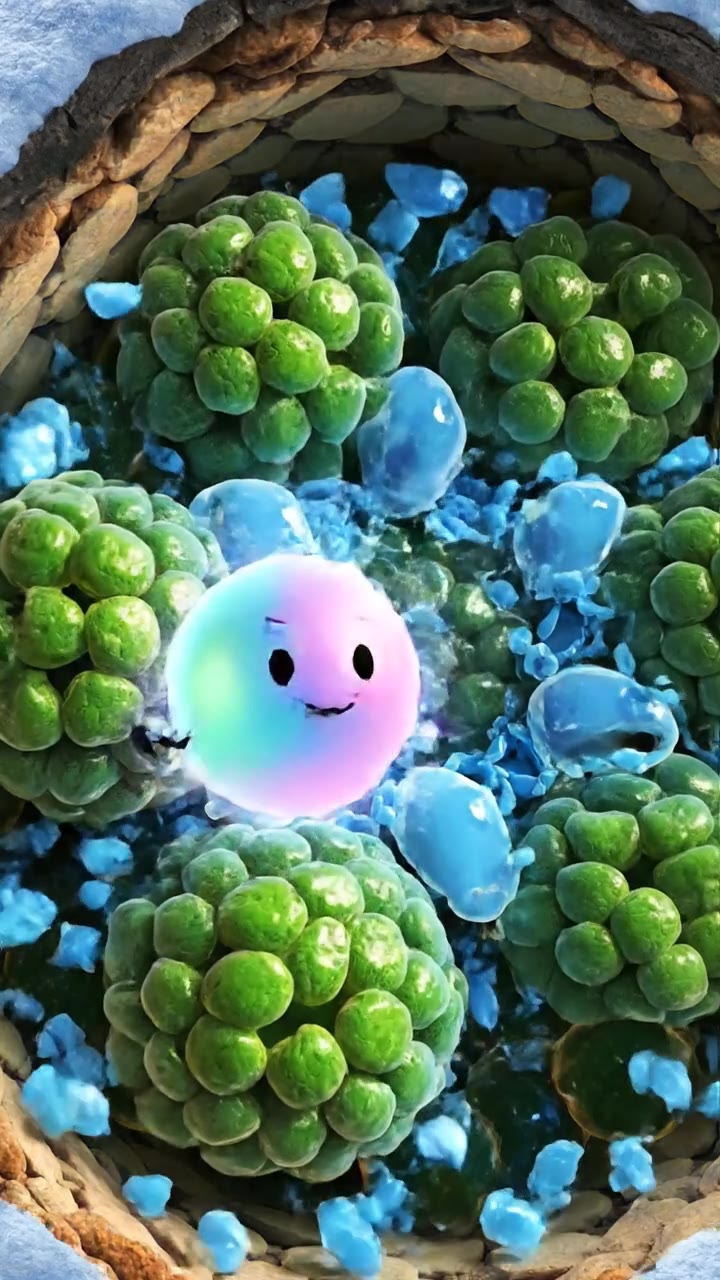
When water freezes, it expands by approximately 9 percent and forms sharp crystalline structures. If this ice forms inside the cell membrane, it destroys the delicate organelles. Trees must adapt to force ice to form only in the spaces between cells where it is harmless.
artiteacher Drag sugars into tree cells to discover how trees survive freezing winter temperatures.
artiteacher Natural antifreeze inside the trunk
Turning starch to sweet sugar so the cold can't freeze our cells

artiteacher Trees squeeze water out of their cells into intercellular spaces, allowing the cells to safely supercool.
Glassy cells: During extreme cold, tree cells turn their internal fluids into a solid, glassy state without forming sharp ice crystals.

artiteacher Trees convert stored starches into sugars, lowering the freezing point of the water inside their cells.
What is the scientific term for liquid staying liquid below its normal freezing point?
What do trees convert their stored starches into to lower their freezing point?