
The divine winds of Japan
In 1274 and 1281, Kublai Khan launched massive armadas to conquer Japan. Both times, sudden typhoons—dubbed 'kamikaze' or divine winds—destroyed the invading fleets, preserving Japanese independence.
Wrong turns and forgotten keys
Weather whims that broke empires
Scientific strokes of pure luck
Misheard words and paper trails

marcus An 1815 volcanic eruption caused a freezing summer that trapped Mary Shelley indoors to write Frankenstein.
marcus In 1812, an early, brutal winter reduced Napoleon's invading forces from 600,000 to just 100,000.
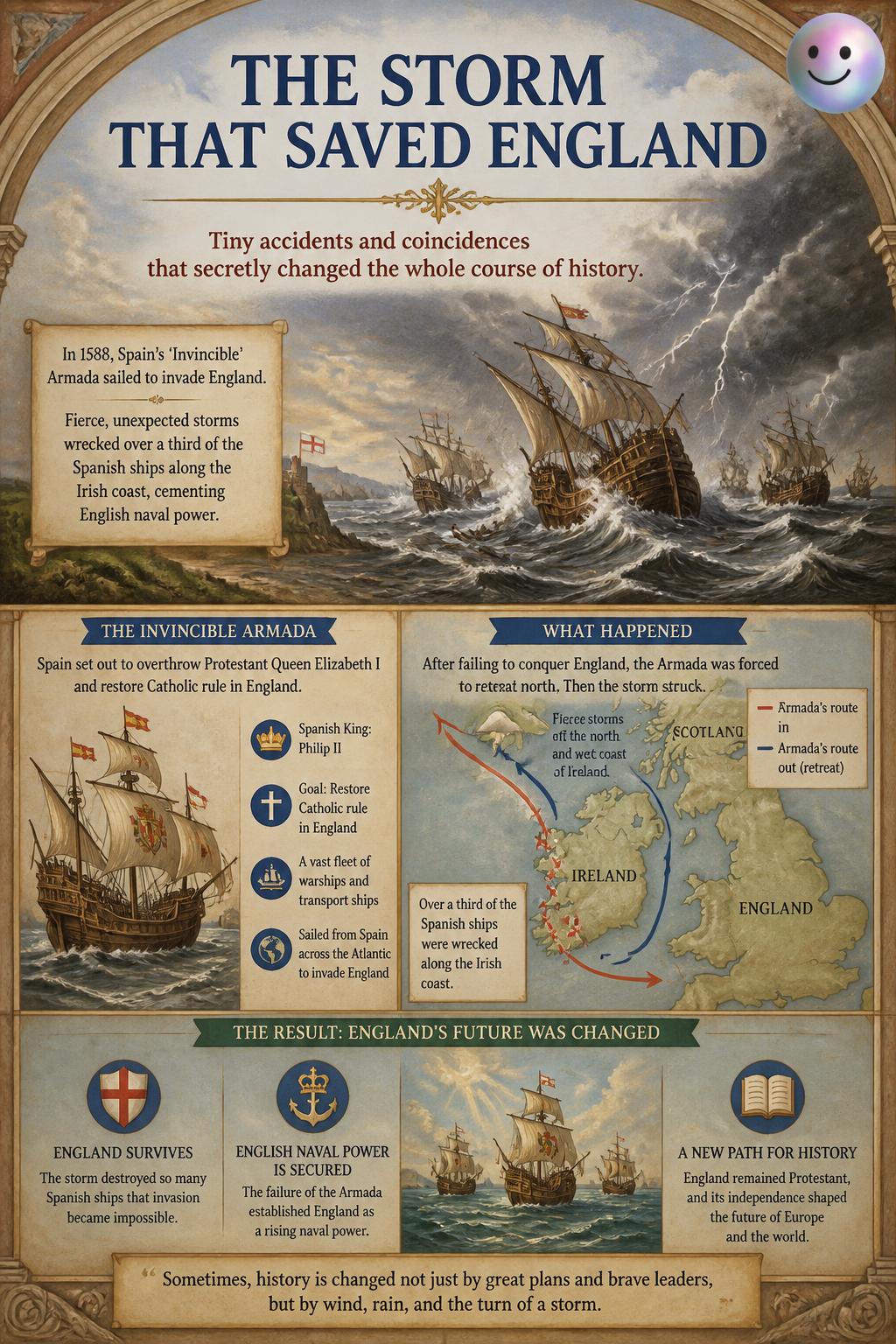
marcus In 1588, unexpected storms wrecked over a third of Spain's invading fleet, securing England's naval power.
marcus Sudden typhoons in 1274 and 1281 destroyed Kublai Khan's invading fleets and preserved Japanese independence.

marcus Drag the minor mishaps into place to discover how tiny accidents broke mighty empires.
marcus Kamikaze Typhoons
Winds blow wild, Winds blow wild, The ocean swept the Khan away.
Frankenstein's origin: Mary Shelley wrote Frankenstein during a freezing, rainy Swiss summer caused by a volcanic eruption thousands of miles away in Indonesia.

A Japanese term meaning divine wind, used to refer to a powerful typhoon or a suicidal pilot. In 1281, a massive storm destroyed Kublai Khan's invading fleet, permanently saving Japan from Mongol conquest.
In which country did Mary Shelley write her famous novel during the dark summer of 1816?