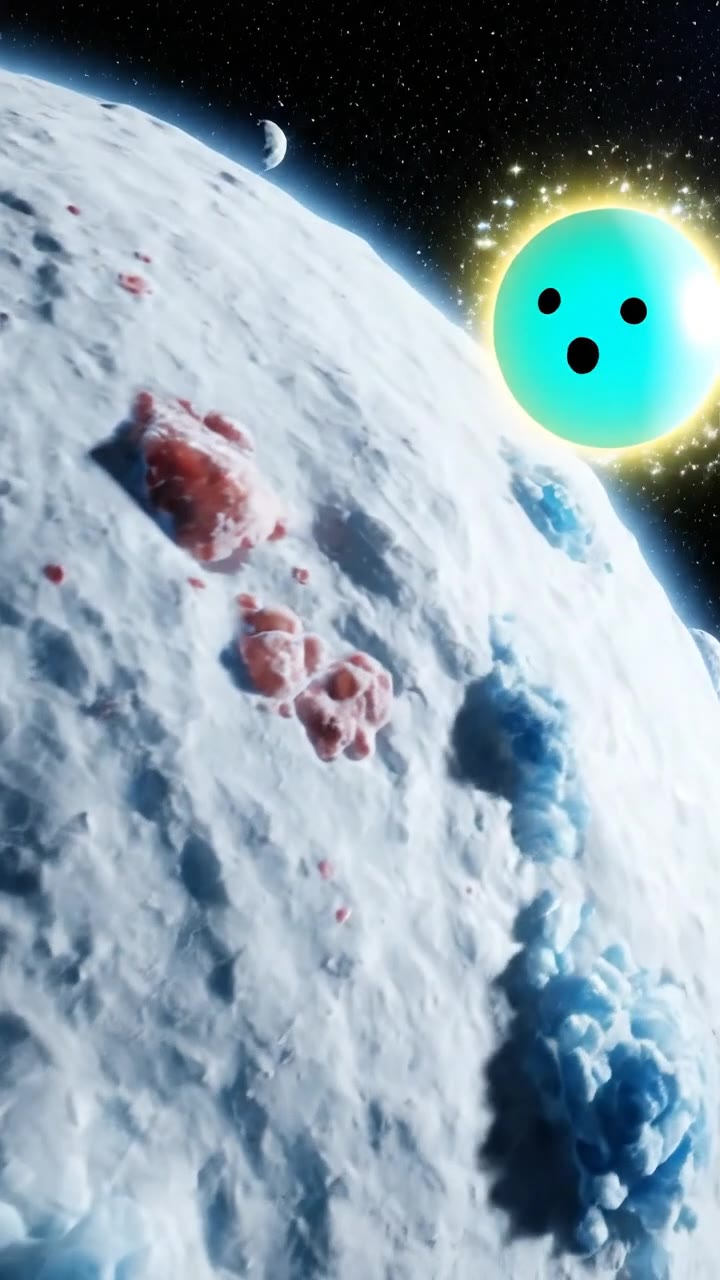
The frozen outer boundaries
Short-period comets originate in the Kuiper Belt, a donut-shaped ring of icy bodies beyond Neptune. Long-period comets come from the Oort Cloud, a giant spherical shell surrounding the entire solar system. These regions are so cold that water, methane, and ammonia remain frozen solid for billions of years.
Leftovers of cosmic creation
Cosmic visitors and Earthly impacts
Human missions to touch the stars
The future of space rocks

artiteacher Leftovers of cosmic creation
Floating in the dark, floating in the dark, Bennu's got the dust that gave Earth its start.
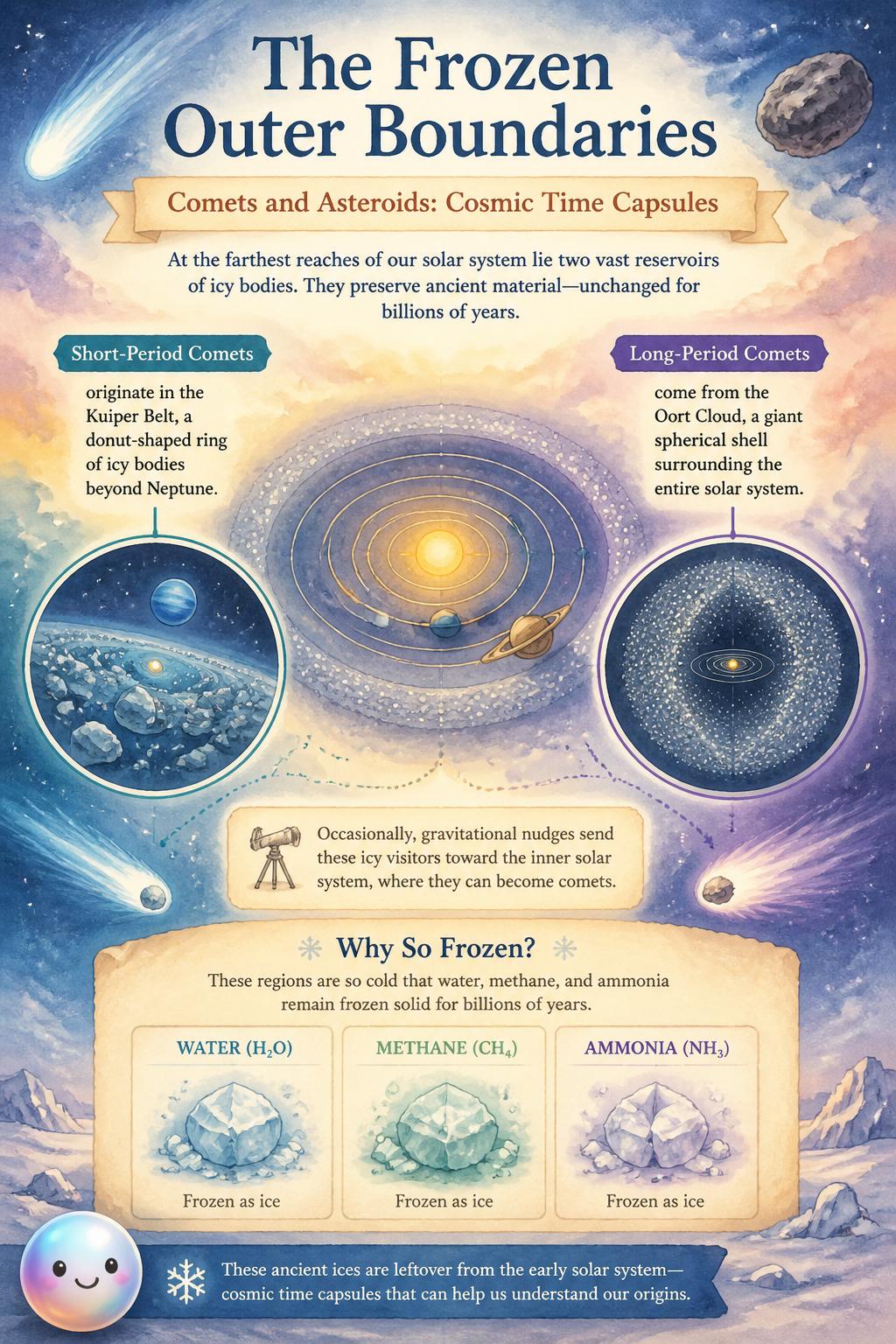
artiteacher Comets spend most of their lives in the cold, distant edges of our solar system.
Comet tails: A comet's tail doesn't trail behind its movement, but always points directly away from the Sun due to solar wind.
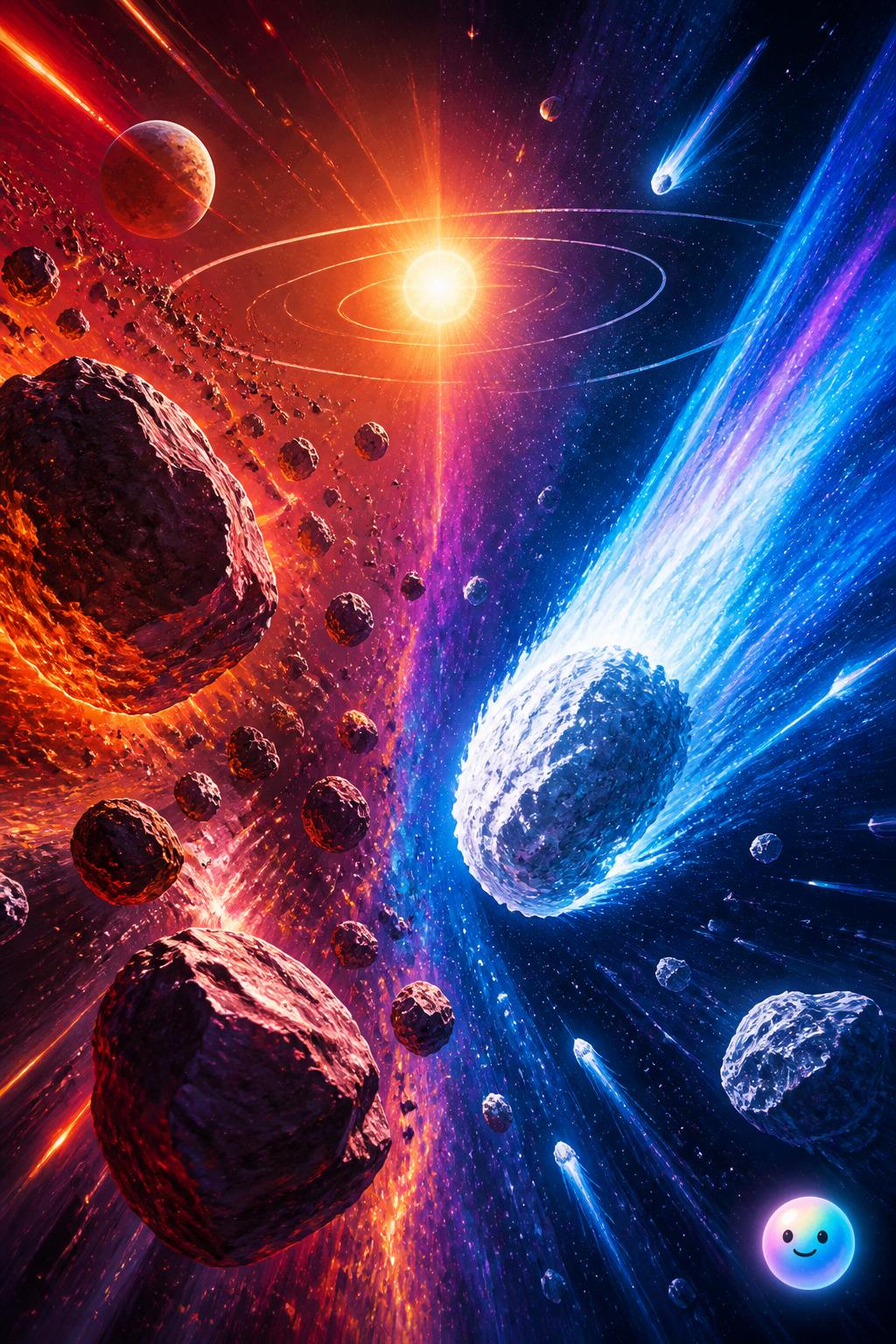
artiteacher Comets and asteroids differ fundamentally in what they are made of and where they formed.
A celestial object consisting of a nucleus of ice and dust that develops a glowing tail when near the sun. In 2014, the Rosetta spacecraft successfully orbited Comet 67P to analyze its ancient, icy material.
What is the largest object in the main asteroid belt, classified as a dwarf planet?
artiteacher Sweep up drifting space dust to learn how comets act as cosmic time capsules.