

BETA
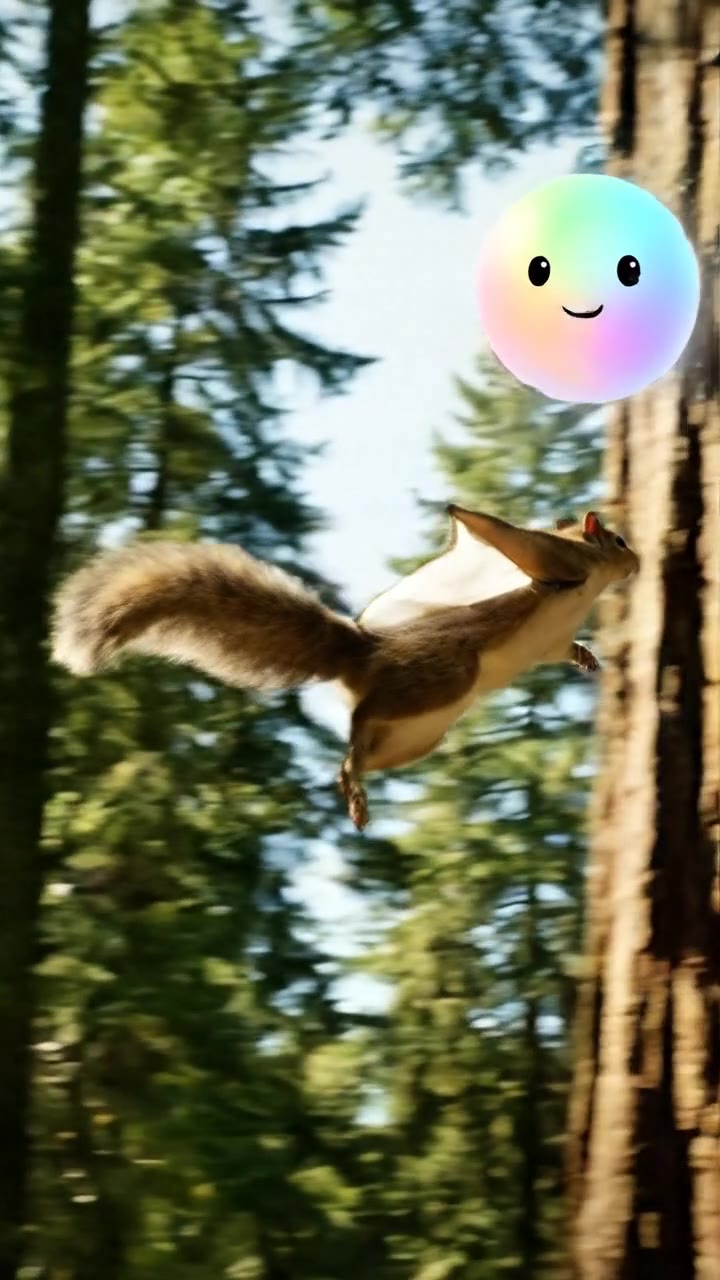
The northern flying squirrel uses a furry membrane called a patagium to stretch its surface area. This dramatic increase in drag limits its terminal velocity to a safe landing speed, allowing it to glide up to 90 meters between trees.
artiteacher Drag and drop objects to discover how air resistance affects falling speed.
artiteacher The physics of terminal velocity during Felix Baumgartner's stratospheric skydive.
artiteacher Terminal Velocity
Drag meets weight / speed stays straight / terminal velocity!
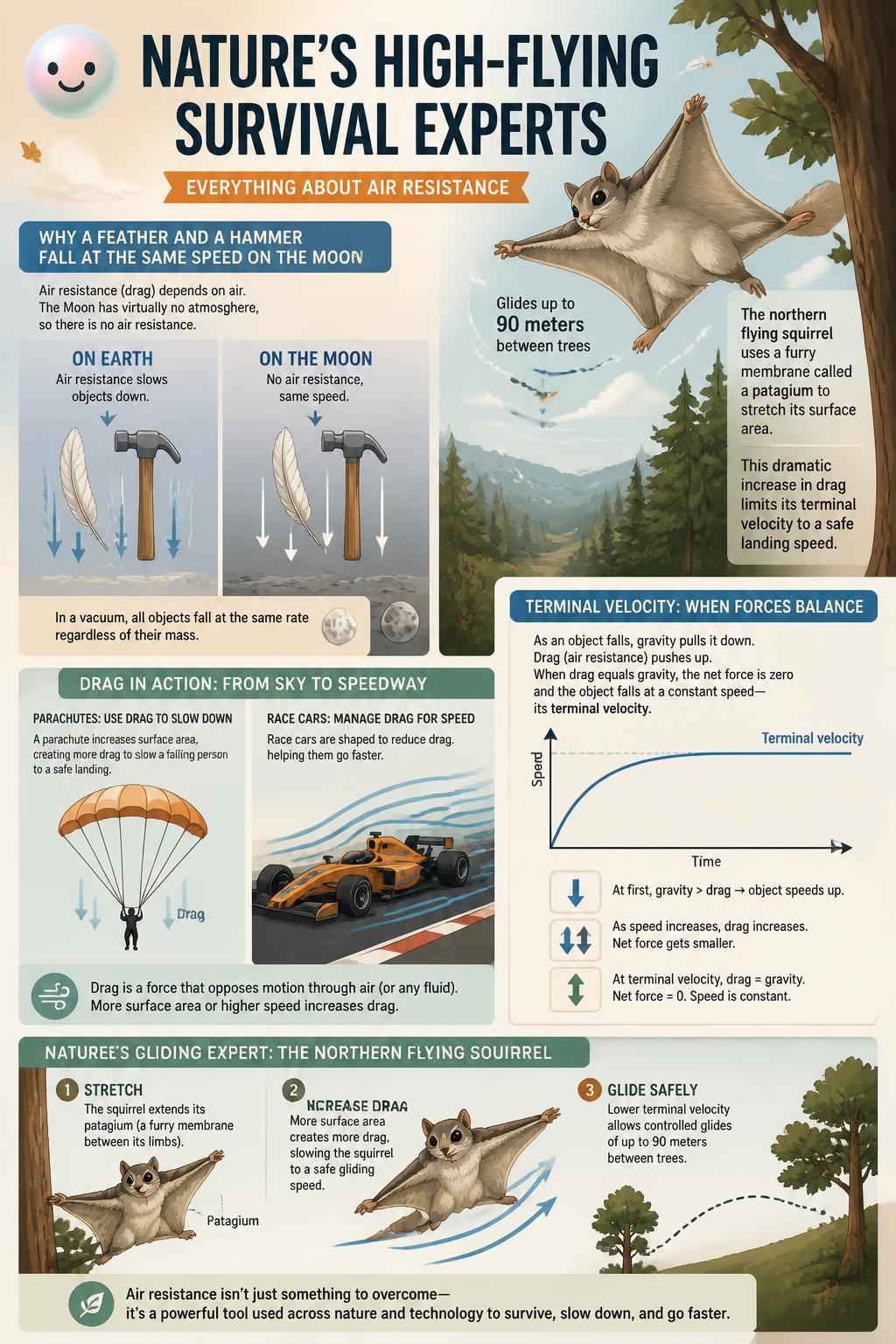
artiteacher Flying squirrels and geckos use skin membranes to survive massive falls.
Ant survival: Ants can survive falls from any height because their tiny size limits their terminal velocity to a gentle 6.4 kilometers per hour.

artiteacher A belly-to-earth skydiver reaches a terminal velocity of about 120 mph.
Why did Felix Baumgartner fall faster than the speed of sound during his 2012 jump?
If two objects have the same size but different weights, which one has a higher terminal velocity?
What is the typical terminal velocity of a human skydiver falling belly-to-earth?