The great Byzantine industrial espionage
In 552 CE, Byzantine Emperor Justinian I recruited two Nestorian monks to smuggle silkworm eggs out of China. They hid the fragile eggs and mulberry seeds inside hollow bamboo staffs. This successfully broke the Chinese silk monopoly and established a thriving Byzantine silk industry in Constantinople.
The secret life of silk
Heavenly horses and war beasts
Flavors that changed the world
Glass, clay, and blue paint
Ideas, medicine, and invisible cargo
misslily The secret life of silk
We don't need copper coins, we're buying Ferghana horses with bolts of plain silk!
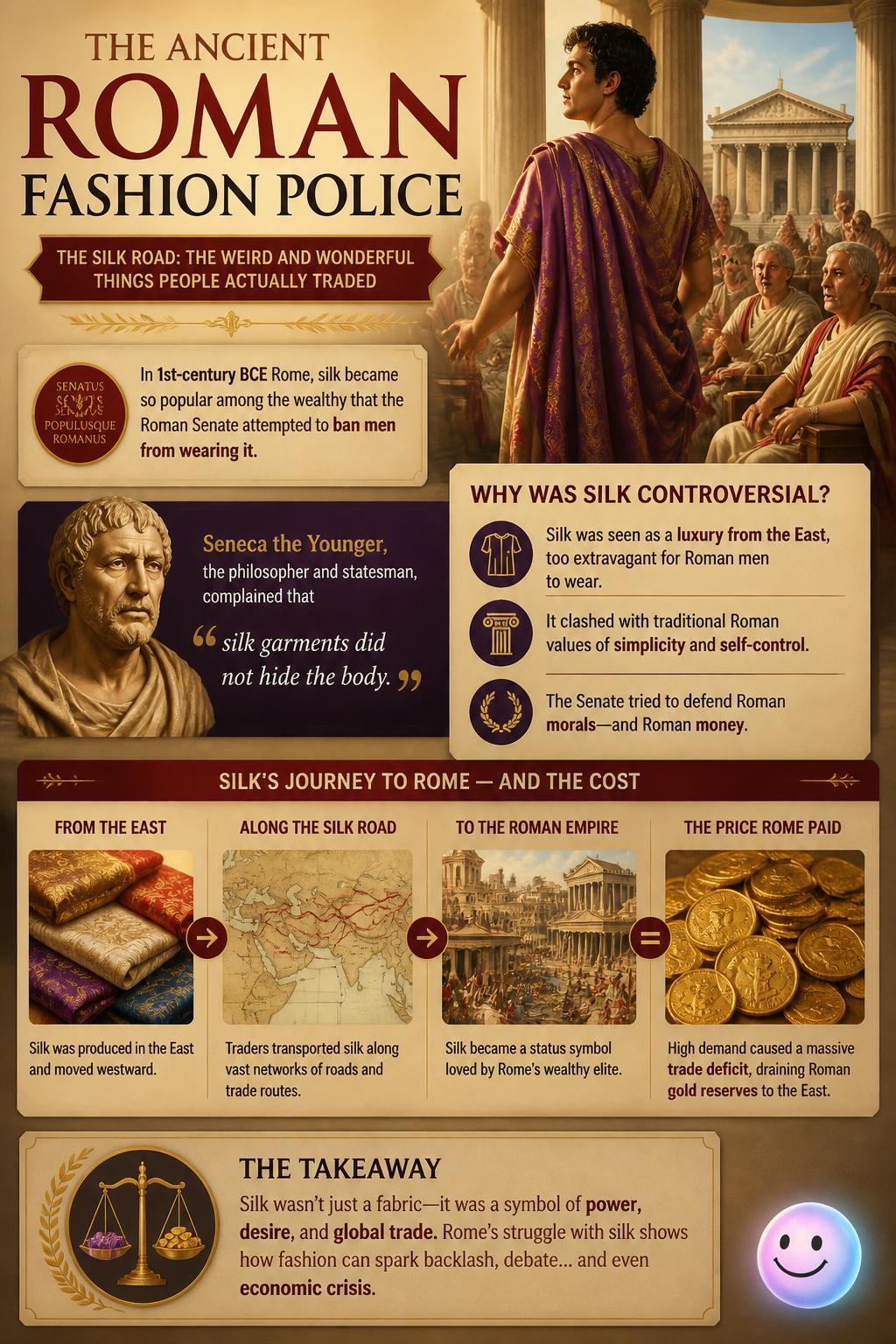
misslily Roman senators tried to ban silk because they thought it was too revealing and economically draining.
Silk armor strength: Genghis Khan's Mongol warriors wore silk undershirts because arrowheads couldn't easily pierce the strong fibers, making arrow removal much safer.
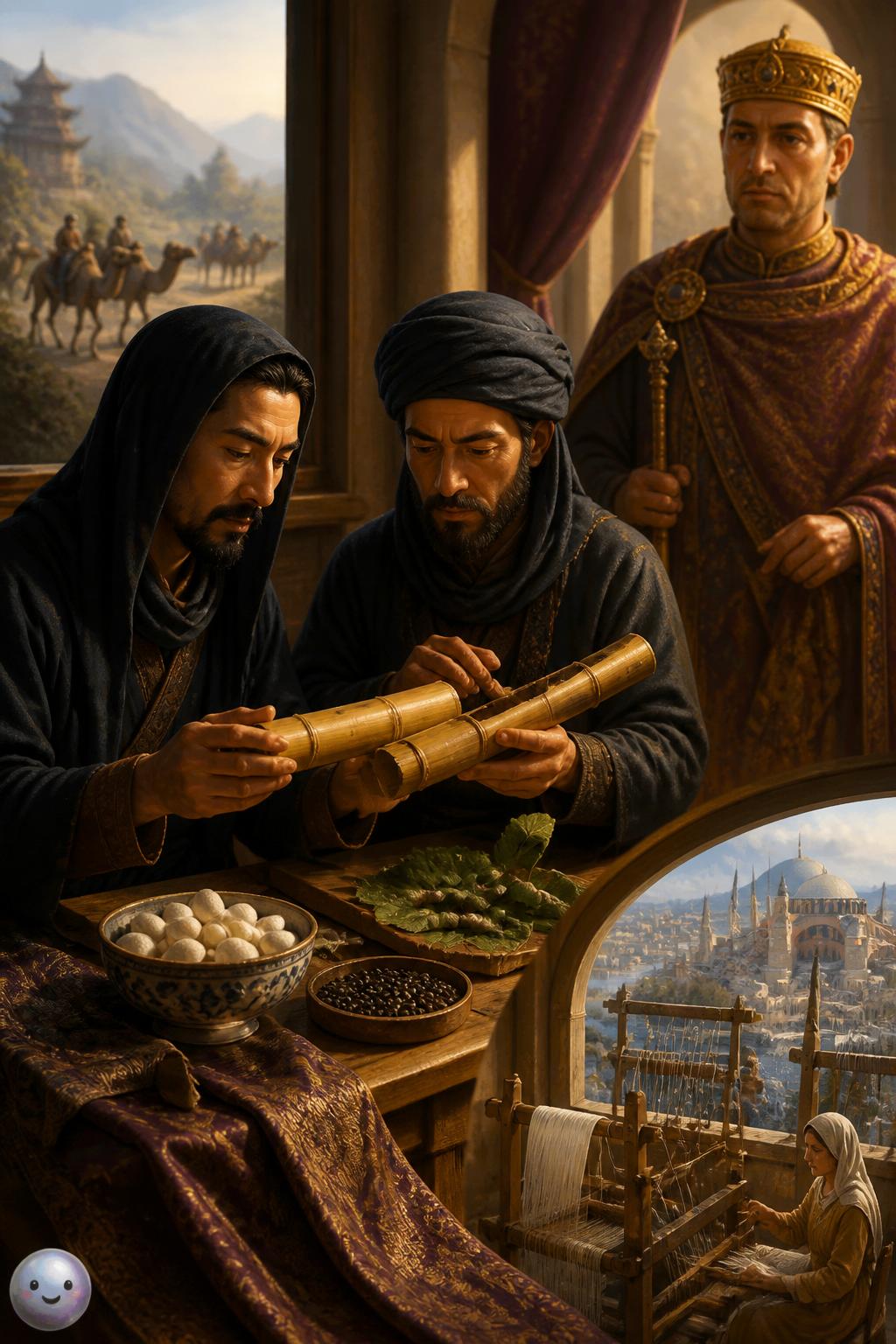
misslily Two Nestorian monks smuggled silkworm eggs out of China inside hollow bamboo walking sticks.
How long is a single continuous thread of silk harvested from a healthy silkworm cocoon?
What did Han Dynasty soldiers in China receive as official payment for their military service?
What unique property made silk undershirts popular among Mongol warriors in battle?
Which Byzantine Emperor successfully broke the Chinese monopoly on silk production?
Which Chinese dynasty first standardized bolts of silk to be used as official currency?