The architecture of deep time
Surviving the great dyings
Ancient climates and changing worlds
The library of 148 million secrets

streetspirit Inside the Smithsonian's whale skeleton archive in Suitland, Maryland
streetspirit Museum entomologists preserve massive beetle collections to study environmental changes.
streetspirit National Museum of Natural History
Ninety-nine percent is kept inside! (Kept inside!) Saving the secrets of our Earth with pride! (With pride!)
streetspirit The Smithsonian Biorepository preserves animal DNA for the deep future.
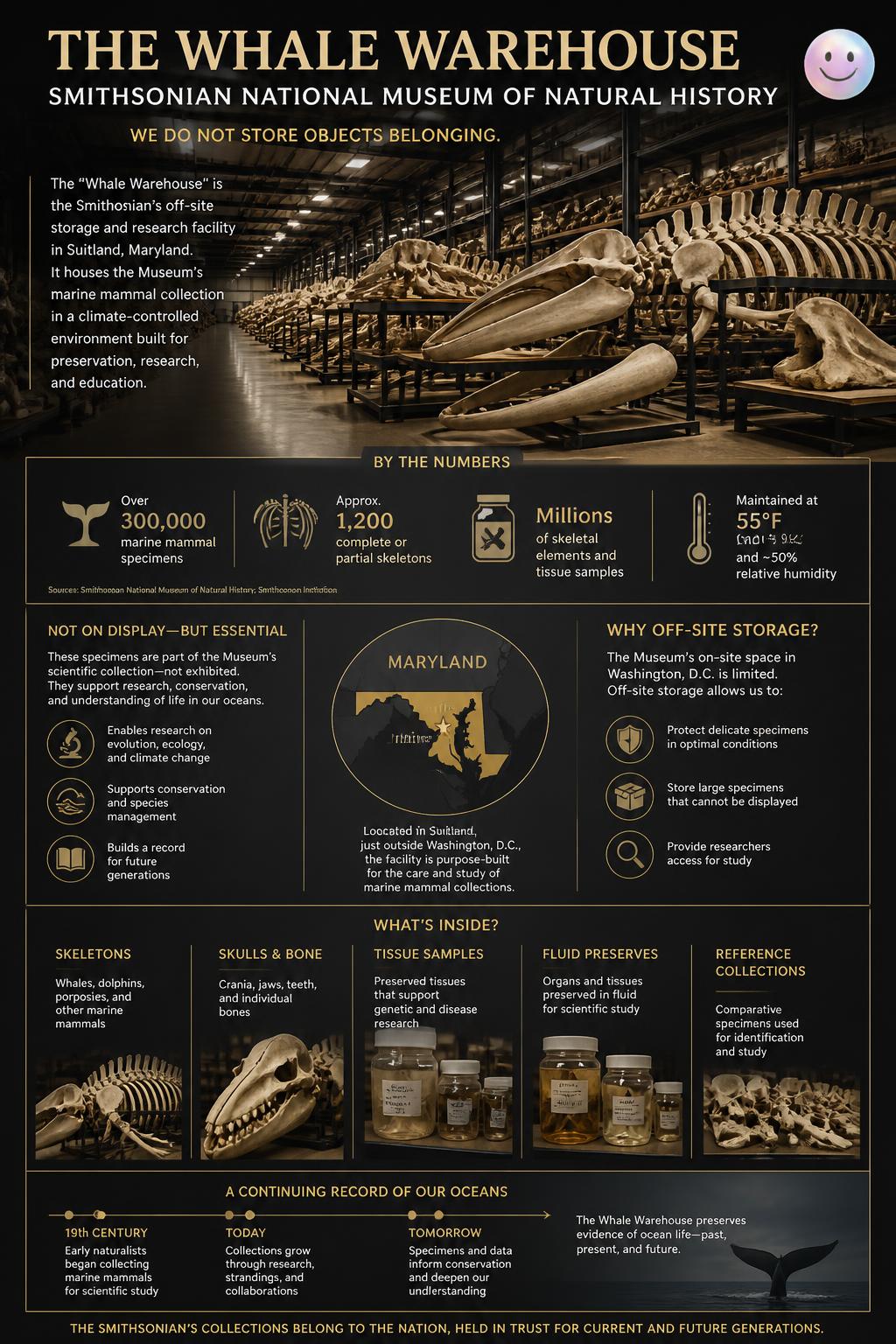
streetspirit A massive off-site facility houses the world's largest collection of whale bones.
Heavy bones: A single blue whale jawbone stored in the Maryland warehouse can weigh up to several thousand pounds.
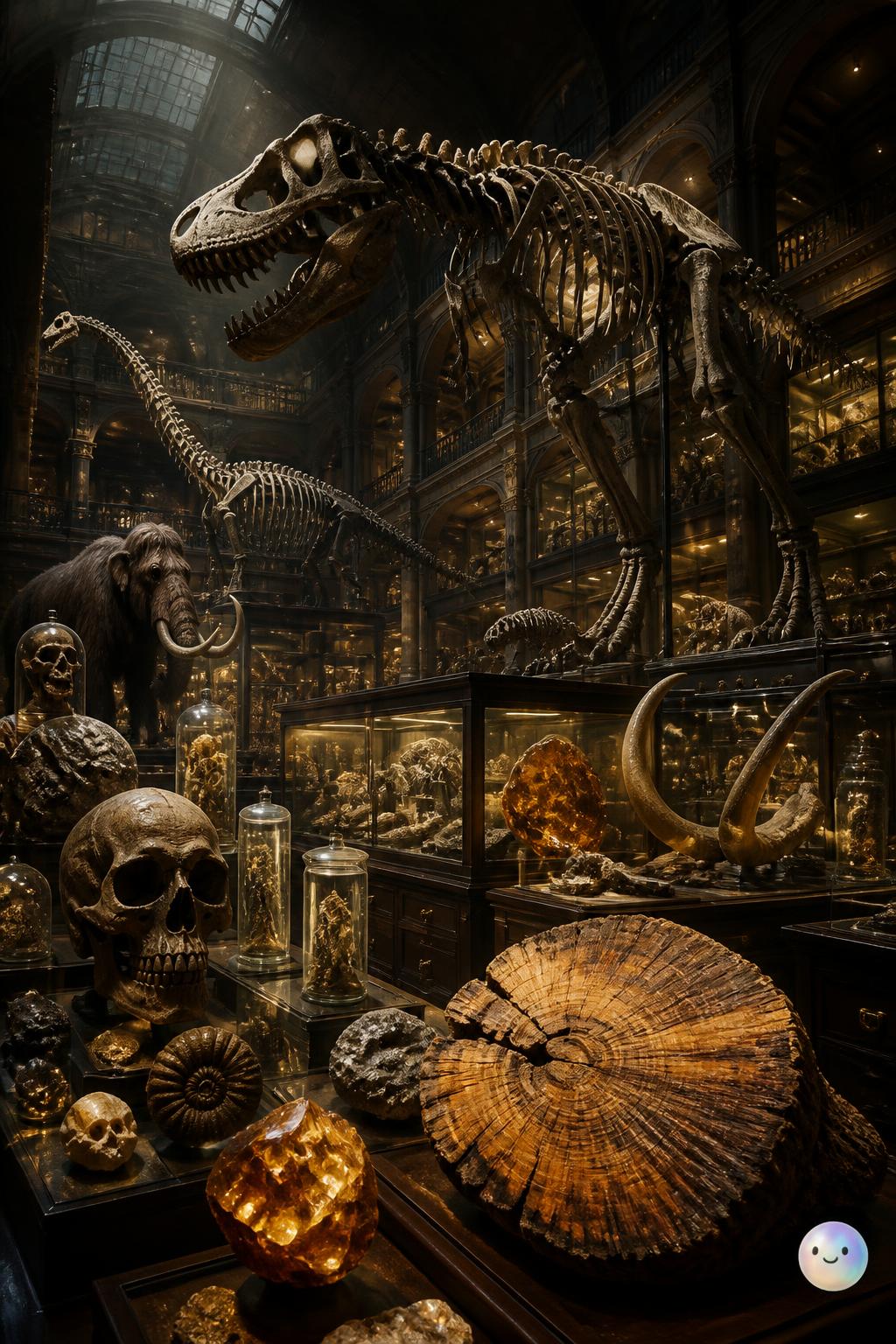
streetspirit Massive insect collections help scientists track environmental changes over centuries.
An individual animal, plant, or mineral used as an example of its species for scientific study. The Smithsonian Institution stores 148 million specimens, keeping over 99 percent off public display.
Approximately how many insect specimens are housed in the Smithsonian's entomology department?
streetspirit Sort ancient specimens to discover how Earth survived long before humans existed.
streetspirit Hidden cabinets store the Smithsonian National Museum of Natural History collection.
What liquid is used to keep the tissue samples in the Smithsonian's biorepository frozen?
Why does the Smithsonian store millions of duplicate-looking specimens of the same species?
Why do Smithsonian entomologists compare historical beetle specimens with modern ones?
Where is the Smithsonian's off-site Museum Support Center, which houses the whale skeleton collection, located?
What is the total estimated number of specimens held in the Smithsonian National Museum of Natural History?
At what temperature, in degrees Fahrenheit, are tissue samples stored in the Smithsonian's Biorepository?