The mapmakers' monsters
The mystery of scurvy
Indigenous knowledge and survival
The technology of lost sailors
YOUR GOAL
Master of Scurvy and sea monsters
misslily The mapmakers' monsters
Throwing old barrels, blowing brass horns, scaring the big whales away!
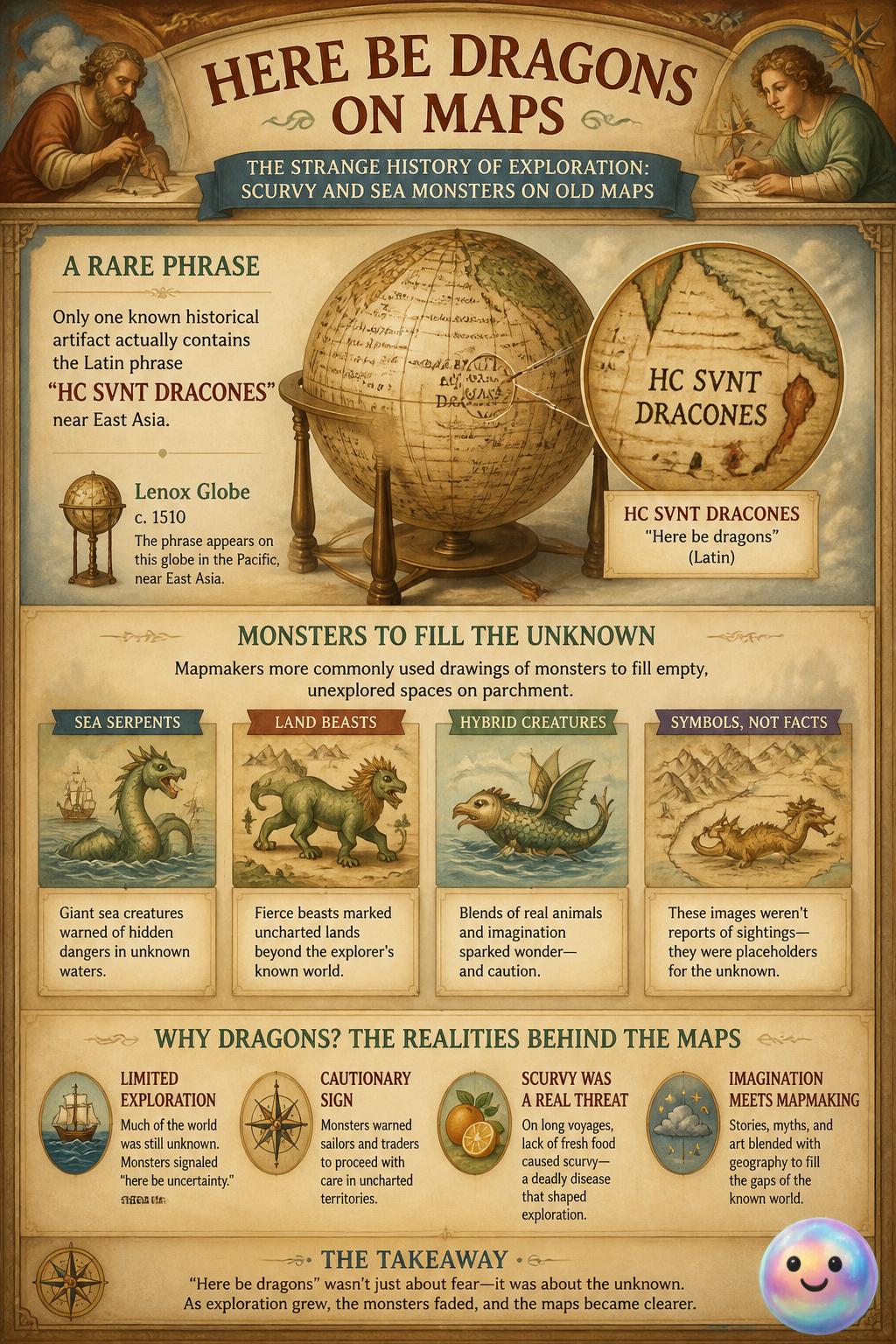
misslily The famous phrase 'here be dragons' rarely appeared on maps, but its legacy shaped how people viewed the unknown.
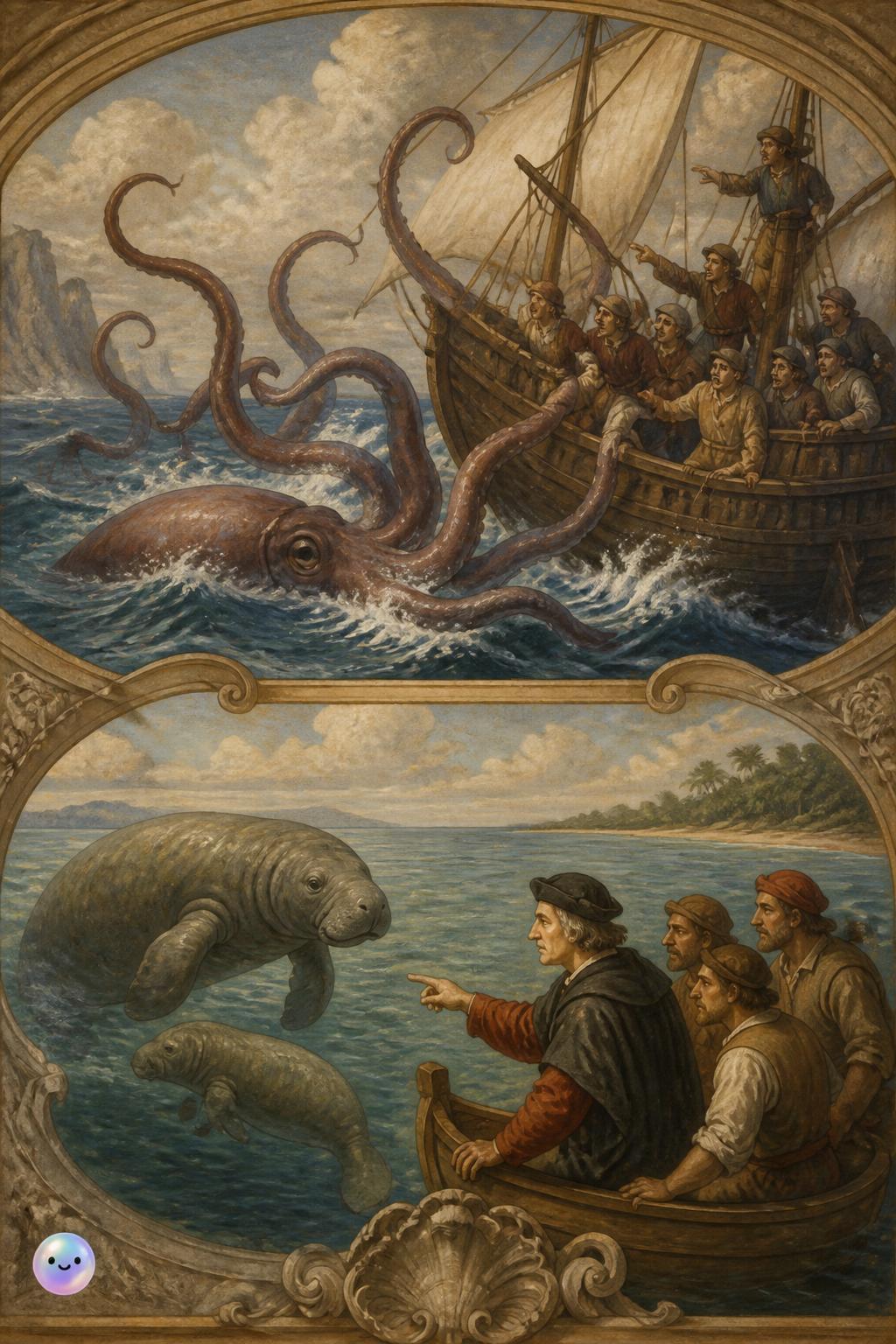
misslily Many legendary sea monsters were actually misidentified marine animals seen by terrified sailors.
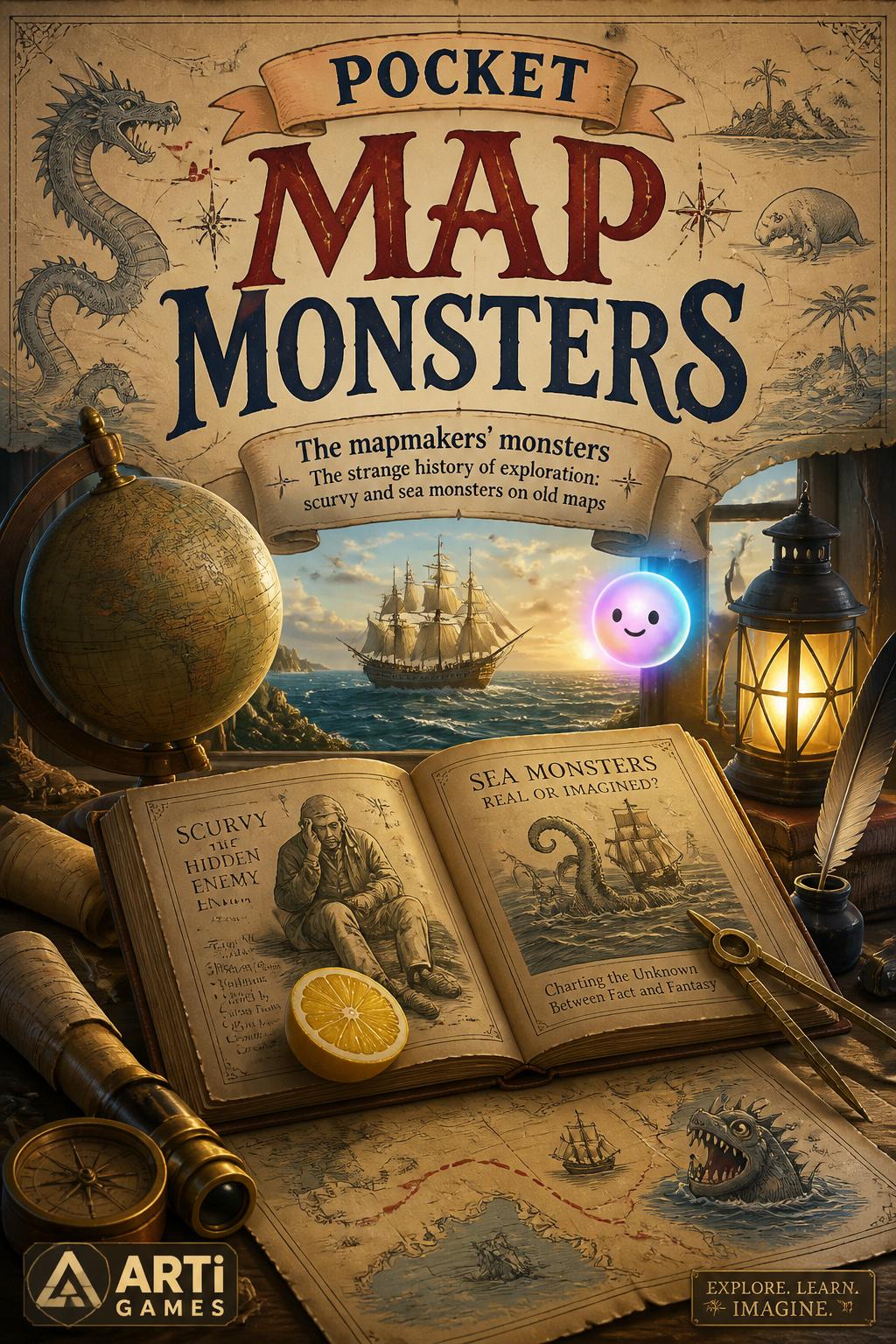
misslily Place mythical sea monsters on ancient charts to learn how early explorers mapped their fears.
Kraken's real identity: The legendary Kraken was actually based on real sightings of giant squids, which can grow up to 43 feet long.
The science or art of making maps. In 1539, Olaus Magnus depicted terrifying ocean beasts on his landmark map of Scandinavia.
What does the Latin term 'terra incognita', often found on old maps, translate to in English?
Which 1539 map by Olaus Magnus is famous for its highly detailed illustrations of sea monsters?
In which year did Christopher Columbus record his famous sighting of 'mermaids' that were actually manatees?
What real-life marine animal is widely believed to have inspired the legend of the multi-tentacled Kraken?
What ocean phenomenon did old map illustrations of giant whirlpools and sea monsters often warn sailors about?
Why did mapmakers in the Middle Ages primarily draw sea monsters in the empty spaces of maps?
On which rare 1510 artifact is the Latin phrase 'HC SVNT DRACONES' (Here be dragons) actually written?