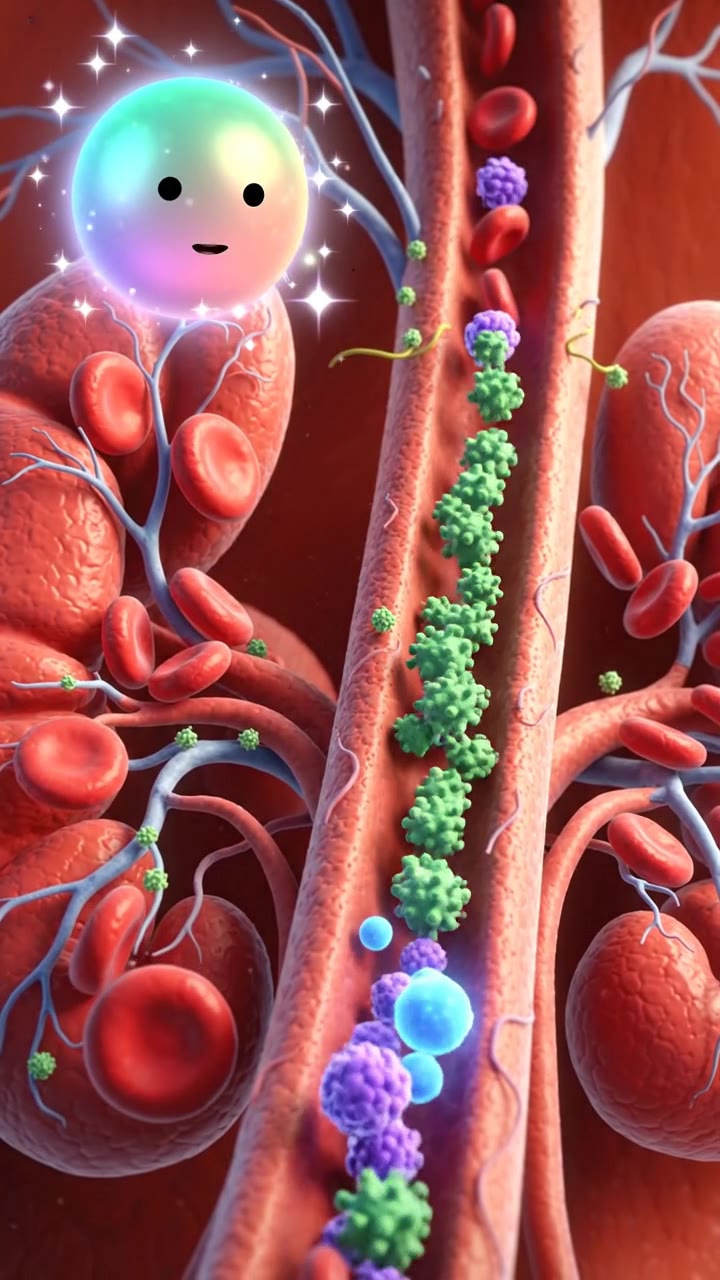
The million-filter network
Discovered by Italian biologist Marcello Malpighi in 1666, nephrons span the kidney's outer cortex and inner medulla. These tiny structures work simultaneously to separate vital nutrients from cellular waste, keeping your blood clean and chemically balanced.
The microscopic marvels of filtration
The plumbing and storage system
History and global medicine
Balance, hydration, and survival

artiteacher The microscopic marvels of filtration
Filter the flow, filter the flow / Forty times a day!

artiteacher The glomerulus is a tiny ball of capillaries that initiates the filtration process.
Kidney blood flow: Despite their small size, your kidneys process more blood per minute than your brain or even your heart.

artiteacher Each kidney contains about one million microscopic filtering units called nephrons.
The basic structural and functional unit of the kidney, responsible for filtering blood and forming urine. In 1842, English anatomist William Bowman first illustrated the detailed structure of these microscopic units.
What percentage of the water and nutrients filtered by the kidneys is reabsorbed back into the blood?
Which structure receives the filtered fluid immediately after it passes through the glomerulus?
Approximately how many liters of fluid do healthy human kidneys process every day?
What is the name of the tiny ball of capillaries where blood filtration begins in the nephron?

artiteacher Sort waste from vital nutrients to discover how microscopic nephrons filter your blood.