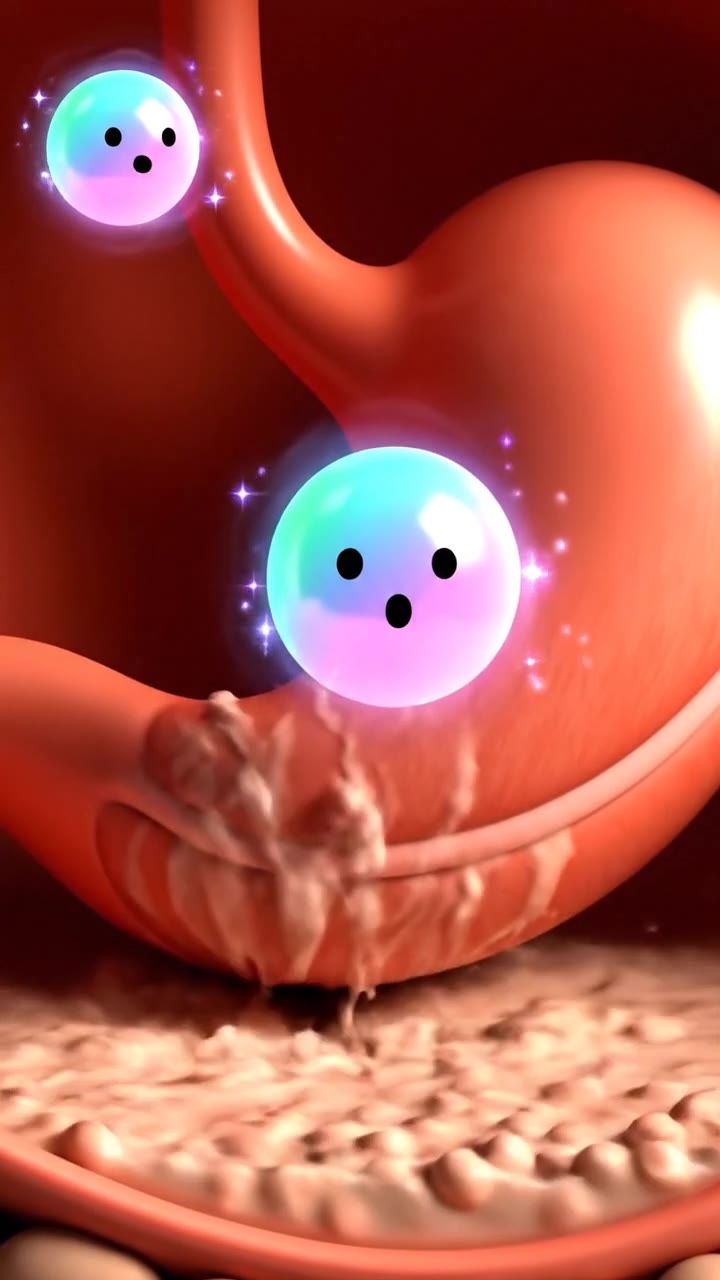
The muscular three-way squeeze
Unlike the rest of the digestive tract which has two muscle layers, the stomach has a third, diagonal layer called the oblique muscle. This unique anatomy allows it to churn, squeeze, and liquefy food into a mixture called chyme.
The physical blender
The chemical cauldron
The ultimate self-defense
The brain-gut hotline

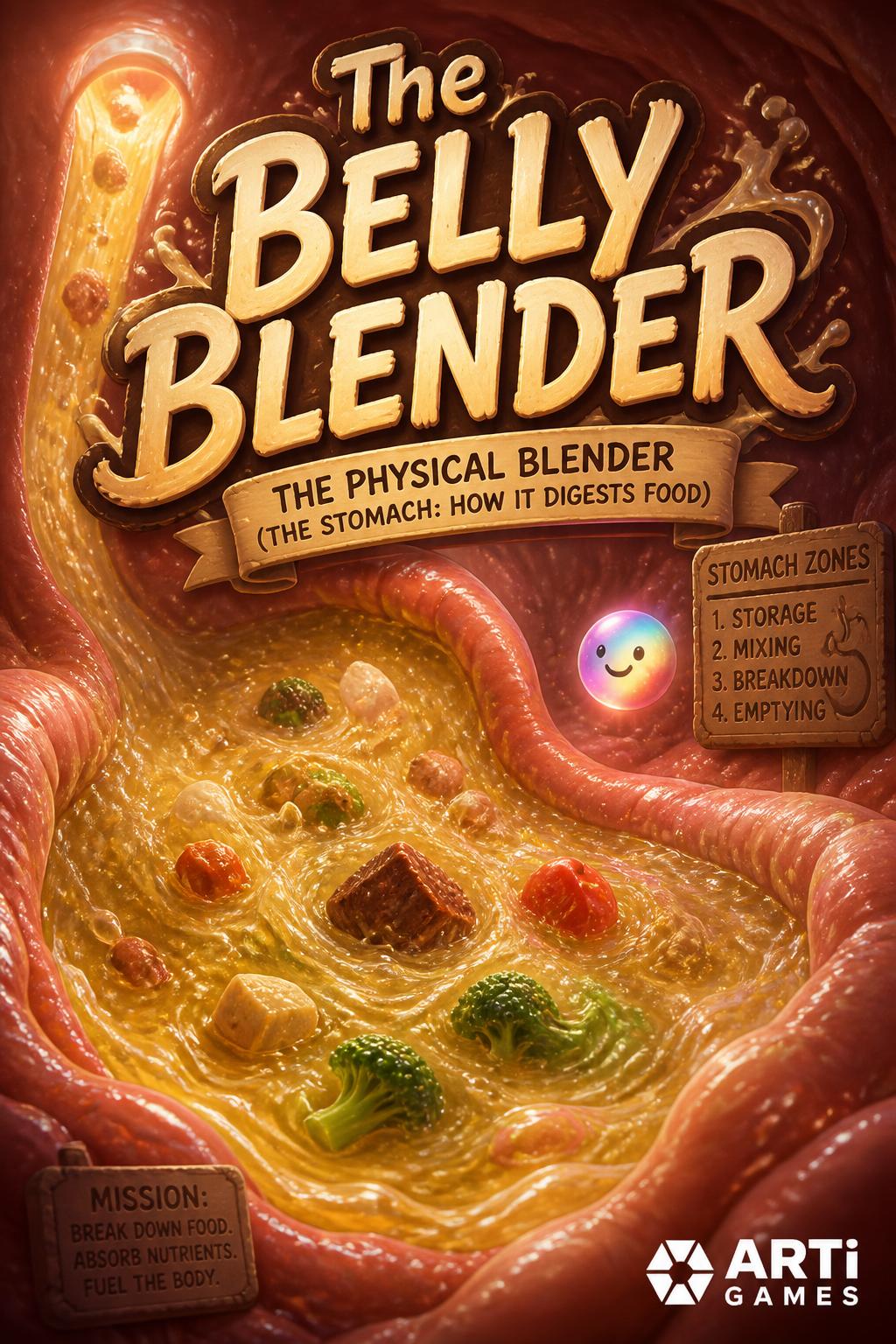
artiteacher Swipe to blend meals with stomach acid to learn how the stomach digests food.
artiteacher The physical blender
Churn it up, churn it up! We are turning it to chyme!
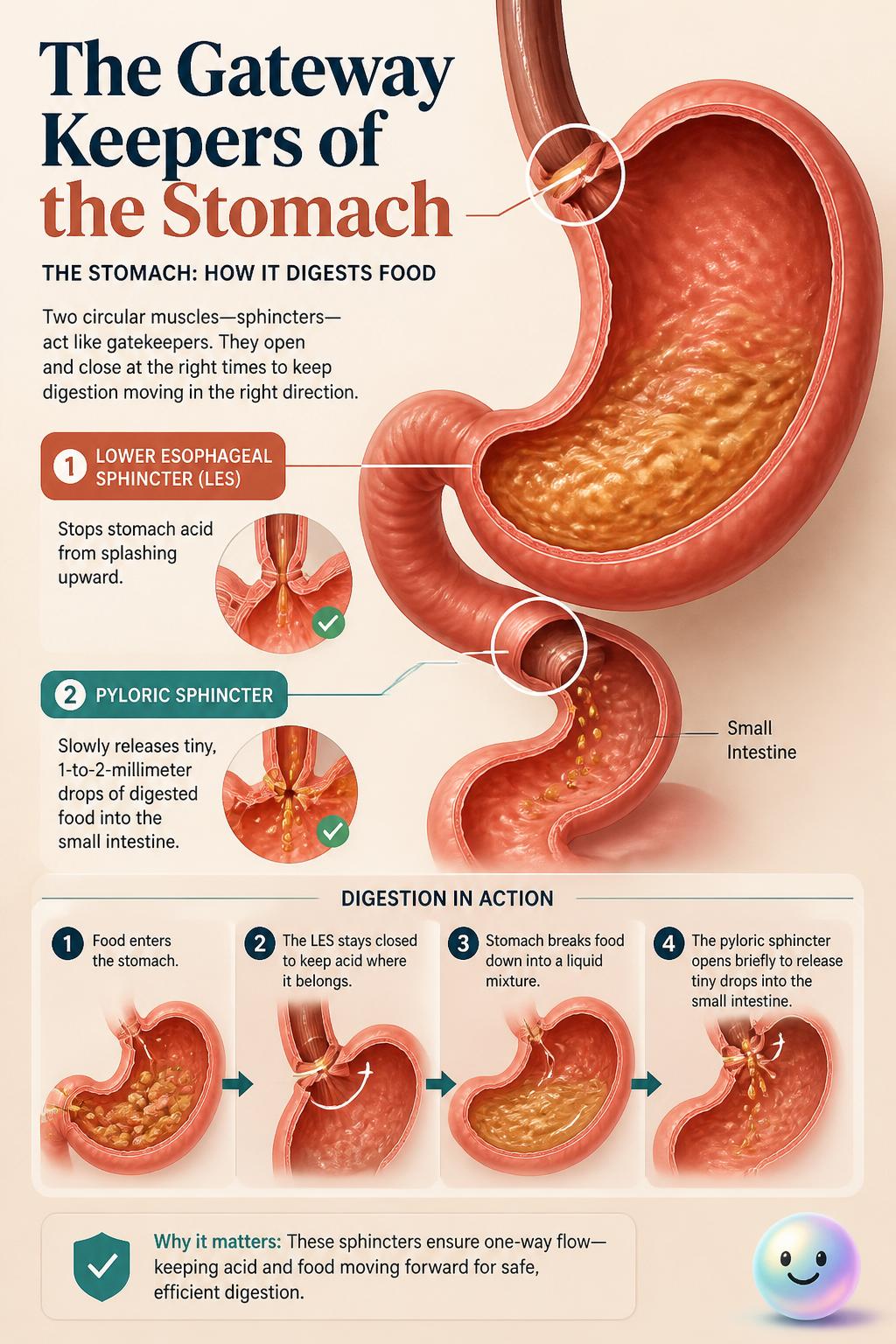
artiteacher Two powerful muscular rings act as one-way valves to keep food moving in the right direction.
Stomach expansion: The stomach's accordion-like folds, called rugae, allow it to expand to more than 50 times its empty size to accommodate a large meal.
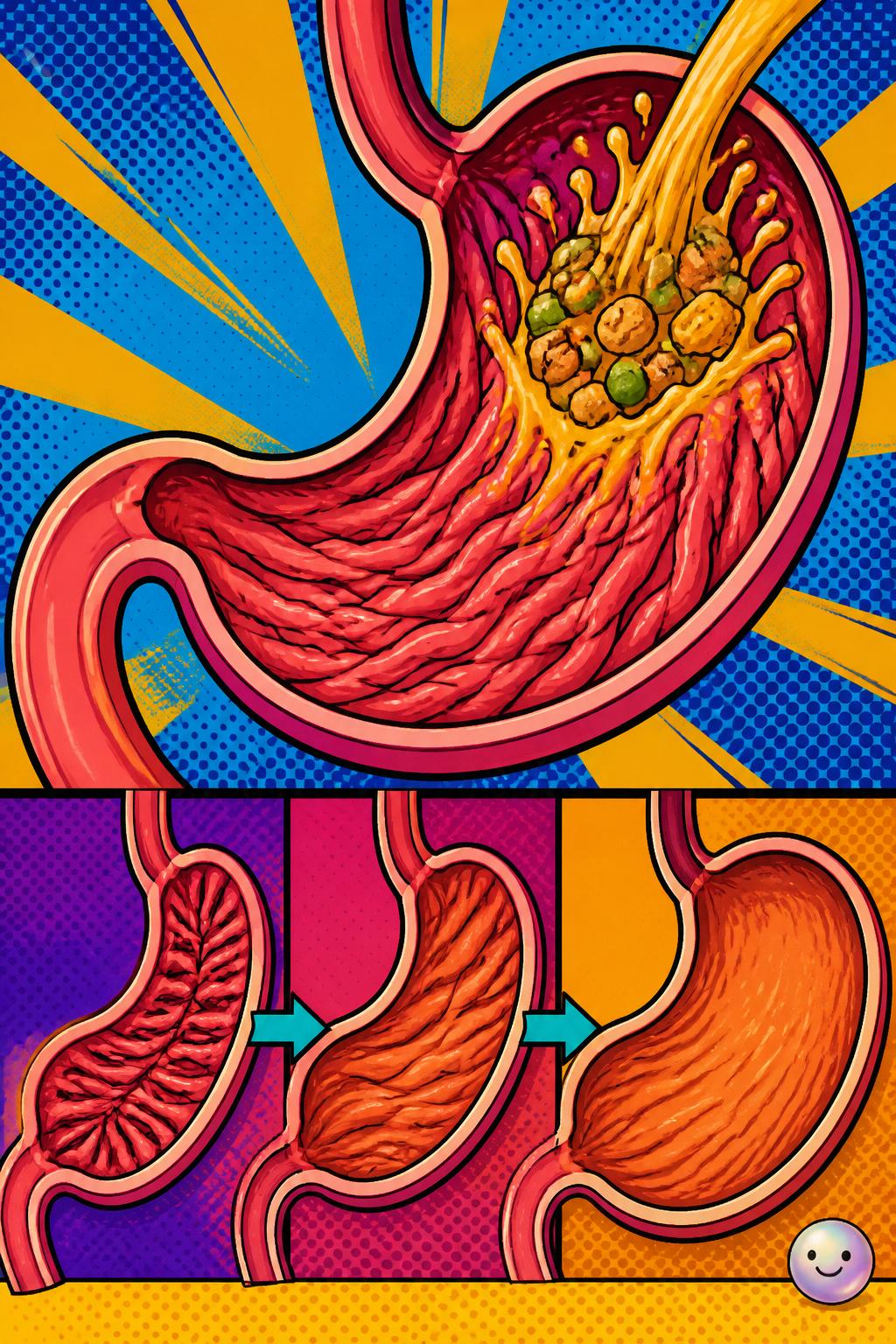
artiteacher An empty stomach is about the size of a fist but can stretch to hold up to four liters of food.
The thick, semifluid mass of partly digested food that is passed from the stomach to the duodenum. The stomach's three muscular layers mix swallowed food with gastric juices to produce this acidic mixture.
What is the thick, semi-fluid mixture of partly digested food and stomach juices called?
How wide is the opening of the pyloric sphincter when letting food pass into the intestine?