The Nobel Prize call that shocked the discoverers
Though they initially didn't set out to study cosmology, their discovery of the cosmic microwave background provided the definitive proof that our universe began with a hot, dense expansion. They shared the Nobel Prize in 1978.
The accidental discovery
The universe's first light
Mapping the baby universe
Deciphering the cosmic recipe
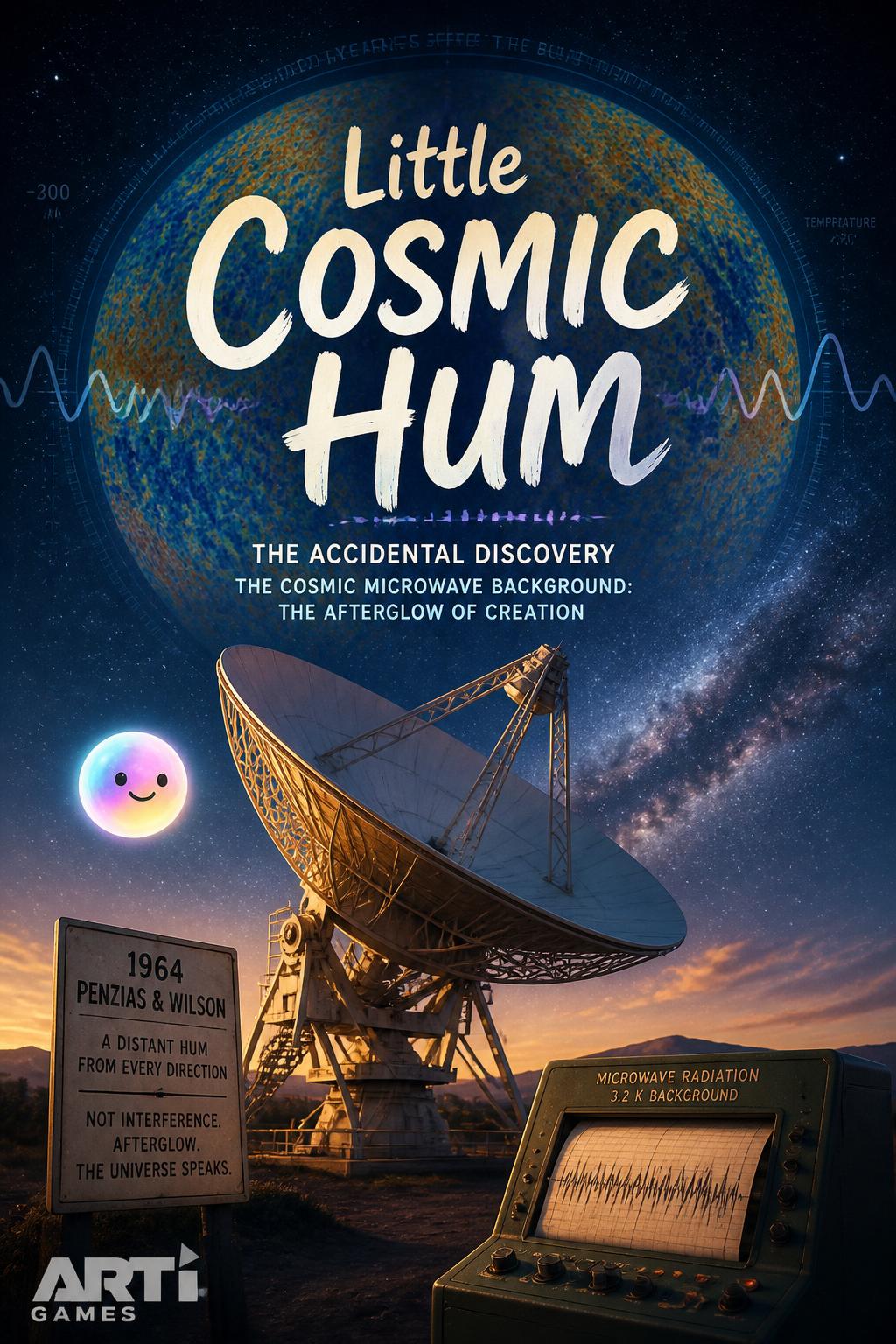
artiteacher In 1964, two scientists heard a mysterious radio hiss that was the afterglow of creation.
artiteacher The accidental discovery
Cleaned up the static but it wouldn't go— (Oh-oh, that's the cosmic glow!)
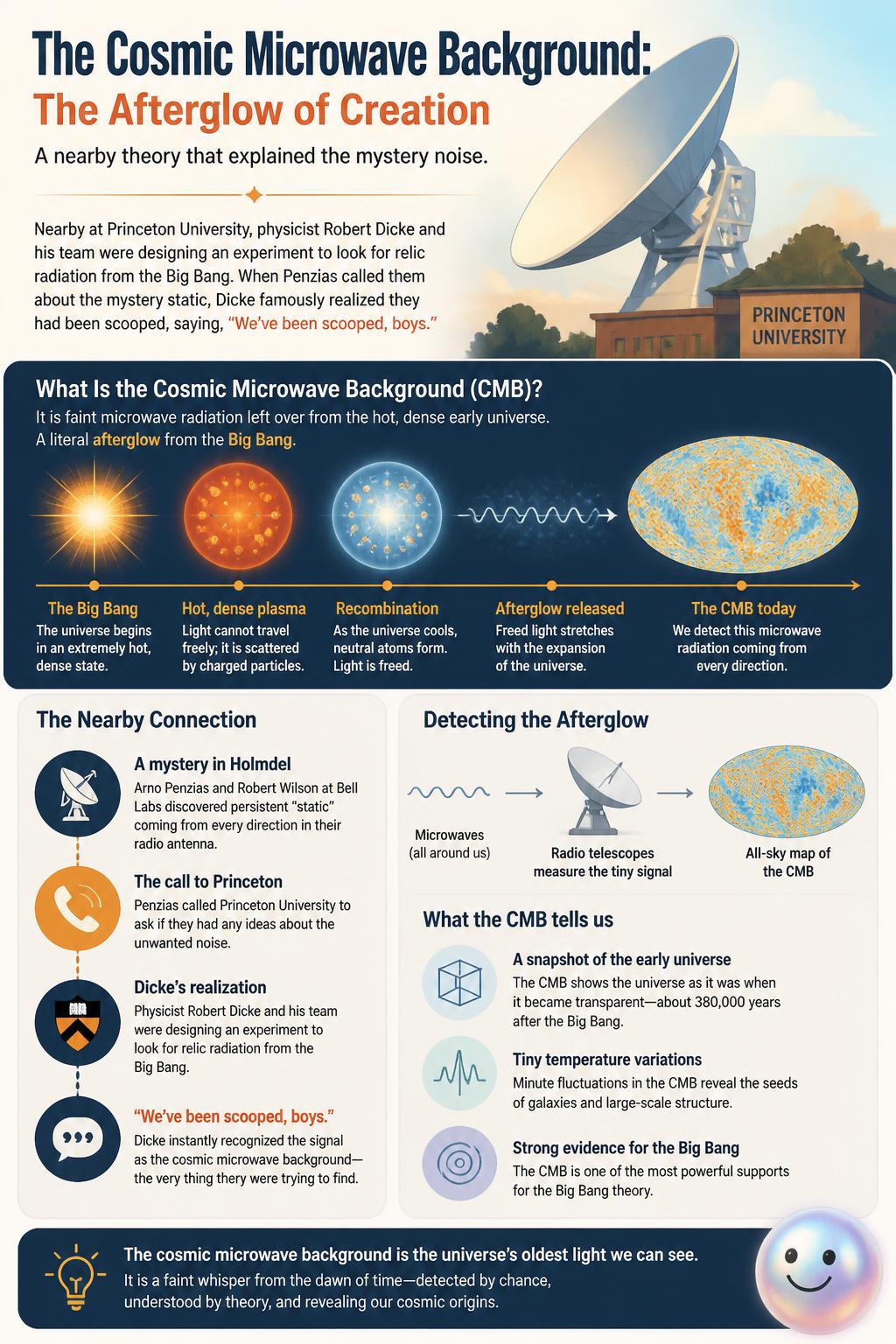
artiteacher A few miles away, Princeton theorists had already predicted the exact cosmic glow the radio astronomers stumbled upon.
Pigeon poop panic: Scientists initially blamed pigeon droppings for the cosmic static that turned out to be the Big Bang's echo.
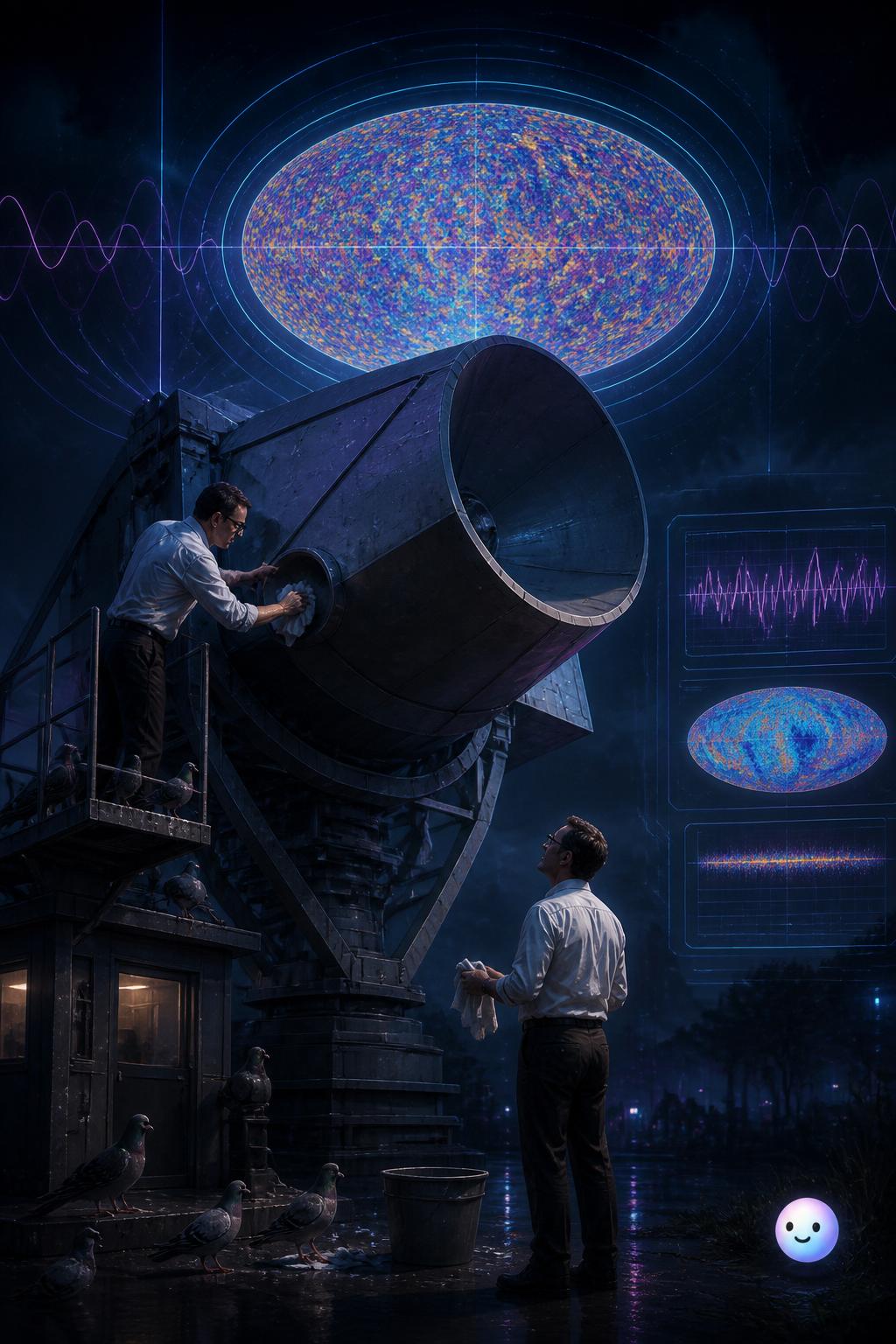
artiteacher The researchers spent months cleaning out nesting pigeons, thinking bird droppings were causing the strange static.
It is electromagnetic radiation remaining from the early stages of the universe in Big Bang cosmology. In 1964, physicists Arno Penzias and Robert Wilson detected this signal using a New Jersey horn antenna.
Where was the giant horn antenna located that first detected the cosmic microwave background?
What did the Princeton physicist Robert Dicke say when he heard about the radio static?
What type of radiation is the cosmic microwave background primarily detected as today?
In what year did Penzias and Wilson win the Nobel Prize in Physics for their cosmic discovery?
In what year did Arno Penzias and Robert Wilson accidentally discover the cosmic microwave background?
What was the Holmdel horn antenna originally designed to do before it detected the cosmic microwave background?
Which university housed the theoretical physicists who explained what Penzias and Wilson had actually found?
What animal did Penzias and Wilson suspect was causing the interference in their antenna?