The discipline of Nihonga
Flattening history into Superflat
The birth of Mr. DOB and the smiling flowers
The monumental marriage of art and luxury
YOUR GOAL
Master of From classical screens to luxury bags
b134340 From Nihonga to Acrylic Paint
No more crushed stone, paint it in acrylics, sand it super flat
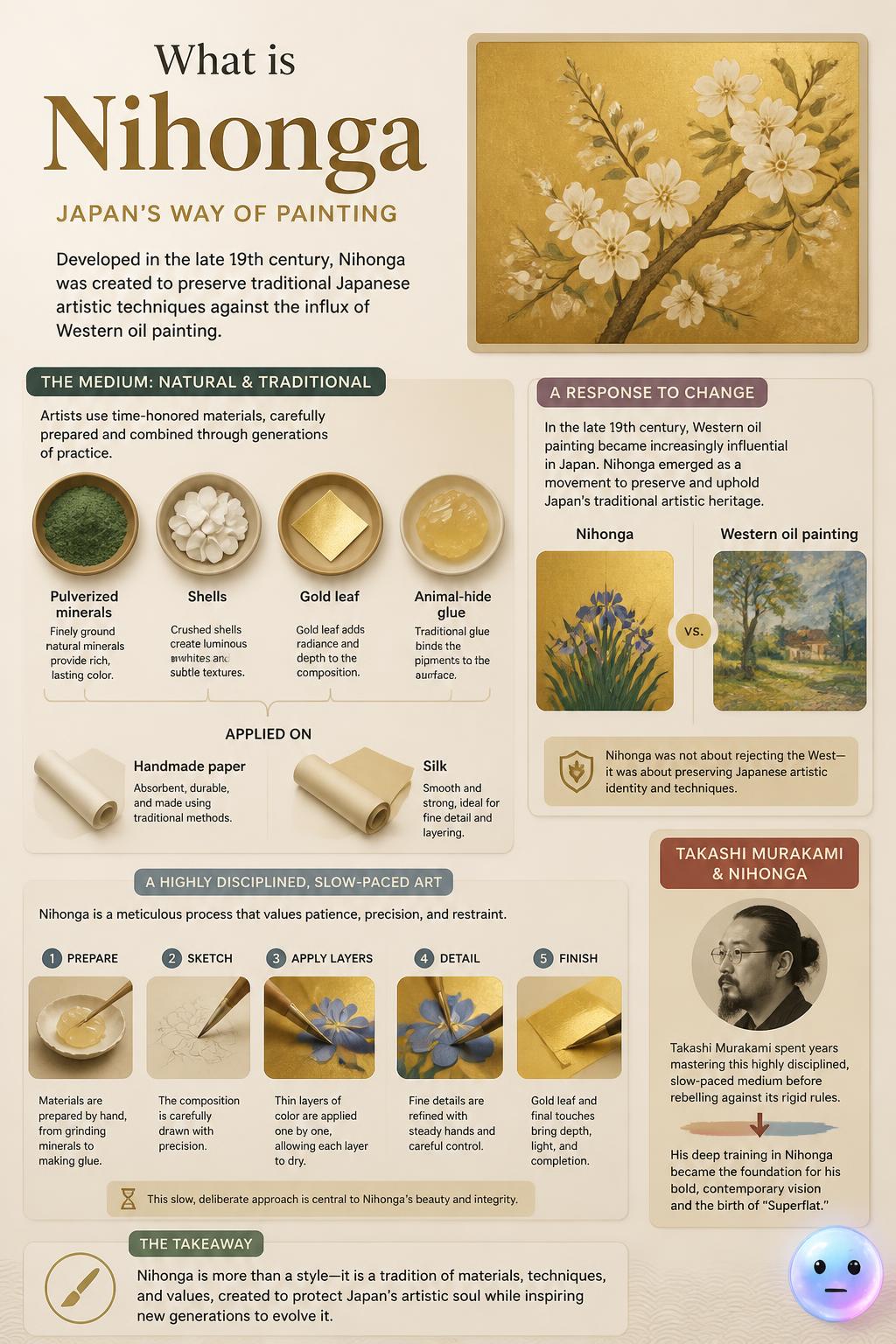
b134340 Takashi Murakami spent years mastering Nihonga, a technique using pulverized minerals, shells, and gold leaf on handmade paper or silk.

b134340 This grueling academic grind isolated the young artist from vibrant 1990s Tokyo culture
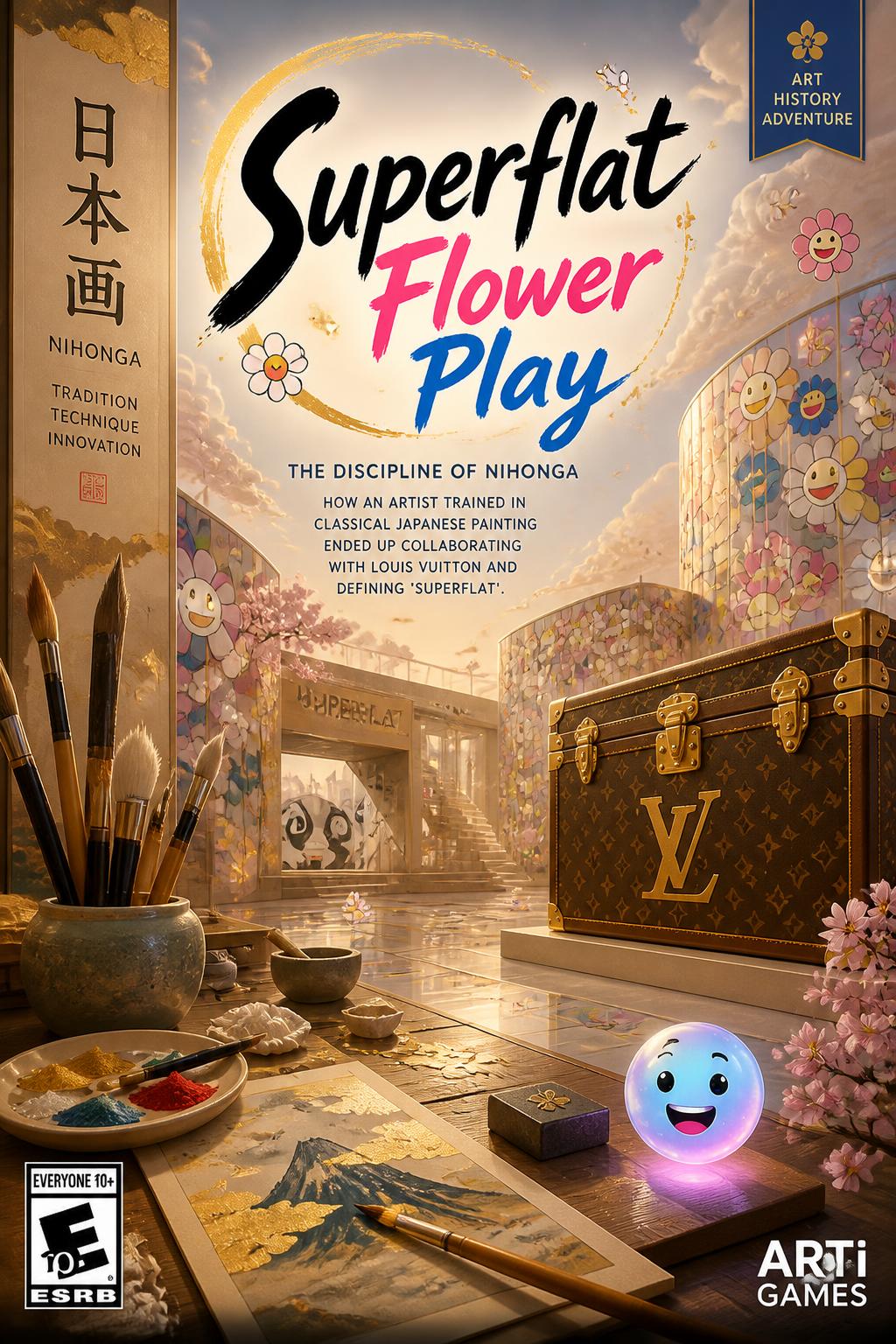
b134340 Match colorful smiling flowers to discover how Murakami blended classical Japanese art with pop culture.
Nihonga pigments: Traditional Nihonga paint is so natural that some pigments are made from crushed oyster shells and semi-precious gems.
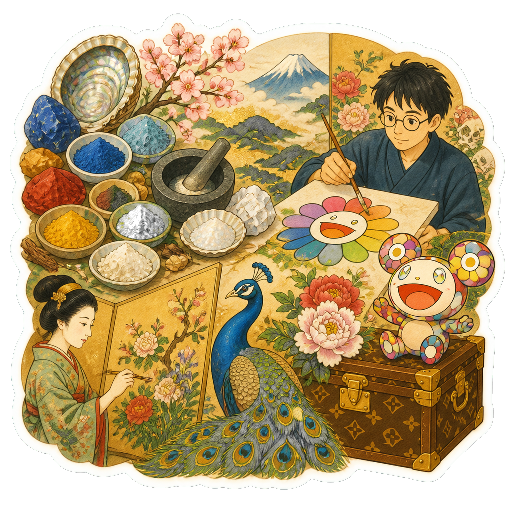
A traditional style of Japanese painting that uses natural pigments and materials on paper or silk. Takashi Murakami earned a doctorate in nihonga from Tokyo University of the Arts in 1993.
Which binding agent is traditionally used in Nihonga painting to hold mineral pigments together?
Why was the Nihonga style of painting originally developed in Japan during the late 19th century?
What did the rigorous Nihonga PhD program at Tokyo University of the Arts primarily require students to do?
In which year did Takashi Murakami earn his PhD in Nihonga from the Tokyo University of the Arts?
What major criticism did Takashi Murakami have regarding the traditional Nihonga art world?
To which modern phenomenon did Takashi Murakami turn after leaving traditional Nihonga painting behind?
What traditional Nihonga materials did Takashi Murakami replace with modern synthetic acrylic paints?