Chapter 1
Ancient boards that crossed generations
Chapter 2
The tabletop revolution
Chapter 3
Street games and physical play
Chapter 4
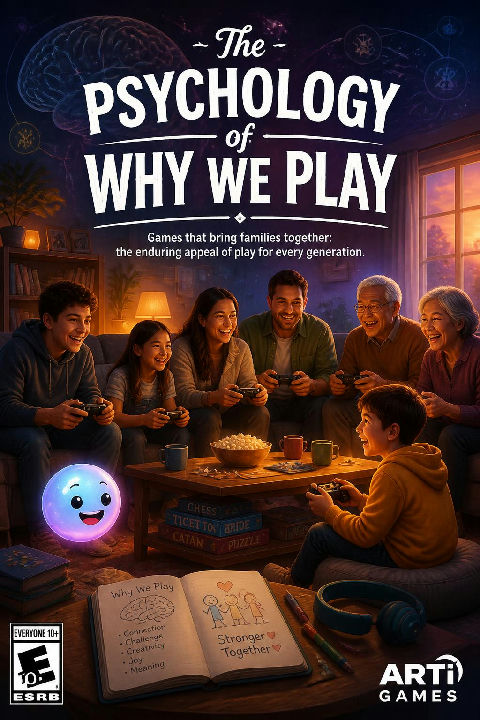
The psychology of why we play
Ch 4 · The psychology of why we play
nintendo Psychology of Play
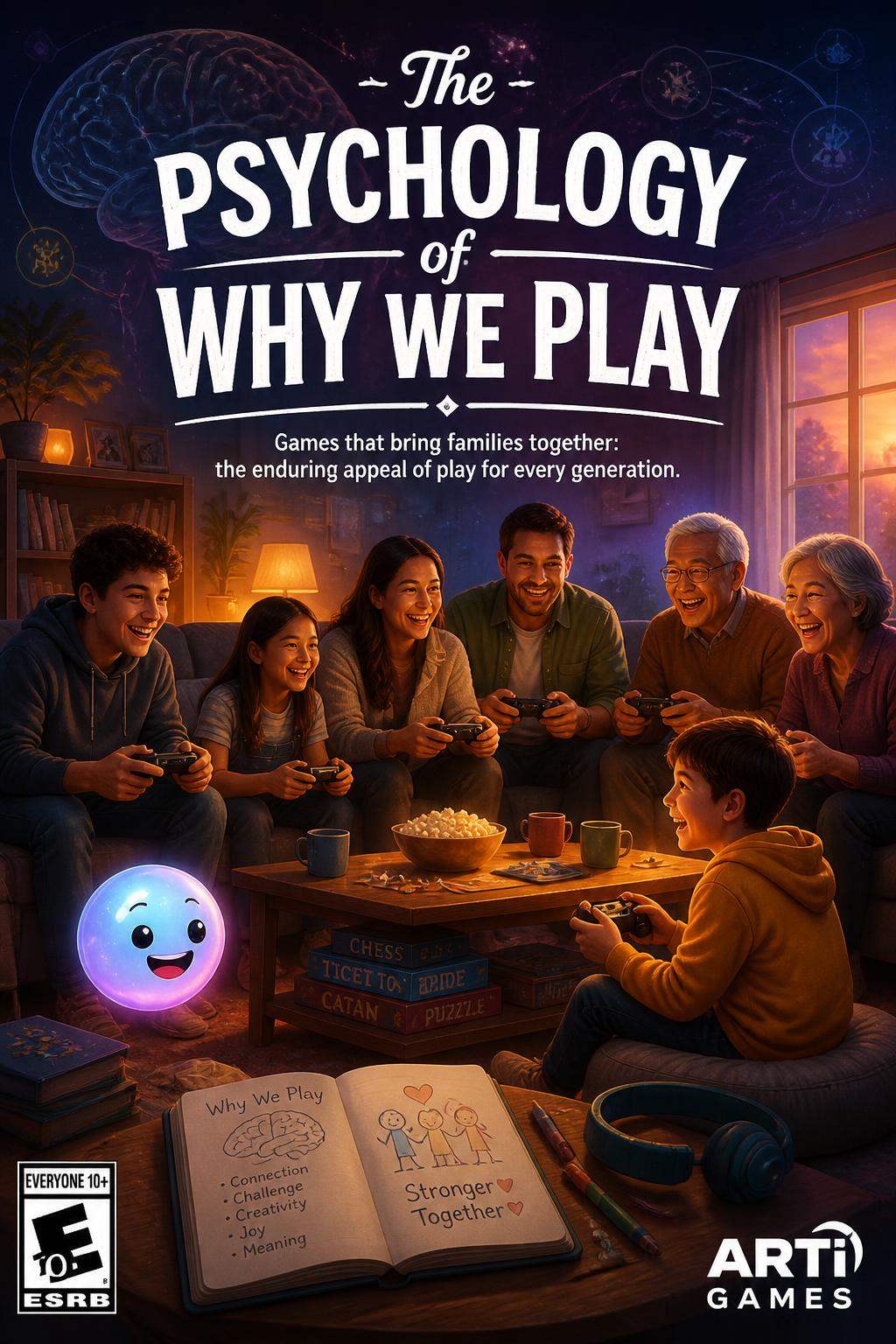
Gather 'round the table, roll the dice, let that warm oxytocin flow!
BETA
nintendo Match player motivations to discover the psychological reasons why families love to play together.
Glossary
intrinsic motivation (noun)
The drive to engage in an activity because of its inherent satisfaction rather than external rewards. In 1985, psychologists Edward Deci and Richard Ryan identified this internal force as a key driver of play.
The drive to engage in an activity because of its inherent satisfaction rather than external rewards. In 1985, psychologists Edward Deci and Richard Ryan identified this internal force as a key driver of play.
Fun Fact
Brain-boosting chess: Neuroimaging studies in 2025 showed that expert chess players have significantly higher connectivity in brain regions linked to visual processing and decision-making.
Quiz
According to research, what type of board game layout is most effective at improving a preschooler's counting skills?
Quiz
According to a 2013 French study, seniors who play board games have what percent lower risk of developing dementia?
Quiz
Which Chilean researcher led the 2023 study published in the journal Early Years on board games and early math?
Quiz
What is the popular nickname of the hormone oxytocin, which is released during family game play?
Quiz
Which university tracked over 1,000 seniors to study the cognitive benefits of non-digital board games?
Quiz
Why do psychologists refer to board games as a 'safe sandbox' for family social interactions?
Quiz
Which university conducted the 2019 study measuring oxytocin levels in people playing board games?