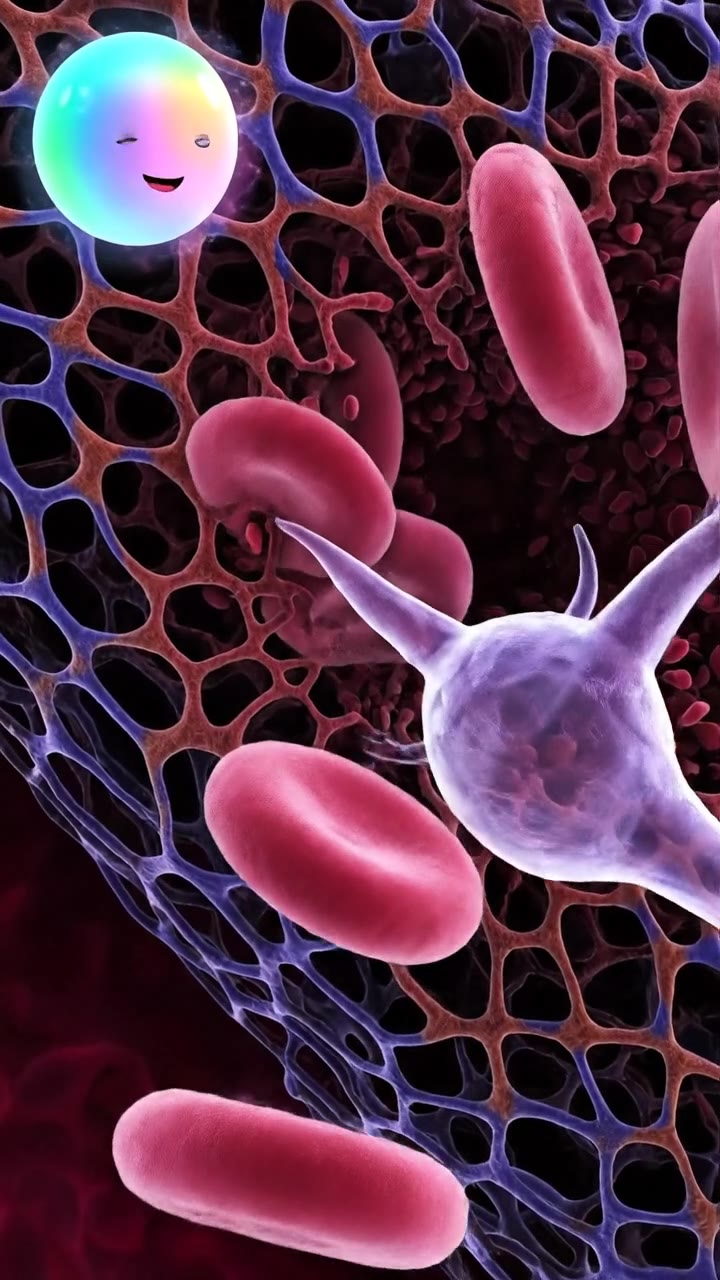
The red blood cell quality control
Red blood cells live for about 120 days before becoming stiff and fragile. The spleen forces these cells through microscopic gaps in its red pulp tissue that are only 1 to 2 micrometers wide. Healthy cells bend to squeeze through, while old, rigid cells break and are recycled.
The body's ultimate recycling center
The immune system's command center
The spleen across history and nature
Life without a spleen

artiteacher Spleen macrophages harvest iron from damaged hemoglobin, sending it to bone marrow to make new blood cells.
artiteacher The spleen filters blood by forcing red blood cells through tiny gaps, recycling stiff cells that break.
artiteacher During blood loss, the spleen contracts to pump its stored cup of blood and maintain oxygen levels.
artiteacher The body's ultimate recycling center
Squeeze through slits, / Recycle the iron, / Refresh the blood!

artiteacher When the spleen breaks down old red blood cells, it salvages and recycles their precious iron.
Spleen blood storage: Human spleens contract during holding-breath dives, releasing stored red blood cells to boost oxygen by up to 10 percent.


artiteacher The spleen acts as a strict quality control inspector, filtering out and destroying worn-out red blood cells.
An abdominal organ involved in the production and removal of blood cells in most vertebrates. Located behind the left ribs, this organ recycles iron from blood cells after their 120-day lifecycle.

Which protein transports recycled iron from the spleen back to the bone marrow?

artiteacher Swipe away damaged blood cells to learn how the spleen filters your bloodstream.