Chapter 1
The cosmic web and human networks
Chapter 2
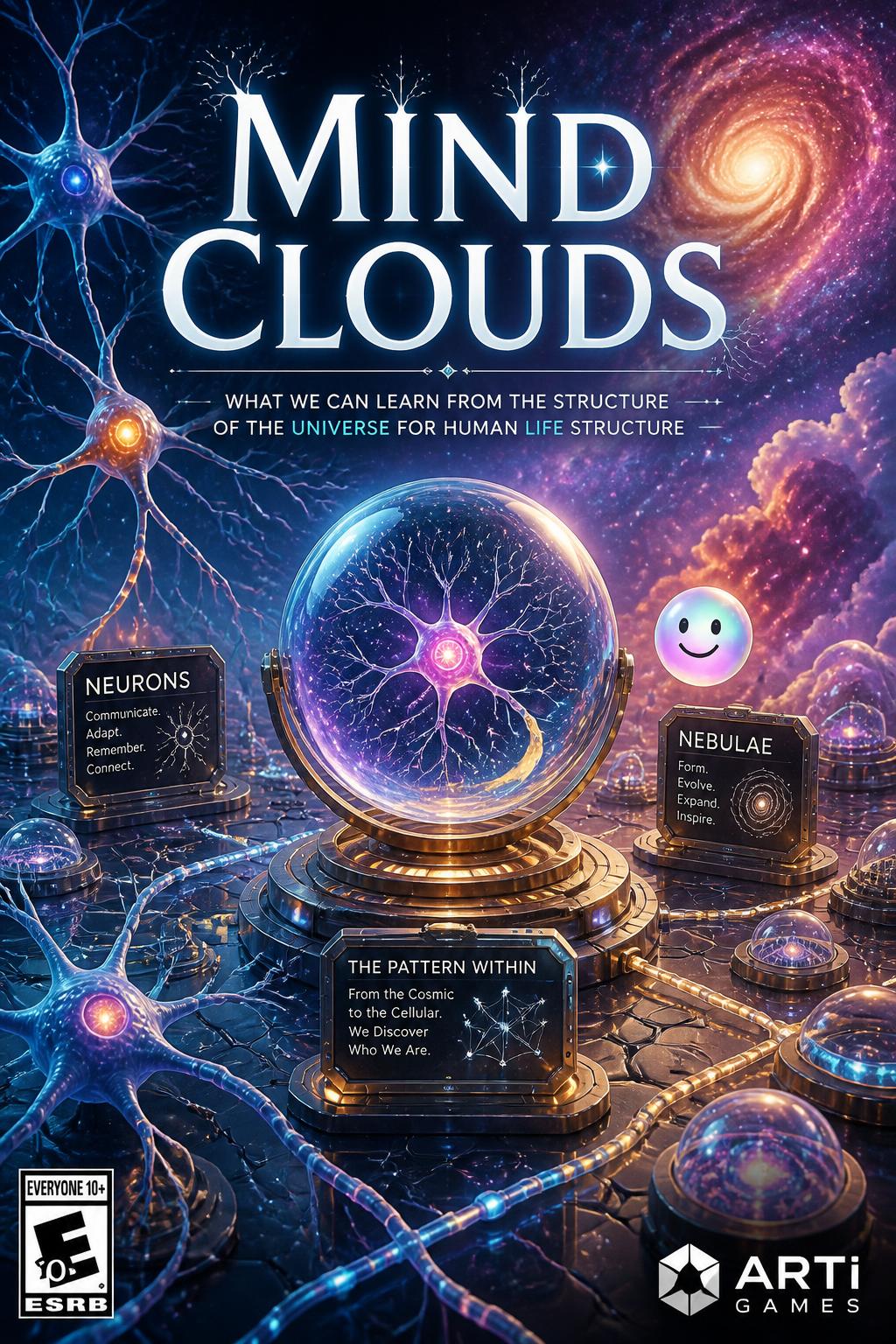
Neurons and nebulae
Chapter 3
Self organization in space and society
Chapter 4
Life cycles of stars and civilizations
YOUR GOAL
Master of Cosmic patterns in human life
Ch 2 · Neurons and nebulae
futura Neurons and Nebulae
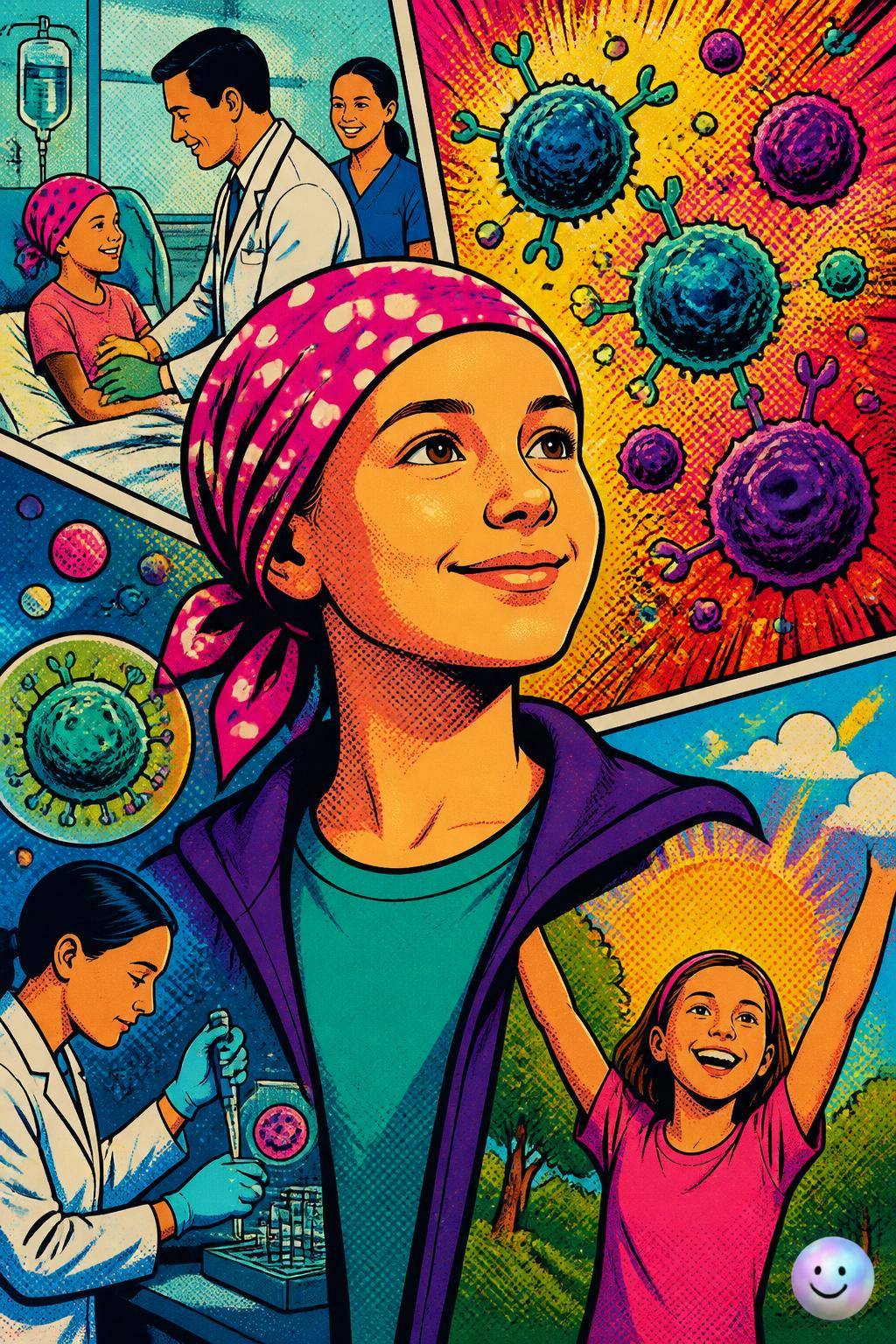
From tiny brain cells, to galaxies so grand, Nature's own patterns, across the universe expand.
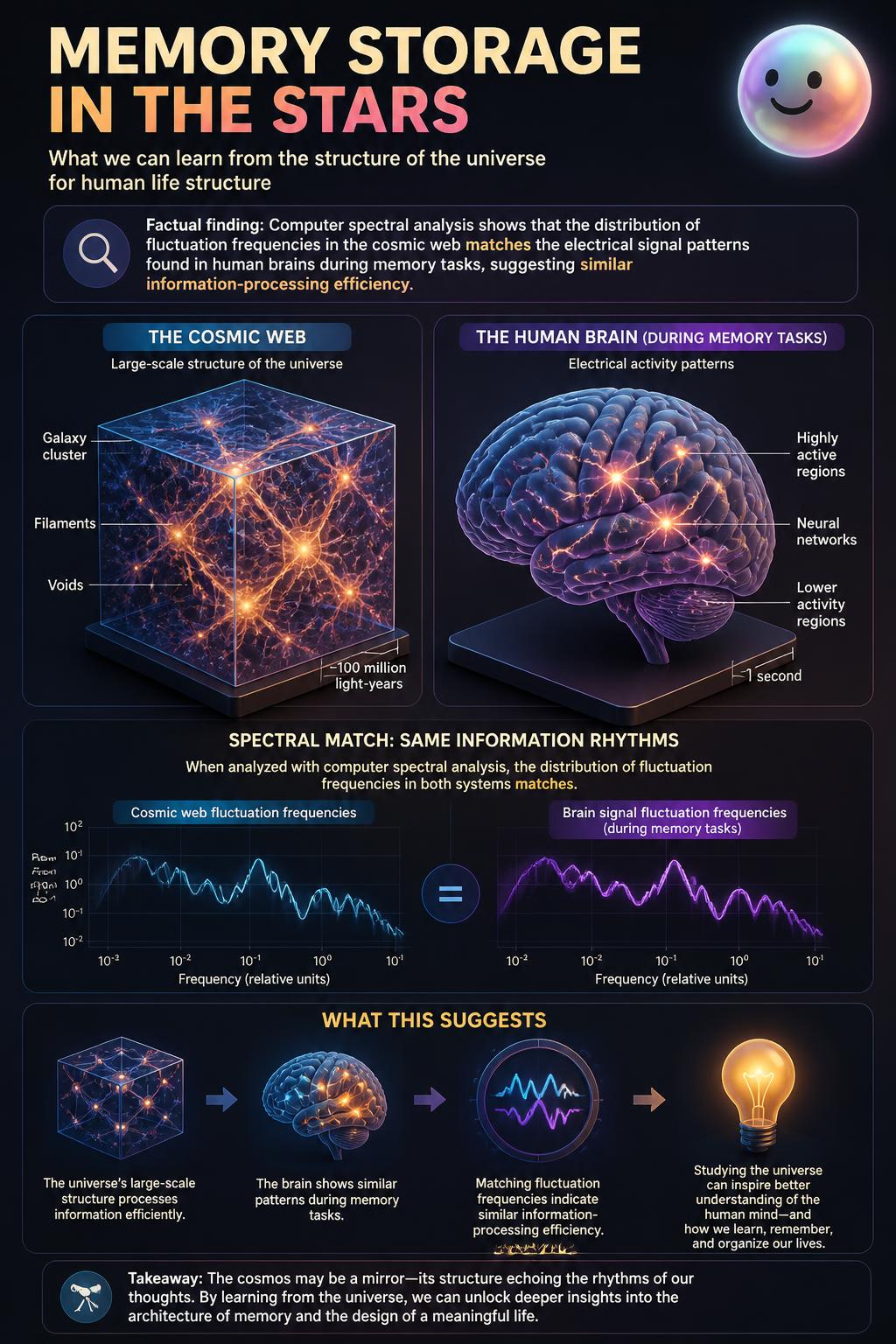
futura The way information flows through cosmic filaments resembles how memories are stored in neural pathways.
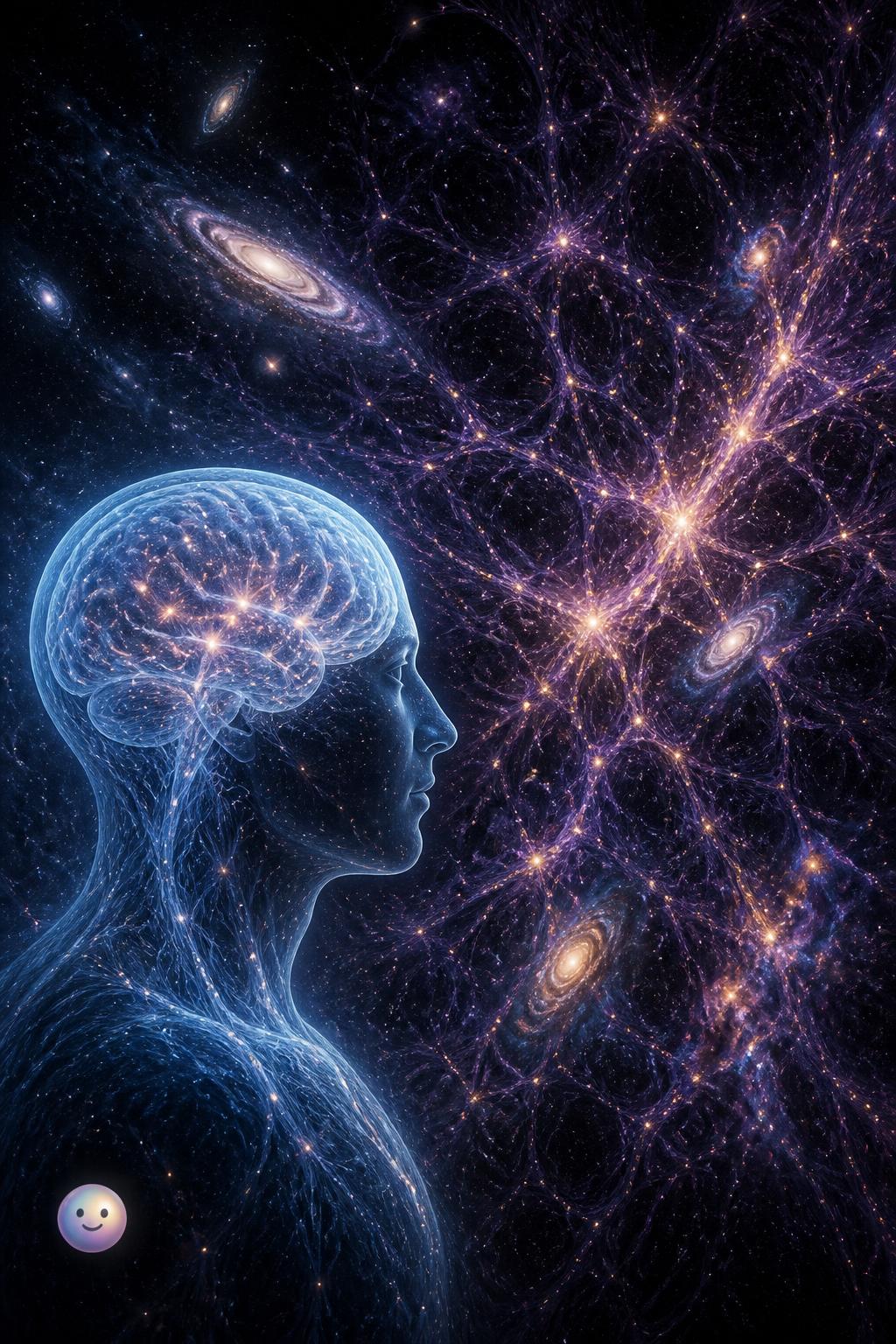
futura Both brain tissue and the universe are mostly composed of passive, supportive mediums.
BETA
futura Connect drifting mind clouds to discover how cosmic networks mirror our own life structures.
Fun Fact
Shared node count: The human brain contains roughly 69 billion neurons, incredibly close to the estimated 100 billion galaxies in our observable universe.
Glossary
neuron (noun)
A specialized cell transmitting nerve impulses; a nerve cell. In 2020, Italian scientists discovered that these cells share complex structural similarities with the cosmic web.
A specialized cell transmitting nerve impulses; a nerve cell. In 2020, Italian scientists discovered that these cells share complex structural similarities with the cosmic web.
Quiz
What substance makes up about 77% of the human brain, serving as its primary passive medium?
Quiz
Which two fields of study did researchers Franco Vazza and Alberto Feletti combine to compare brains and the universe?
Quiz
What percentage of the universe is made of dark energy, acting as a passive medium similar to water in the brain?
Quiz
What physical pattern do both neural connections and cosmic structures use to maximize space and efficiency?
Quiz
What type of analysis did scientists use to compare memory flow with cosmic web structures?
Quiz
Which brain structure was specifically compared to the cosmic web in the landmark 2020 study?