
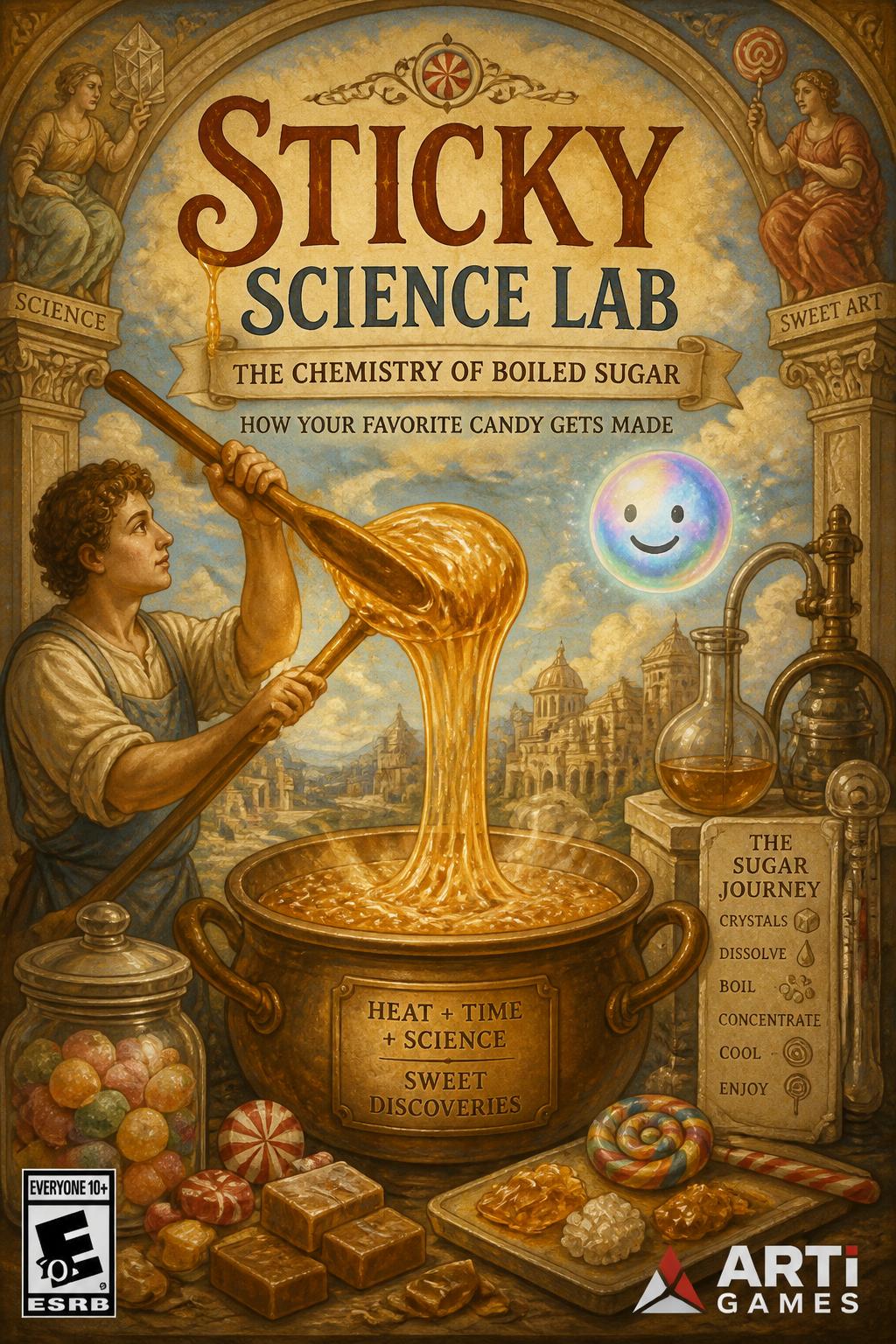
BETA
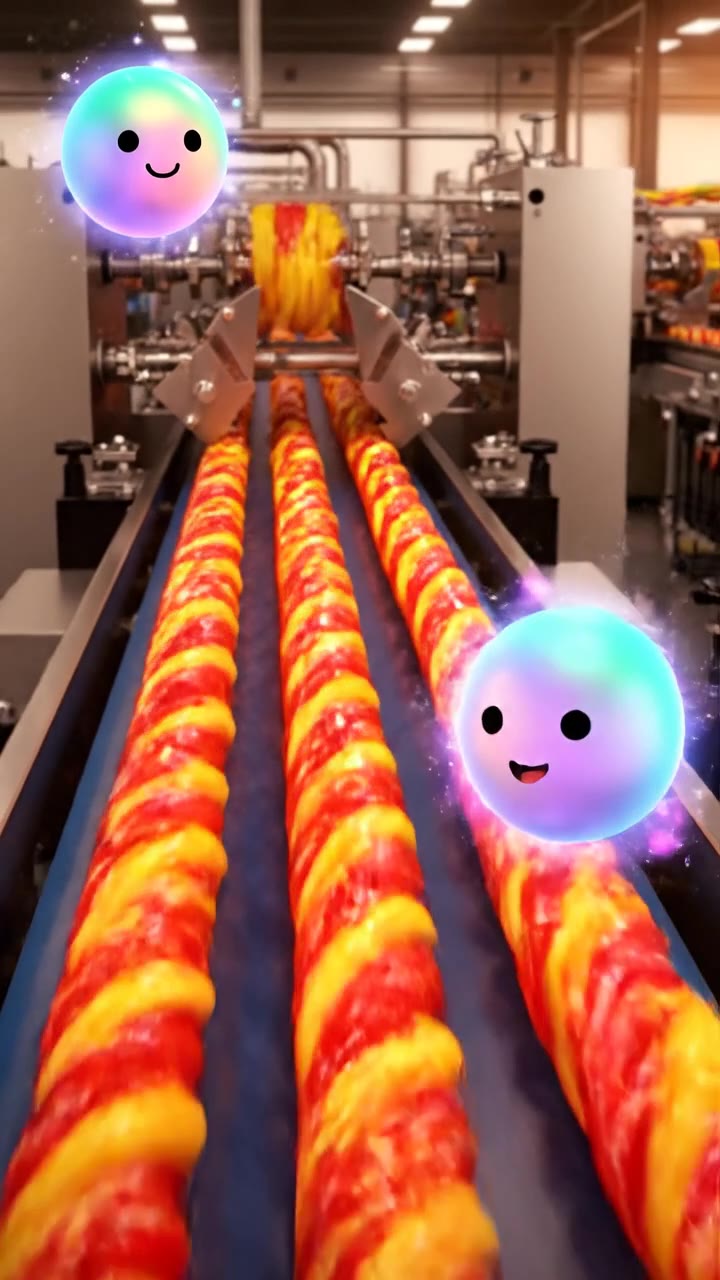
Modern candy factories feed warm, pliable sugar ropes into rotary die-forming machines invented in the early 20th century. These machines press, shape, and insert sticks into 3,000 lollipops every minute.
artiteacher Match the boiling temperatures to learn how sugar transforms into your favorite sticky candies.
artiteacher Boiled Sugar Chemistry
Heat transforms white sugar so bright! Oh, into amber caramel, a new sweet delight!
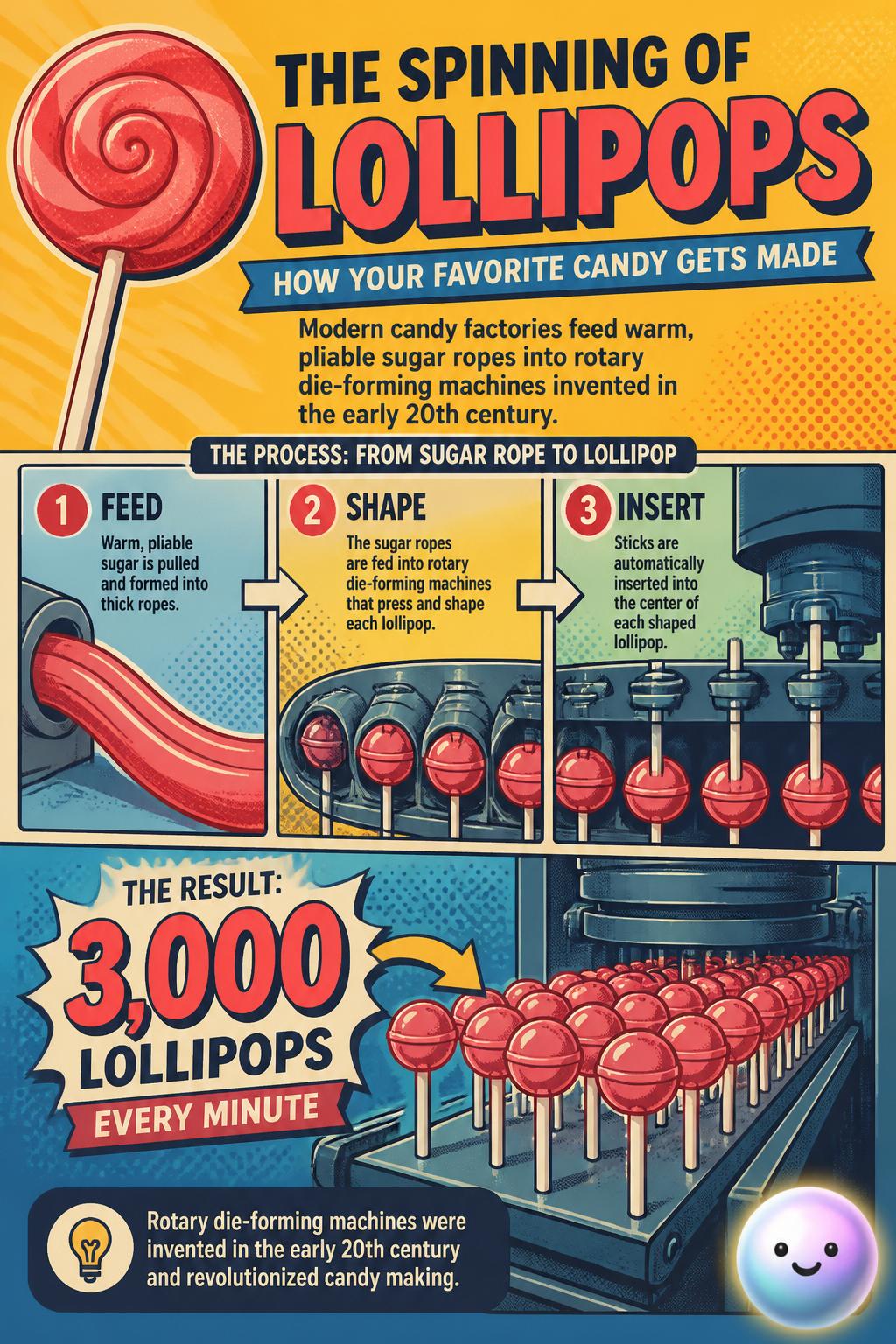
artiteacher Mass-producing lollipops requires high-speed rotary dies that stamp out thousands of shapes per minute.
Candy glass safety: Hollywood filmmakers use boiled sugar glass for stunt windows because it breaks safely without creating dangerous, sharp shards.
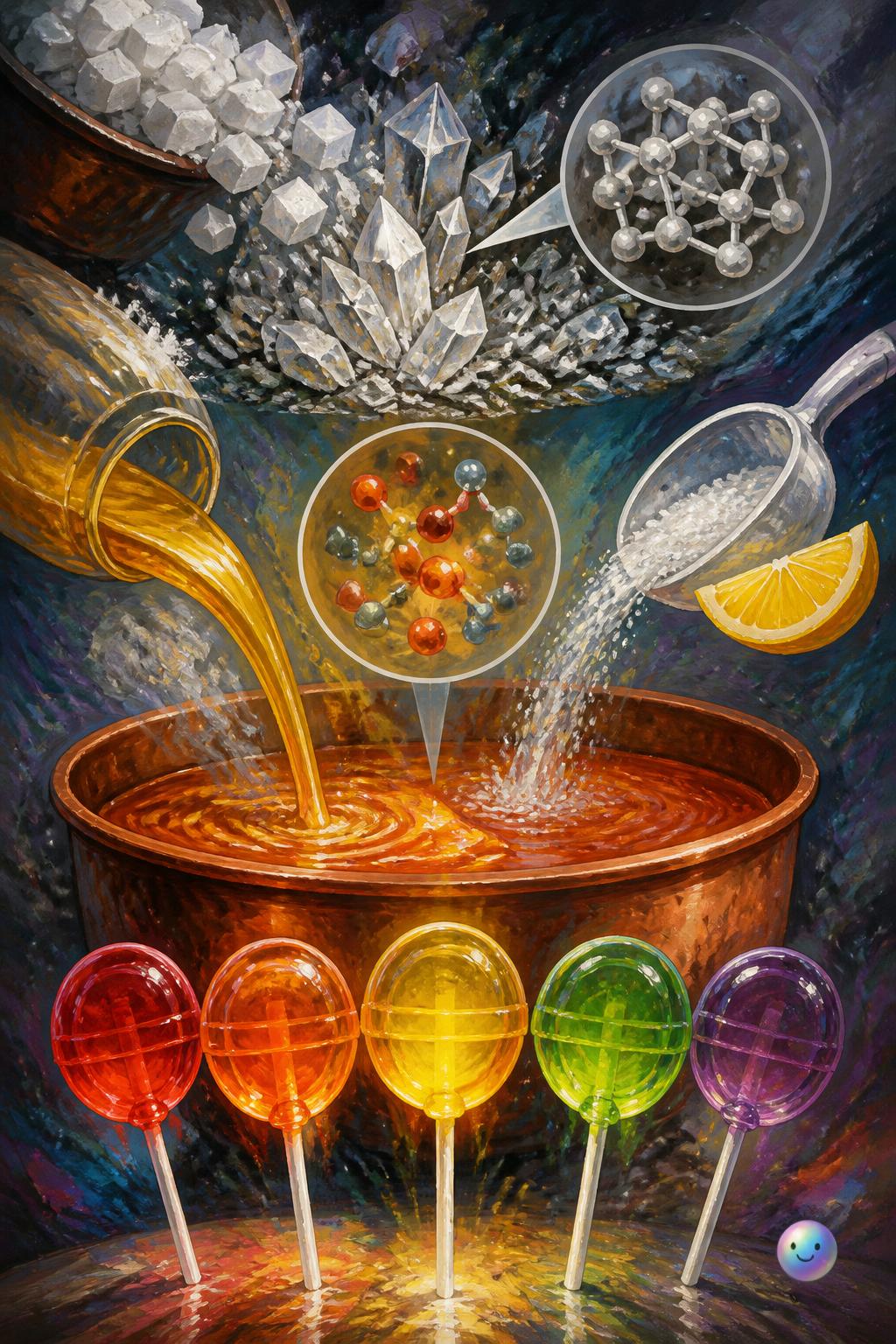
artiteacher Confectioners use corn syrup or acids to block crystallization and keep hard candy perfectly smooth.
Which country is credited with popularizing the modern lollipop on a stick in the early 20th century?
What chemical compound is commonly added to sour hard candies to give them an intense tang?
What classic hard candy was originally marketed in 1912 as a summer treat that wouldn't melt?