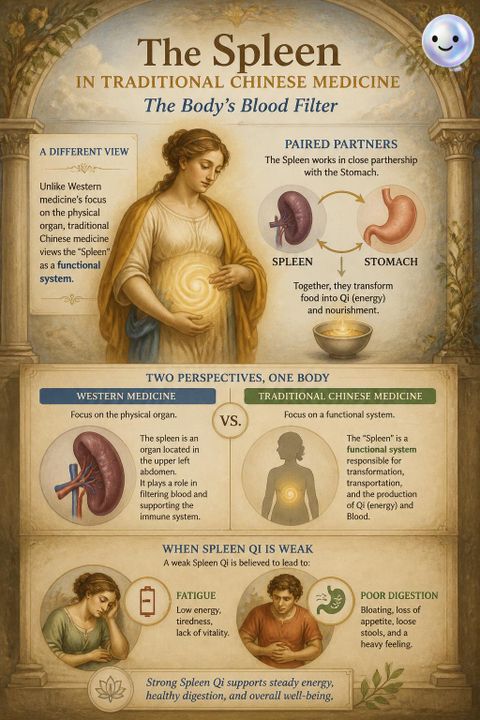
The spleen in traditional Chinese medicine
Traditional Chinese medicine views the spleen as a vital organ for digestion and distributing life energy, or Qi.
The body's ultimate recycling center
The immune system's command center
The spleen across history and nature
Life without a spleen

artiteacher Traditional Chinese medicine views the spleen as a system that extracts energy, or Qi, from food.
artiteacher Ancient Greek doctors believed the spleen governed black bile, and too much of it caused melancholy.
artiteacher Bajau divers have genetically enlarged spleens that inject extra oxygenated red blood cells during deep dives.
artiteacher During dives, a Weddell seal's spleen contracts, boosting its blood's oxygen-carrying capacity by 60%.
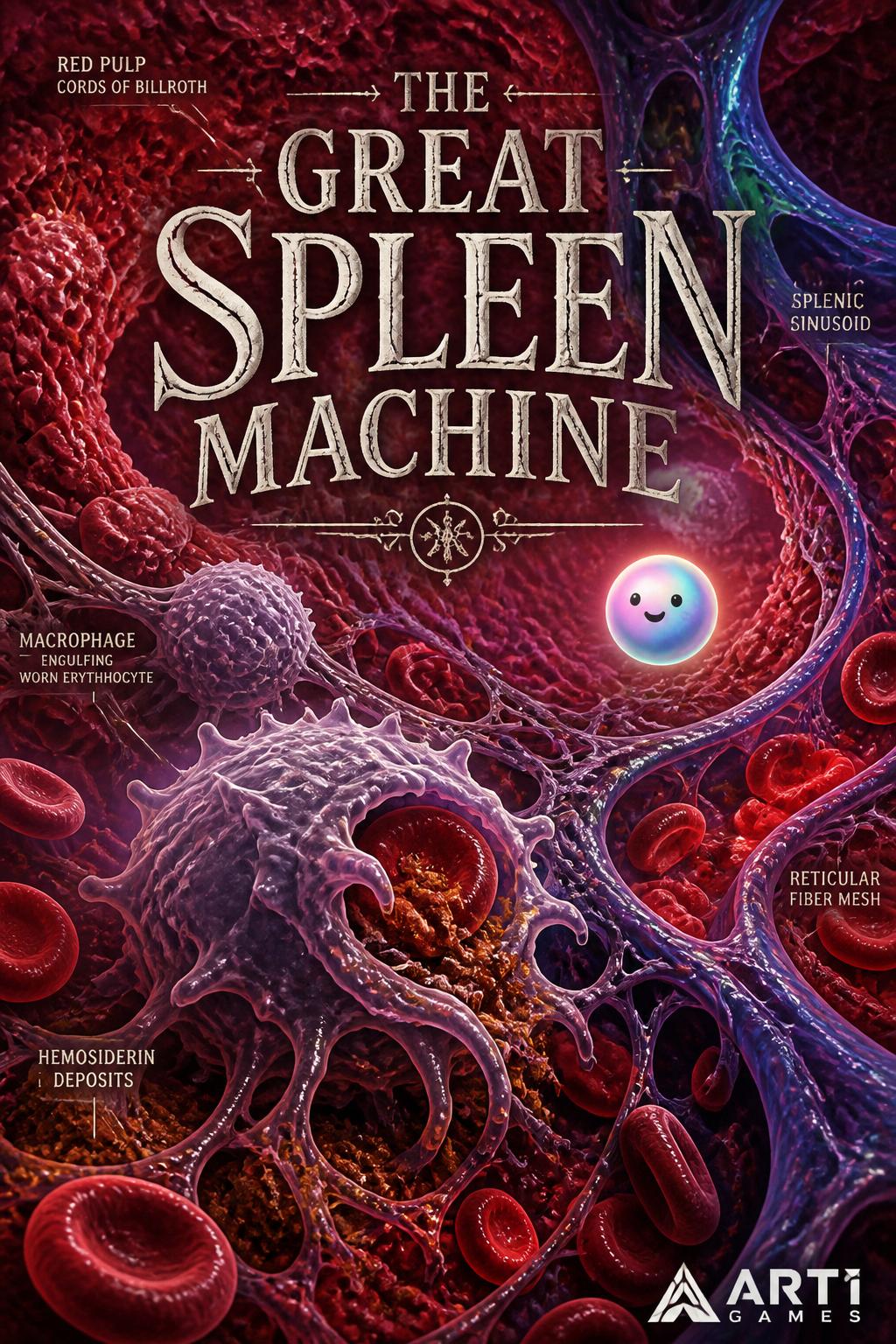
artiteacher Sort healthy and old blood cells to learn how the spleen filters your blood.
artiteacher The Spleen
Spleen starts to squeeze, / Rushing the oxygen free, / Diving so deep in the blue!
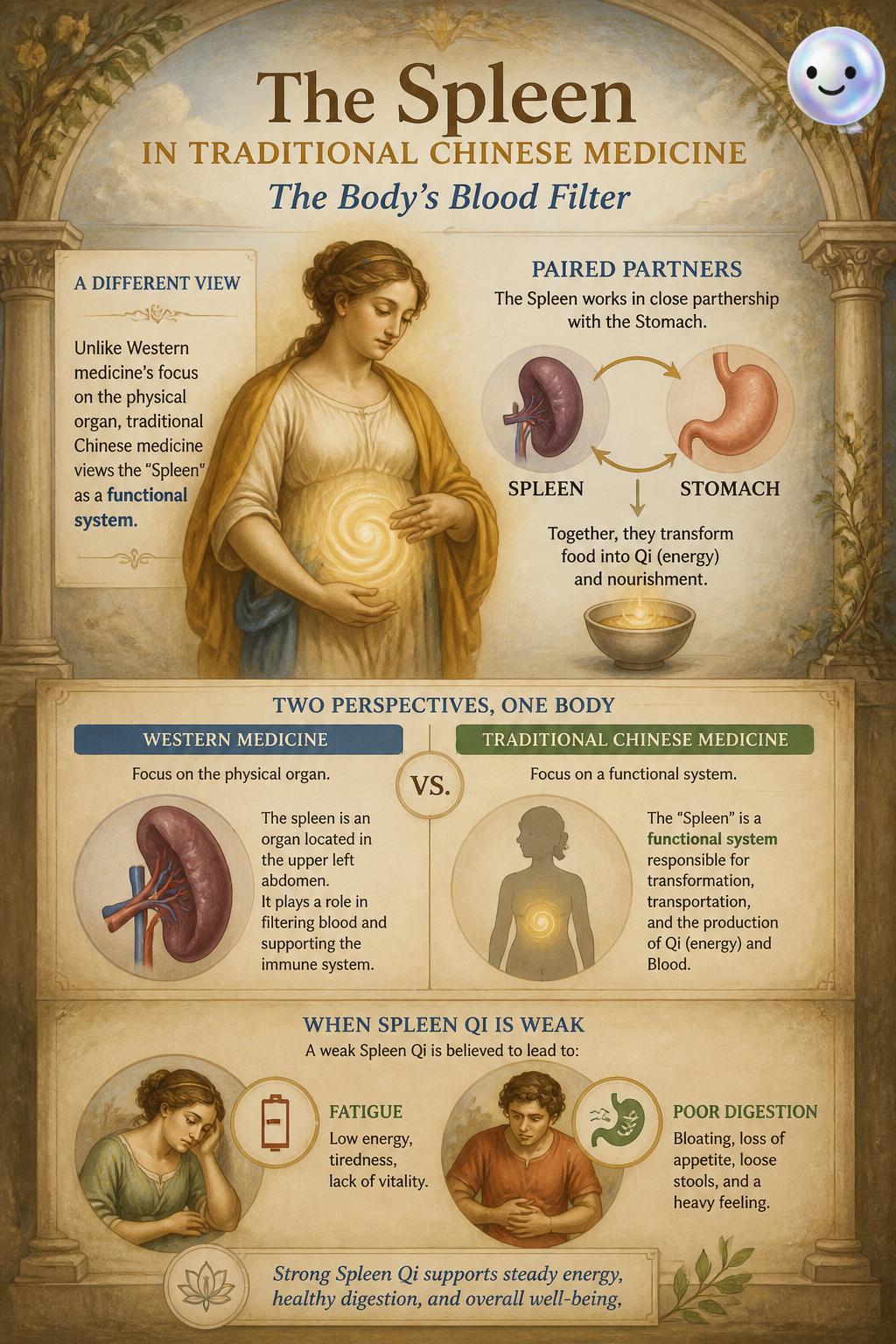
artiteacher Traditional Chinese medicine views the spleen as a vital organ for digestion and distributing life energy, or Qi.
Bajau divers: The Bajau people of Southeast Asia have spleens 50 percent larger than average, helping them dive up to 200 feet deep.
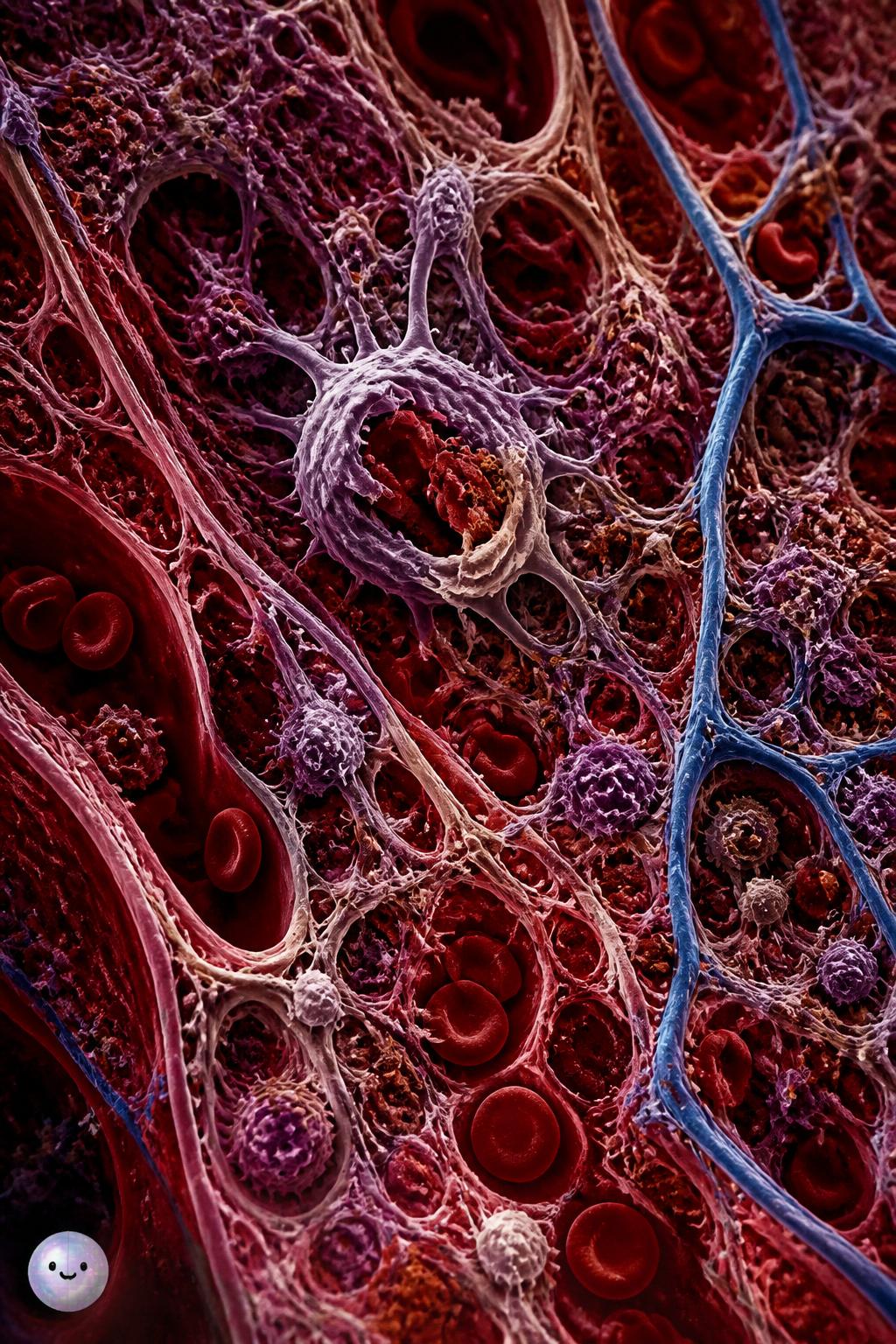
artiteacher Ancient Greek doctors believed the spleen was responsible for producing black bile, one of the four bodily humors.
An abdominal organ that filters blood and produces lymphocytes as part of the lymphatic system. In the second century, Galen mistakenly identified the organ as the producer of black bile.
Which gene variant is associated with the larger spleen size of the Bajau people?
In traditional Chinese medicine, which organ is the spleen paired with as a functional system?
In ancient Greek medicine, which of the four humors was the spleen thought to control?
By what percentage are the spleens of the Bajau 'sea nomads' larger than average?
By how much can a Weddell seal increase its blood's oxygen capacity when its spleen contracts?
What is the vital life energy called that the spleen helps distribute in traditional Chinese medicine?