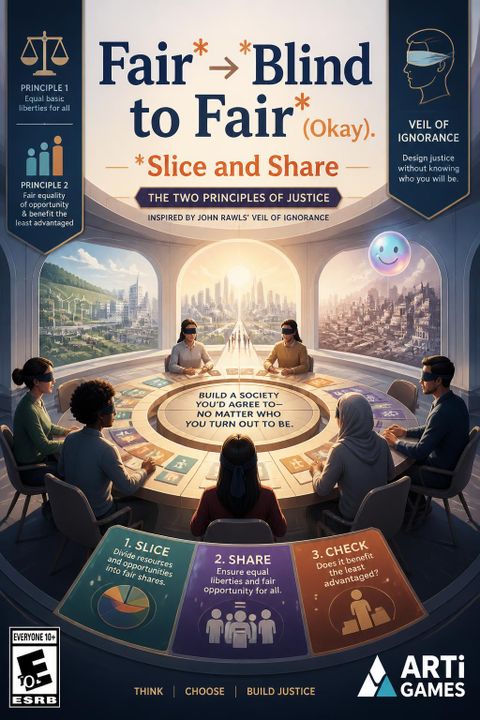
Slice and Share Game: Rawls' Veil of Ignorance
Slice and share the cake to discover how blind choices create a fair society.
The mind behind the curtain
How the experiment works
The two principles of justice
Real world impact and criticisms

marcus Learn about John Rawls' veil of ignorance thought experiment and how the safety net strategy aims to create a fair and just society.
marcus Explore John Rawls' veil of ignorance thought experiment in this video and learn how the difference principle aims to build a fair society.
marcus Learn how John Rawls' veil of ignorance thought experiment can be used to ensure fair play for jobs and build a more just society.
marcus Explore John Rawls' veil of ignorance thought experiment and learn how this philosophical concept defines the first rule of a fair, free society.
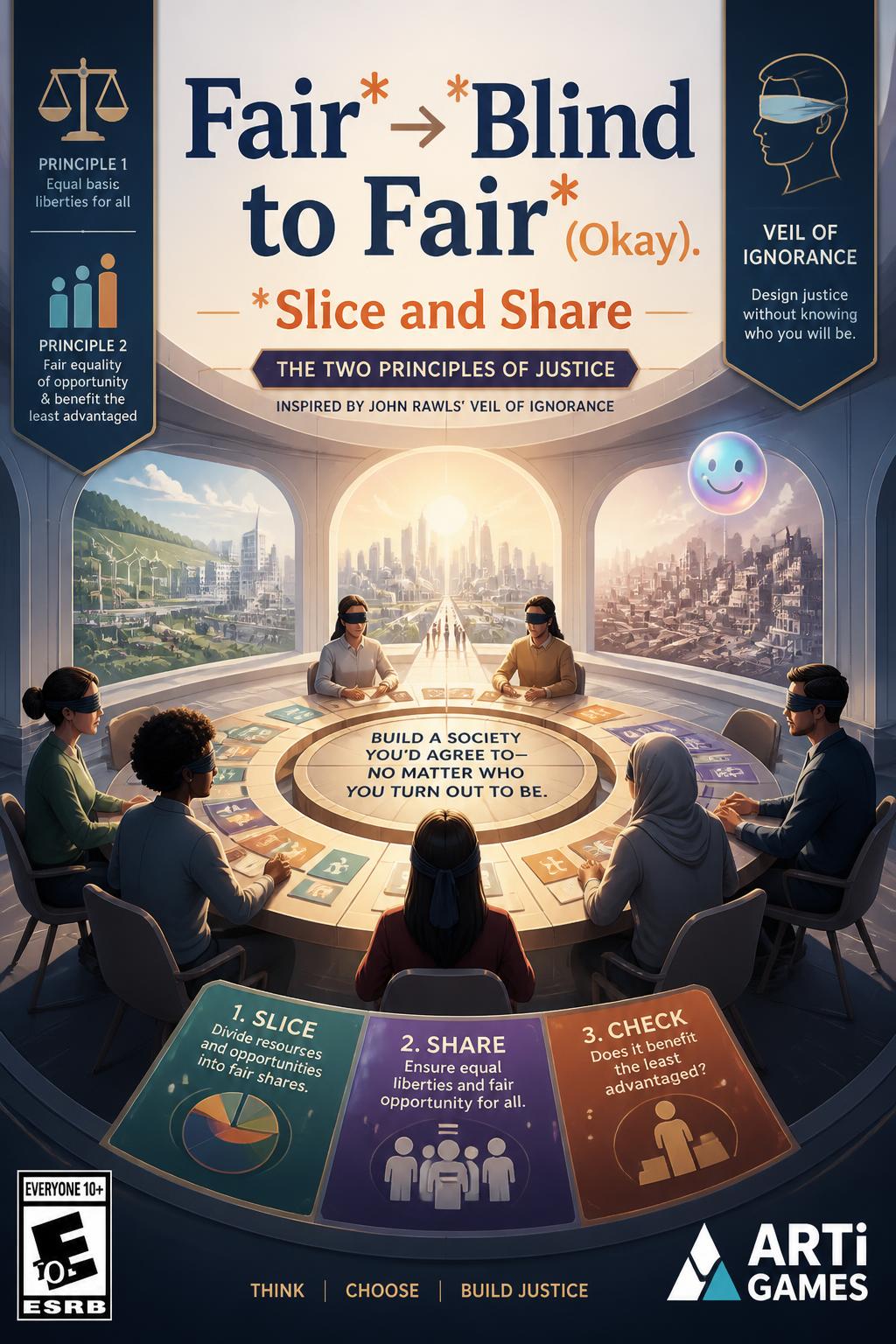
marcus Slice and share the cake to discover how blind choices create a fair society.
marcus The Two Principles of Justice
Behind the veil, / equal rights for all, / lift up those who fall!
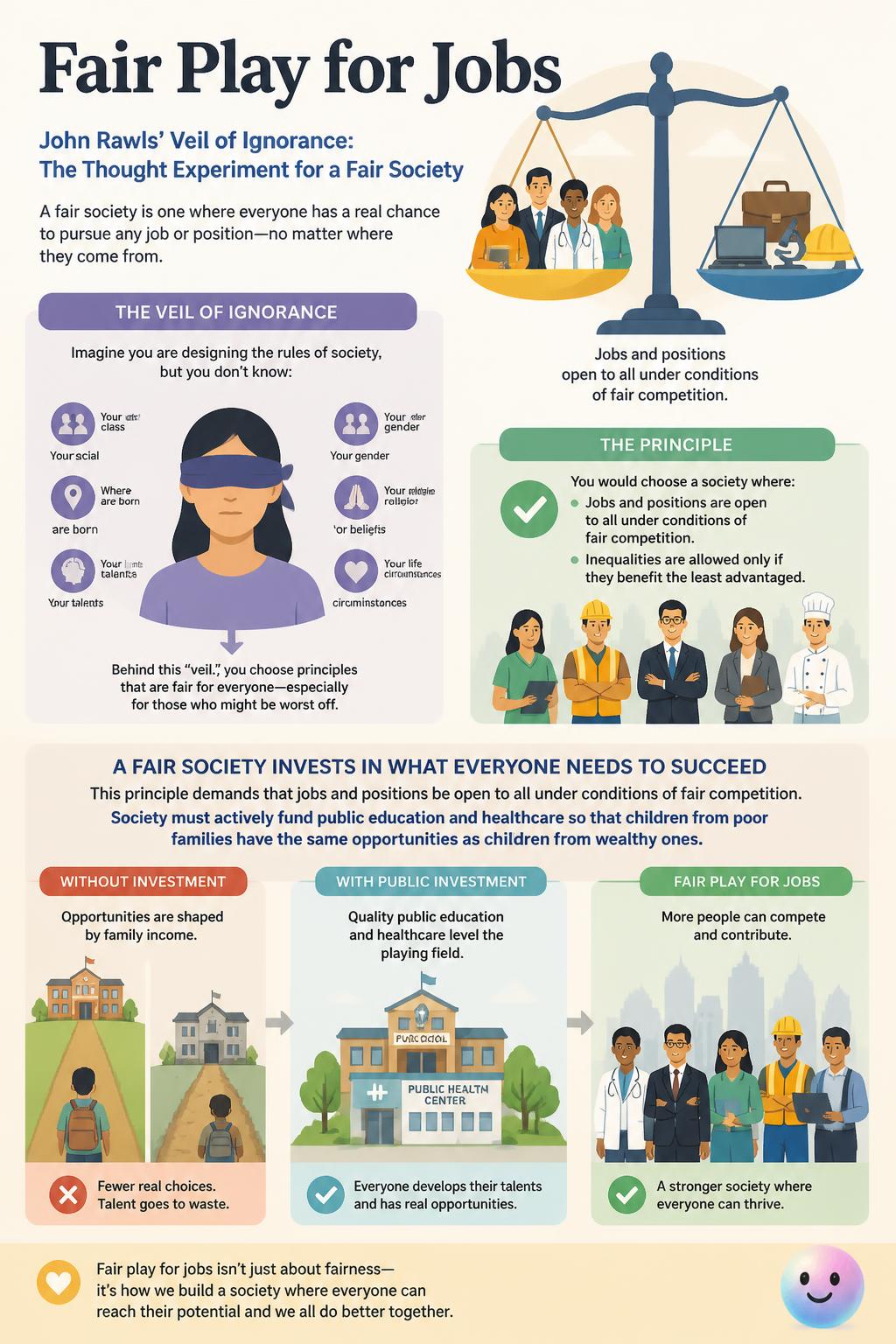
marcus Fair equality of opportunity ensures that everyone has the same realistic chance to develop their talents.
The maximin rule: The word 'maximin' is a blend of 'maximize the minimum,' a strategy Rawls borrowed from mathematical game theory.

marcus The Difference Principle permits economic inequalities only if they directly benefit the most disadvantaged members of society.
The quality of being fair, righteous, equitable, or morally right. In 1971, John Rawls structured this concept around equal basic liberties and the fair distribution of wealth.
According to John Rawls' Difference Principle, when are social and economic inequalities allowed in a society?
What does the principle of 'Fair Equality of Opportunity' require society to provide for all children?
What decision-making strategy from game theory did John Rawls use to explain how people choose rules behind the veil?
Why did John Rawls reject the idea of a purely meritocratic society where only talent determines success?
Which of the following is considered a 'basic liberty' under John Rawls' first principle of justice?