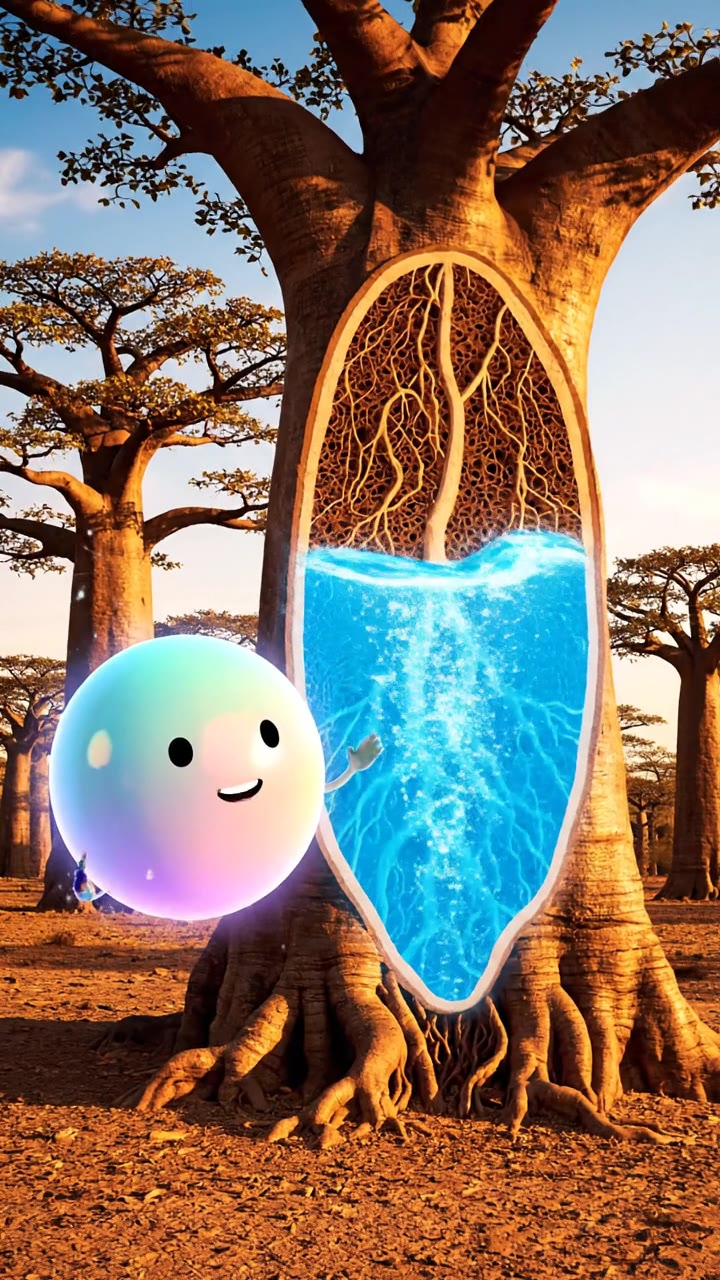
The upside-down trees of Madagascar
In western Madagascar, the Avenue of the Baobabs features a group of Grandidier's baobabs, some over 800 years old and 30 meters tall. These massive trees store up to 120,000 liters of water in their trunks to survive harsh droughts, giving them their distinctive, swollen shape.
Earth's most spectacular natural phenomena
Ancient cities carved in stone
High-tech futuristic cities
Isolated islands of evolutionary wonder

marcus Earth's most spectacular natural phenomena
Step into the mirror, walking on the sky (so high!), Uyuni's reflection is tricking your eye (oh yeah!)

marcus Discover the Avenue of the Baobabs, where ancient, giant trees look like they were planted roots-up.
Glowing waves: The blue light produced by bioluminescent plankton is actually a defense mechanism designed to scare away predators like hungry crabs.

marcus Explore the world's largest salt flat, which transforms into a giant, flawless mirror after a rain.
A luminous atmospheric phenomenon radiating colorful bands of light, typically visible in the polar regions. Tromsø, Norway, remains one of the world's premier destinations for observing these brilliant green night displays.
How much water can a single giant Madagascar baobab tree store in its trunk to survive droughts?
What gives Madagascar's Avenue of the Baobabs trees their unique "upside-down" appearance?
During which months does Bolivia's Salar de Uyuni typically turn into a giant sky mirror?
