
BETA
YOUR GOAL
Master of How the human eye sees
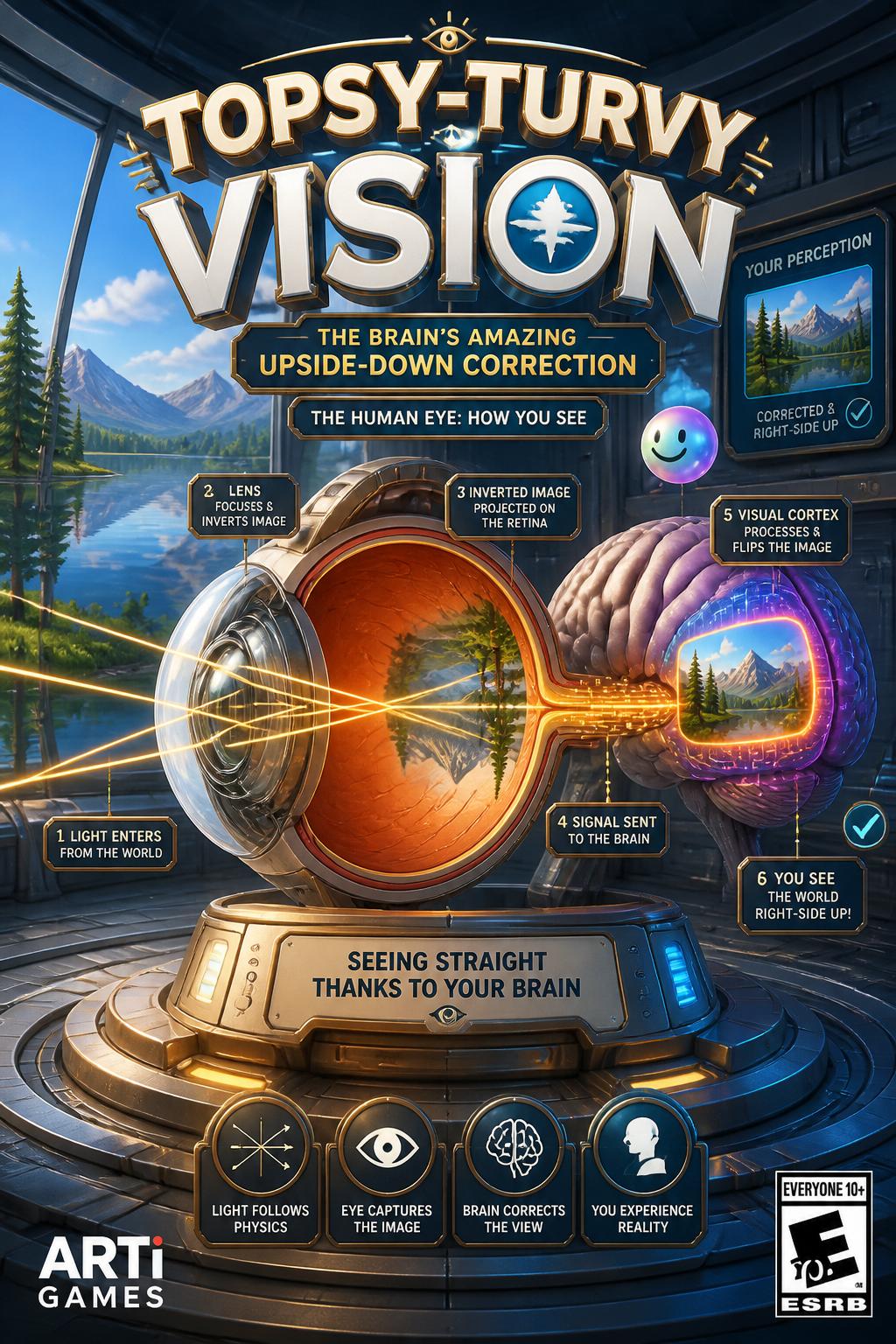
artiteacher Rotate the upside-down images to discover how your brain flips what you see.
artiteacher The brain's darkroom
World falls upside down, / hits the retina, / brain turns it around!
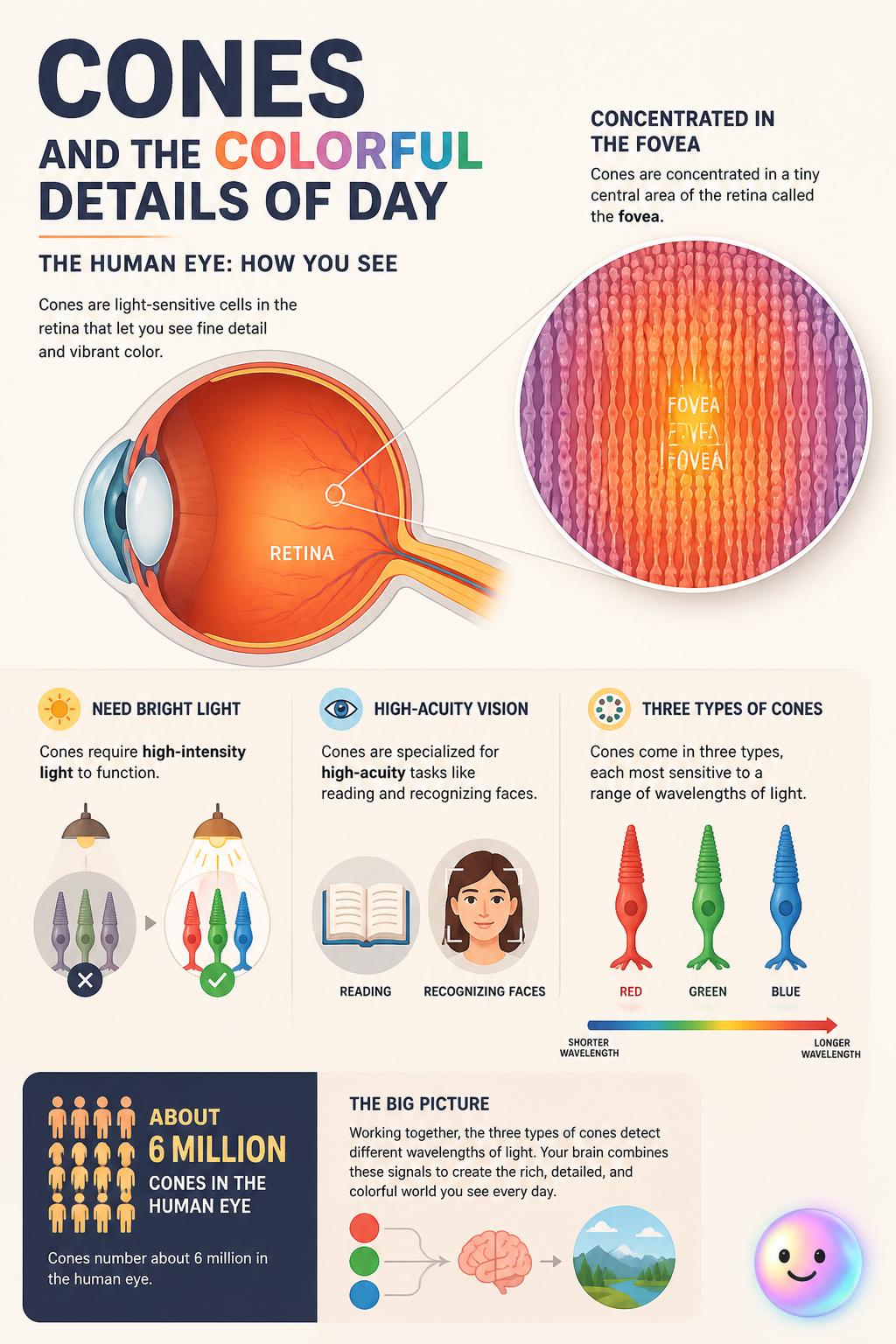
artiteacher Cones pack into the center of the retina, requiring bright light to resolve fine details and vibrant colors.
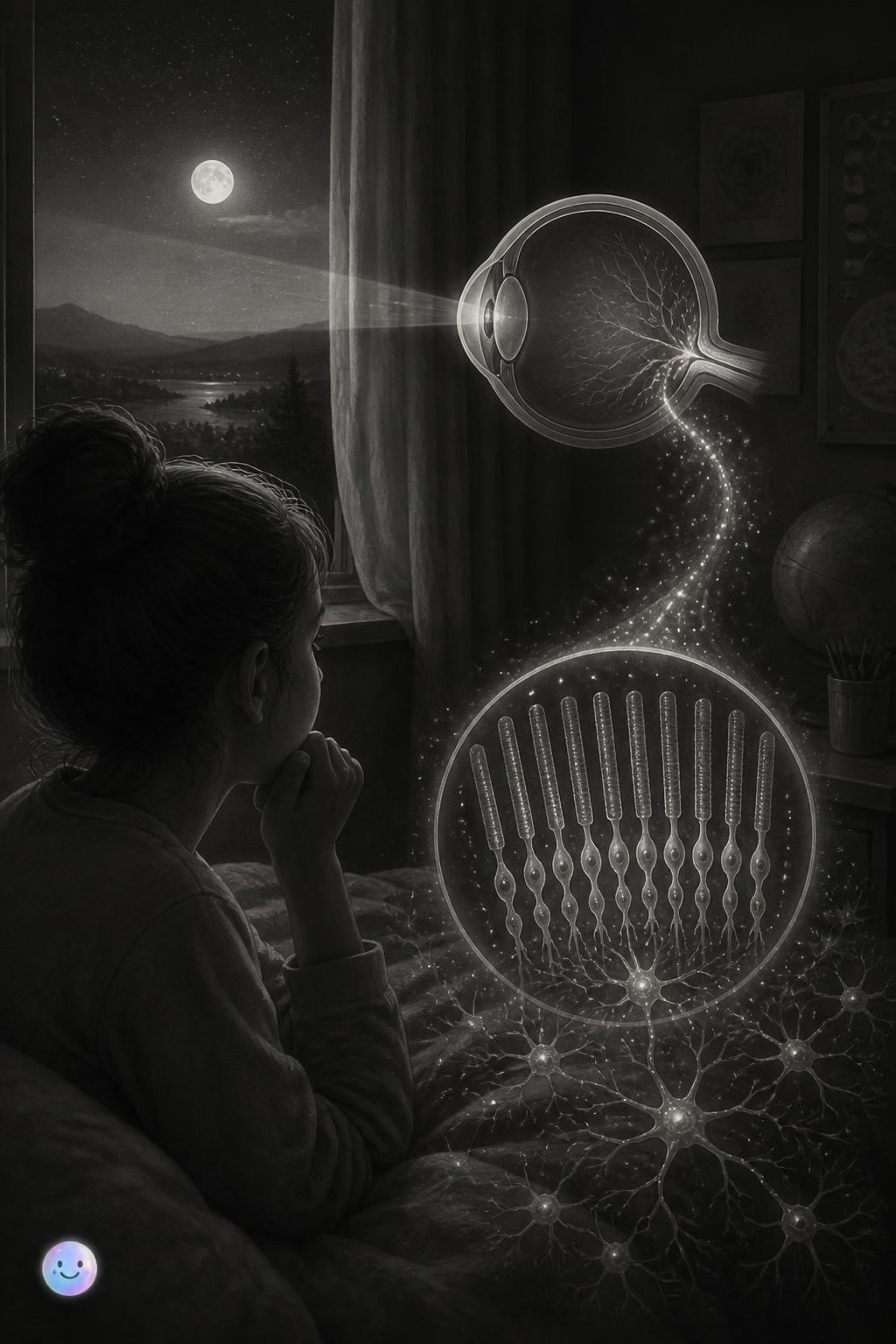
artiteacher Rods are highly sensitive photoreceptors that detect shapes and motion in dim light but cannot perceive color.
Blind spot: Each of your eyes has a blind spot where the optic nerve exits the retina, but your brain seamlessly fills in the missing data.
In which specific central area of the human retina are cones most densely packed?
How does the image of the world first land on the human retina before processing?
Which part of the human brain is primarily responsible for processing visual information?
Which photoreceptors in the human retina are responsible for seeing in low light?
What type of energy do human photoreceptors convert light into for brain transmission?