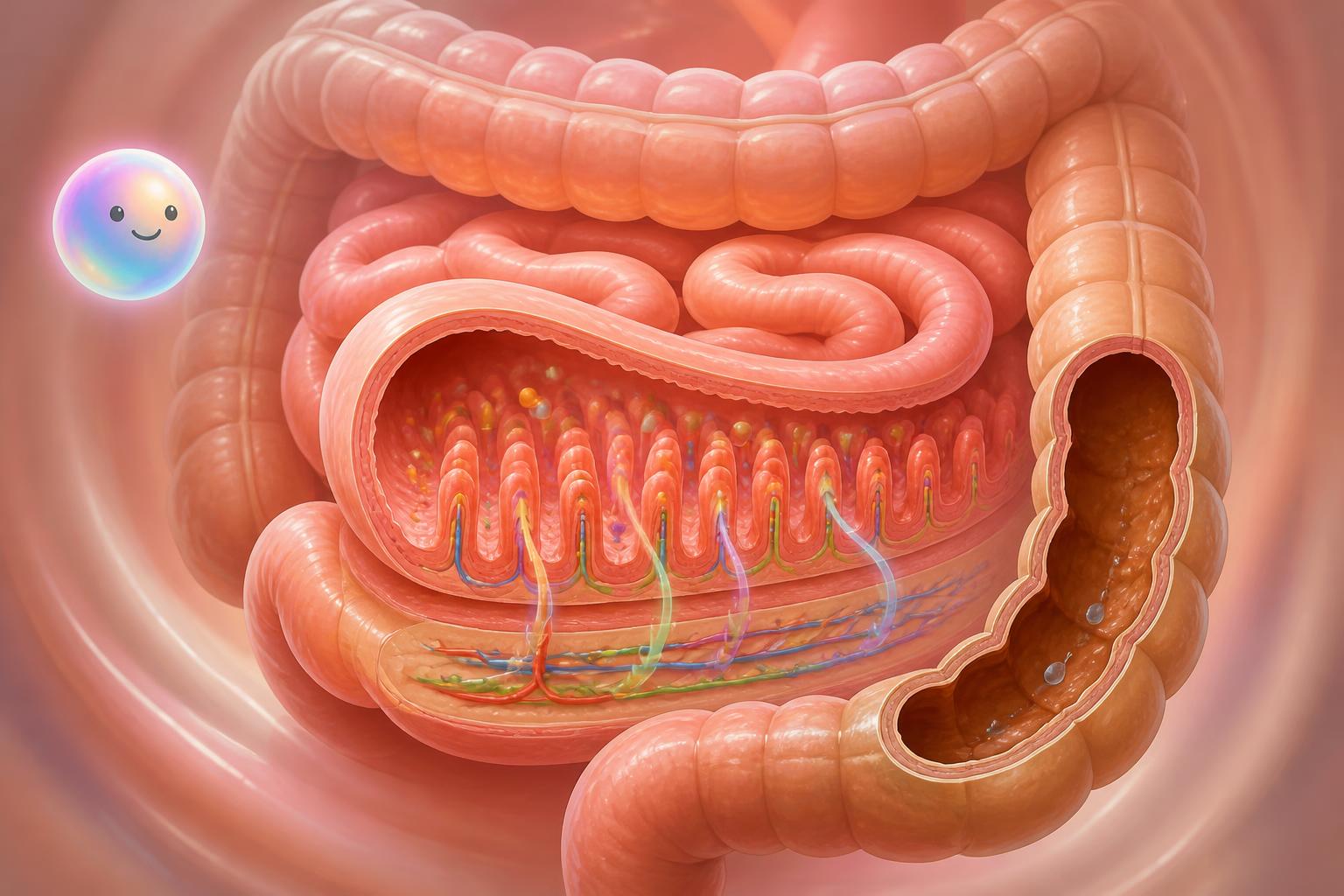
The small intestine and its microscopic forests
The chemistry of nutrient capture
The large intestine as the recycling plant
The bustling world of the microbiome
YOUR GOAL
Master of Inside the human intestines
artiteacher The chemistry of nutrient capture
Microvilli, microvilli, Drawing the fuel from our food!
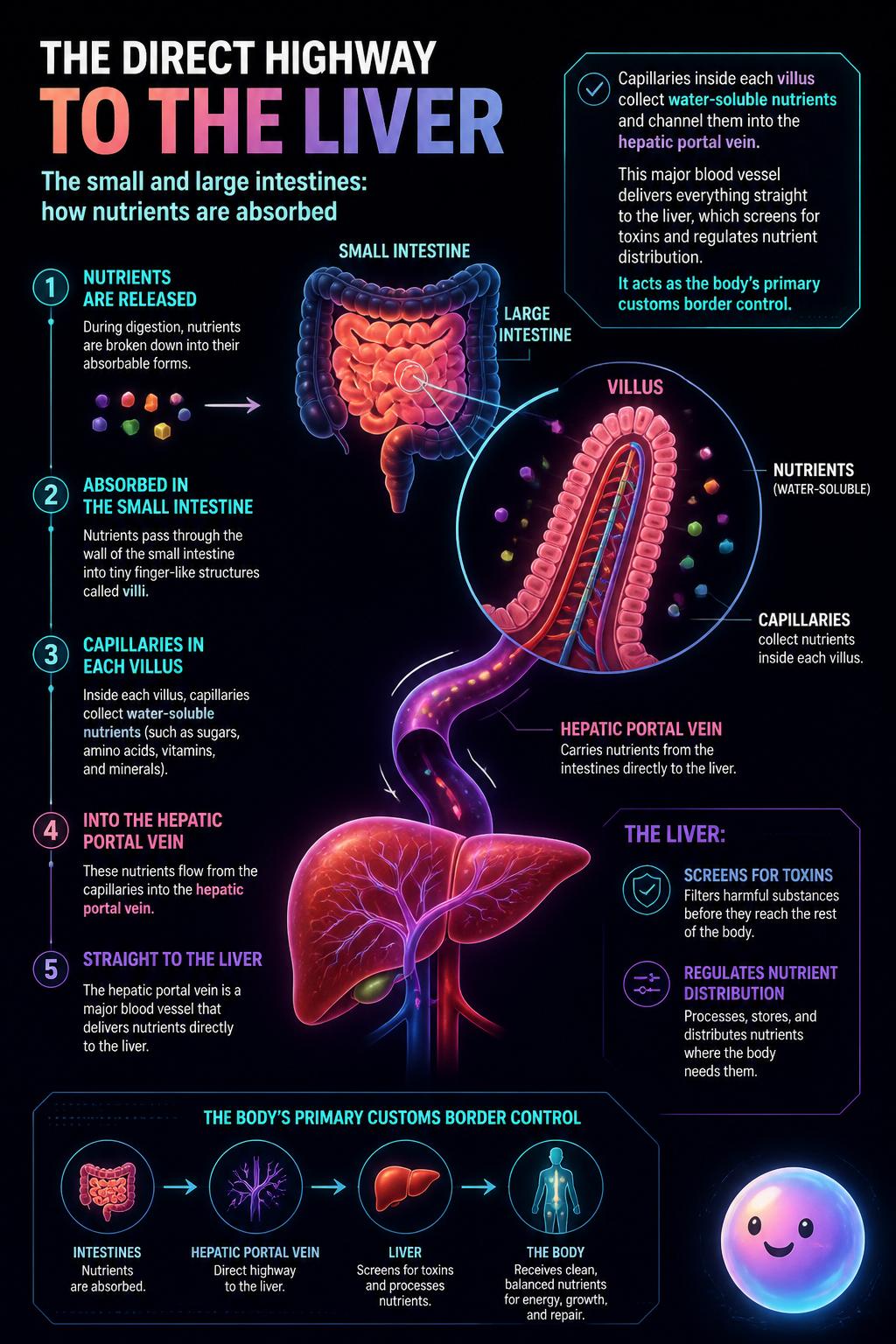
artiteacher Absorbed sugars and amino acids enter capillaries and travel directly to the liver via the portal vein.
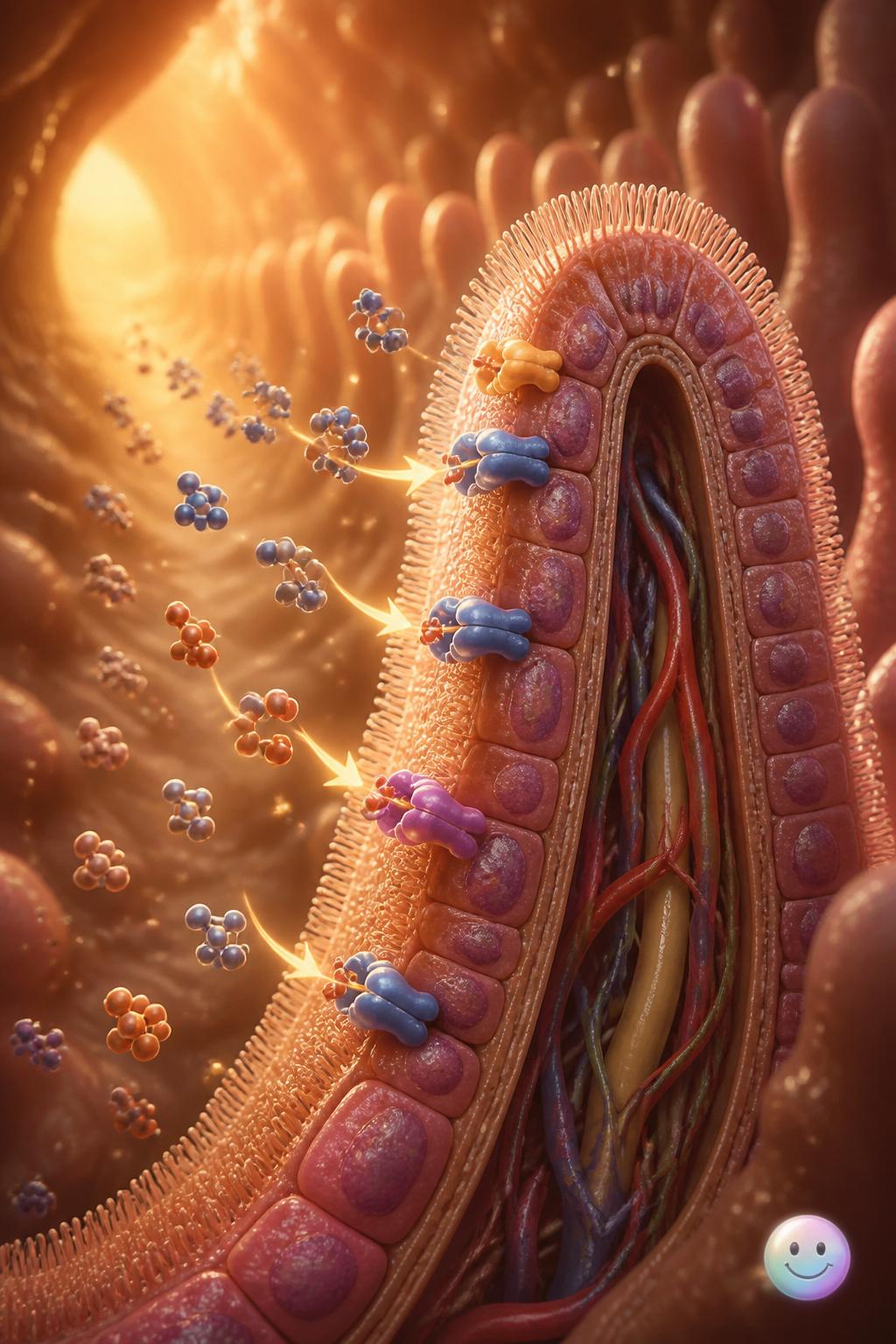
artiteacher Intestinal cells use energy to pump valuable nutrients against gravity and concentration gradients into the body.
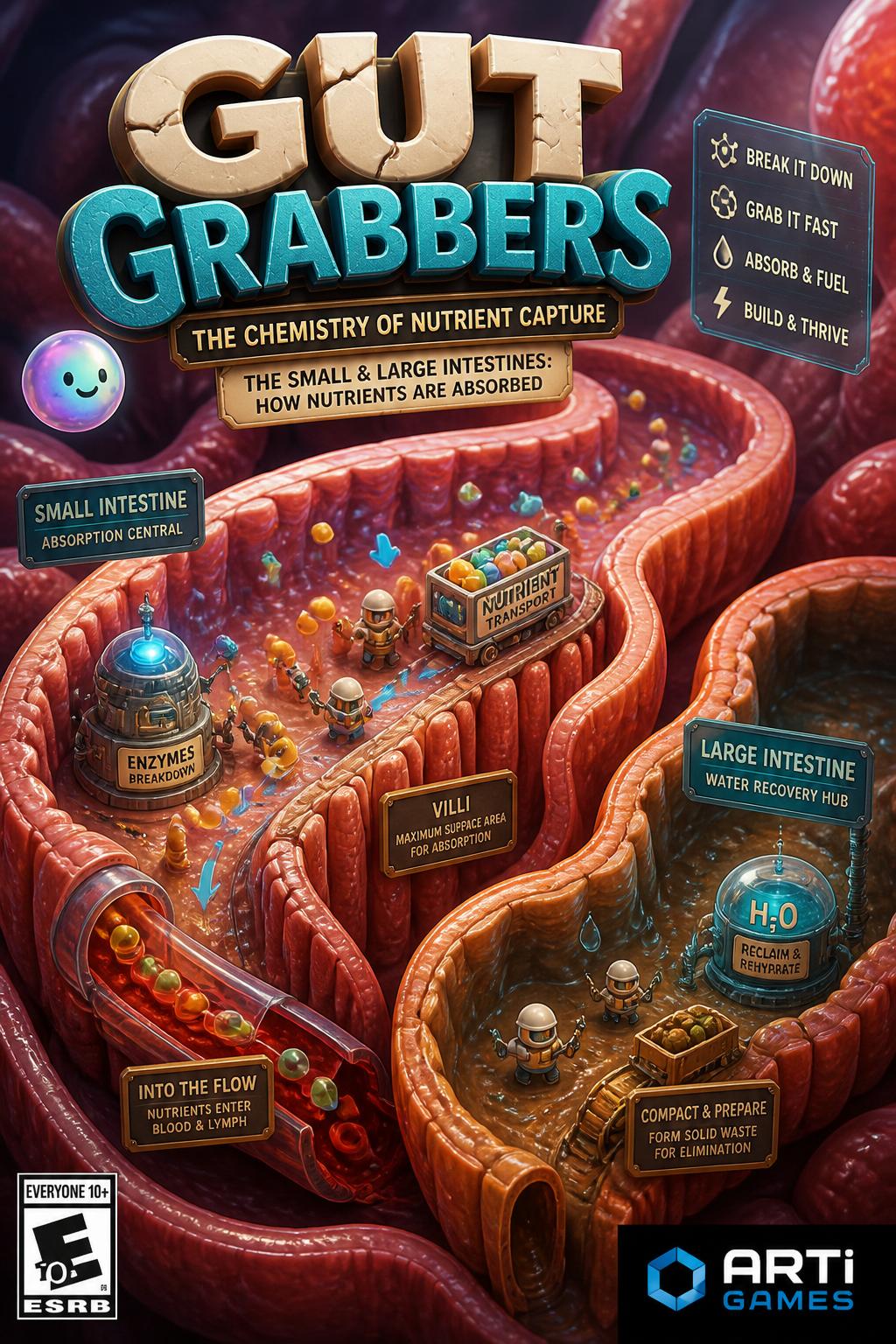
artiteacher Grab passing nutrients inside the intestines to learn how your body absorbs energy.
Fat detours: Unlike sugars and proteins, digested fats are too large for blood capillaries, so they take a scenic detour through your lymphatic system first.
A small, fingerlike projection on the surface of a mucous membrane. In 1561, Gabriele Falloppio first described these structures, which facilitate nutrient absorption in the small intestine.
Which enzyme is specifically responsible for breaking down dietary fats into fatty acids?
Where do large, absorbed fat molecules go immediately after leaving the intestinal cells?
What source of cellular energy powers active transport pumps in the small intestine?
Why must nutrients undergo active transport to cross cell membranes in the intestine?
Which specialized proteins act as chemical scissors to break down food molecules in the gut?
Through which major blood vessel do water-soluble nutrients travel from the intestines to the liver?