
What can a sudden, sustained rise in baseline skin temperature
What can a sudden, sustained rise in baseline skin temperature indicate to a wearable user?
The great screen escape
The screenless superstars
The science of silent tracking
The global shift to ambient tech

play_review Optical sensors measure your heart rate by shining light to see how much blood vessels absorb.
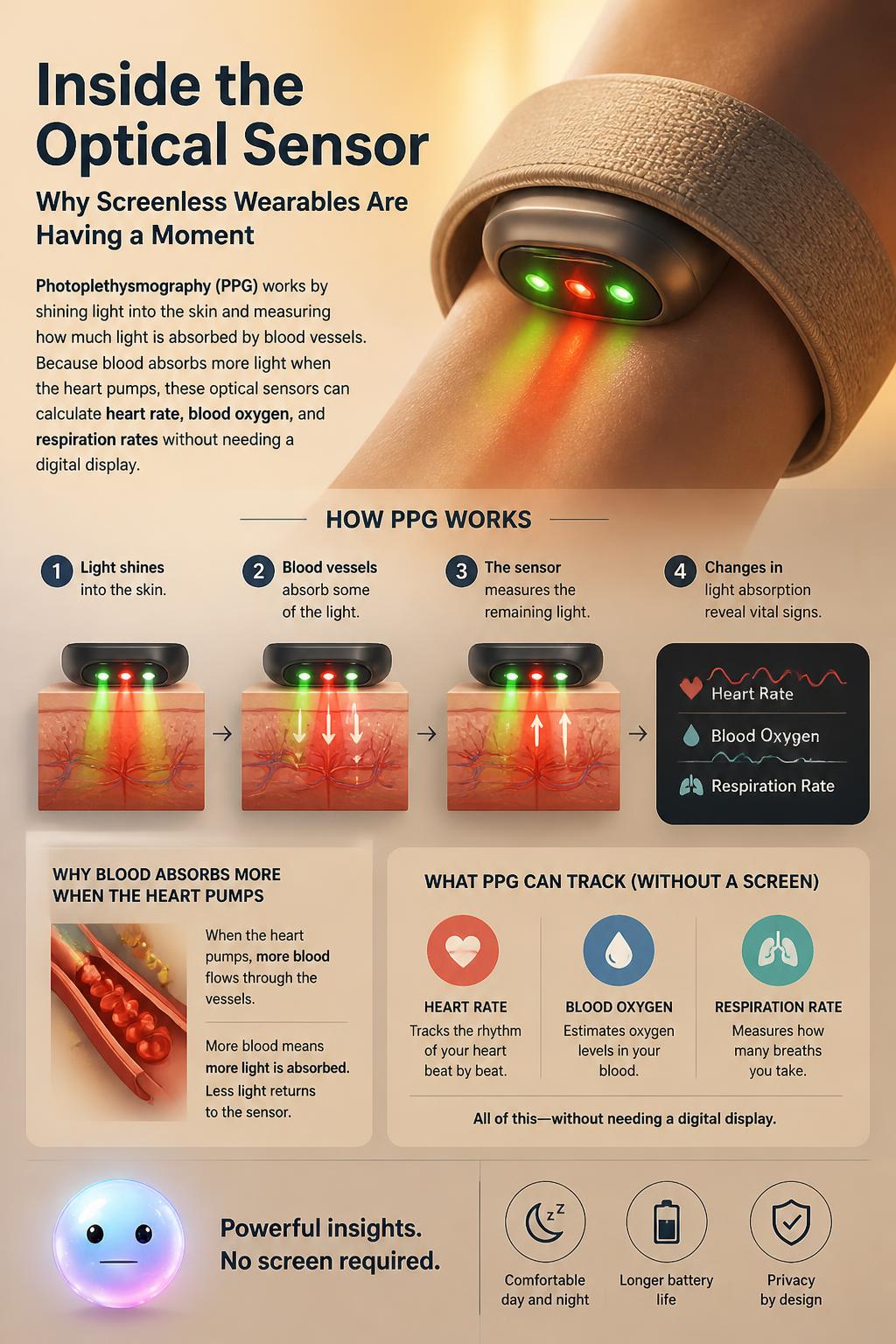
play_review Screenless wearables use photoplethysmography to calculate heart rate, blood oxygen, and respiration by measuring light absorption in pumping blood vessels.
Why do optical sensors in consumer wearables use different colors of light, such as green and red?
What is the scientific name for the optical technology that uses light to measure changes in blood volume?


play_review Screenless wearables measure heart rate variability to show when your body needs rest.
What does a high Heart Rate Variability (HRV) reading typically indicate about a person's body?
Fever warning: Many smart ring users report that their devices flagged a sudden spike in body temperature hours before they actually felt sick.

play_review Tune biometric sliders to decode sleep stages and discover why screenless wearables are popular.
Which sensor inside a screenless wearable is primarily responsible for detecting physical movement and steps?
Why are screenless wearables' sleep stage estimates considered approximations rather than medical diagnoses?
play_review Tracking Invisible Temperature with Screenless Wearables
Invisible temperature tracking checks your baseline in the deep, Sensing point-one degree shifts while you're fast asleep.
What can a sudden, sustained rise in baseline skin temperature indicate to a wearable user?
When do screenless wearables typically measure skin temperature to establish a highly reliable baseline?