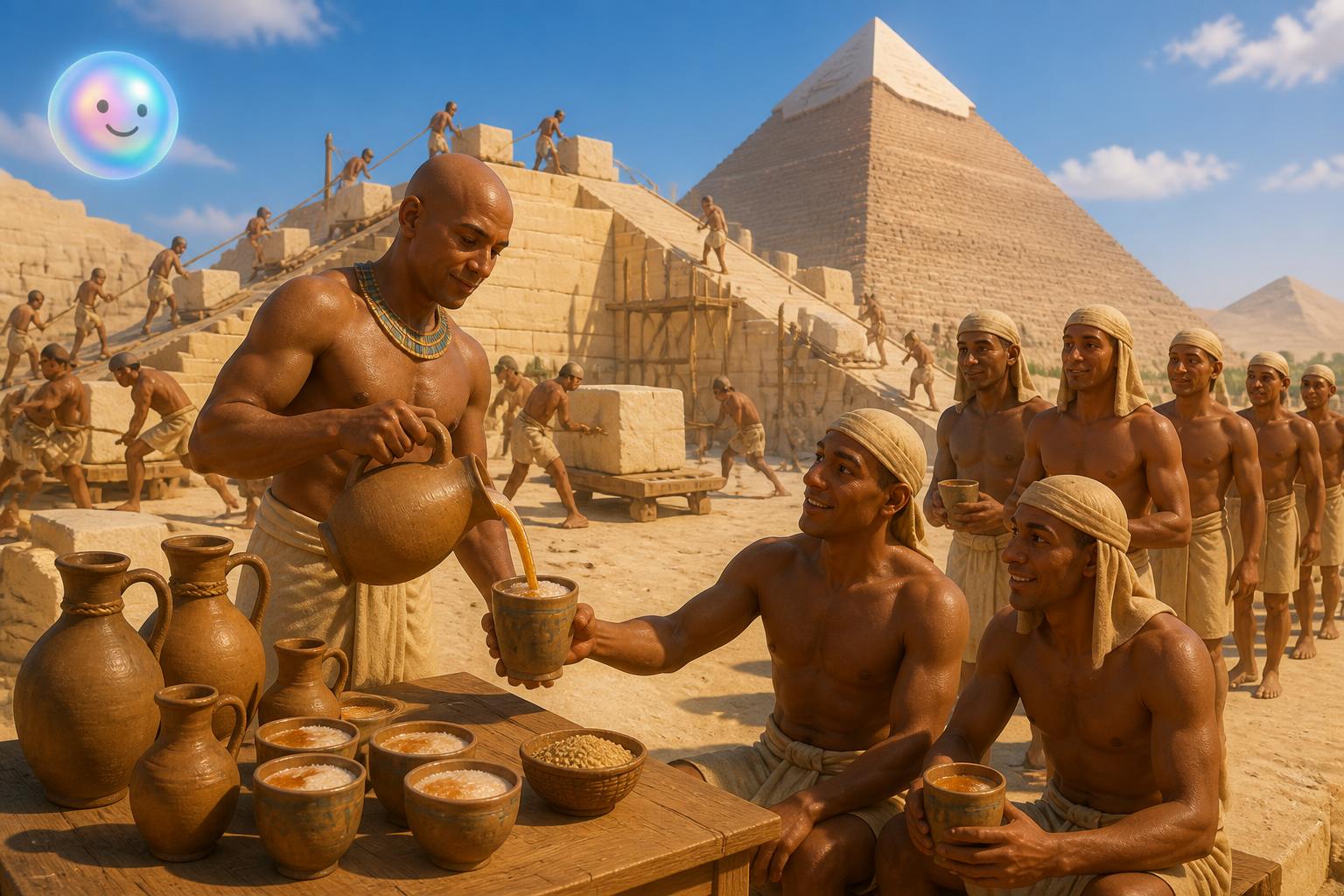
What did cattle bones at the Giza worker village reveal?
Test your knowledge on ancient Egypt and discover what researchers learned from the animal remains found at the Giza pyramid builders' village.
Debunking the pyramid slave myth
Paid in beer and bread
The ultimate team building project

artiteacher Discover the surprising high-protein diet of ancient Egyptian pyramid builders, who were paid in beer rather than being enslaved. Watch now.
artiteacher Watch how massive ancient bakeries fed the pyramid builders, revealing how these workers were actually paid in beer, not enslaved.
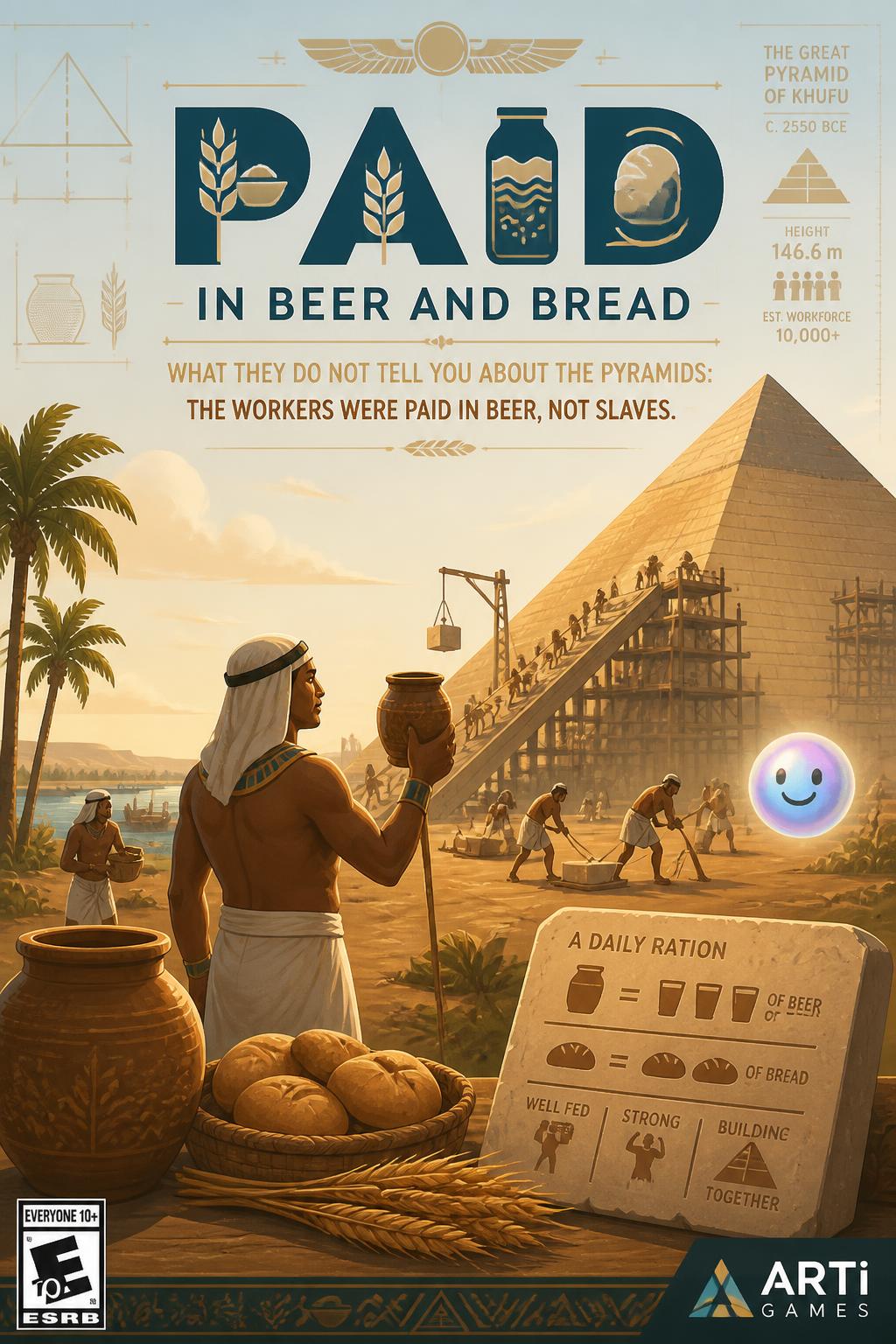
artiteacher Distribute beer to the workers to discover how pyramid builders were paid, not enslaved.
artiteacher Watch how ancient Egyptian pyramid workers were paid in daily beer rations, debunking the myth of slave labor.
artiteacher Discover the medical care provided to ancient Egyptian pyramid builders on the job, proving they were paid workers, not slaves. Watch now.
artiteacher Pyramid worker wages
We built the pyramids on daily wages of thick beer and fresh bread
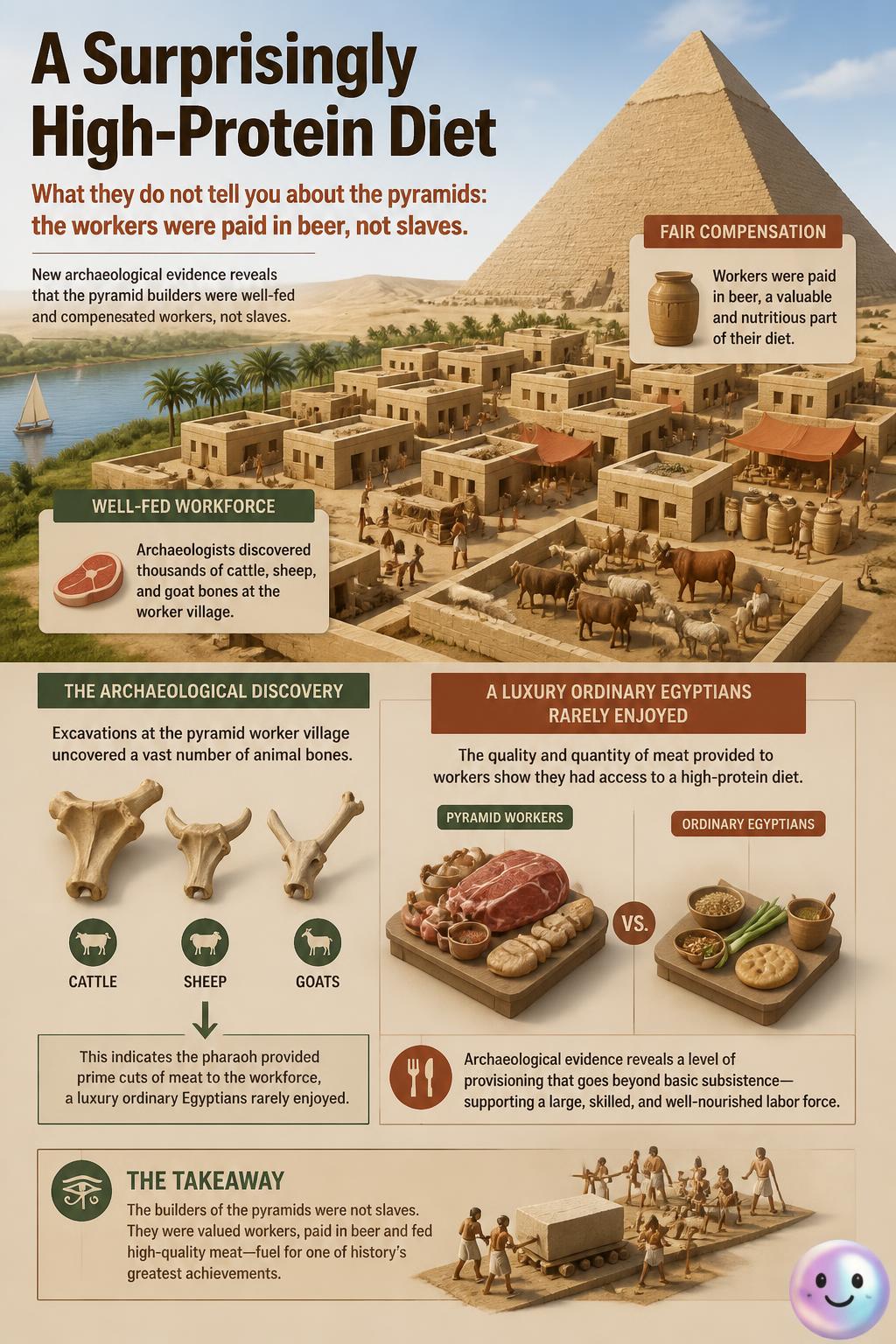
artiteacher Animal bone remains prove that pyramid builders ate high-quality meat regularly.
Ancient Egyptian beer: The beer given to pyramid workers was thick like porridge, sweet, and packed with essential nutrients, acting more like liquid food.
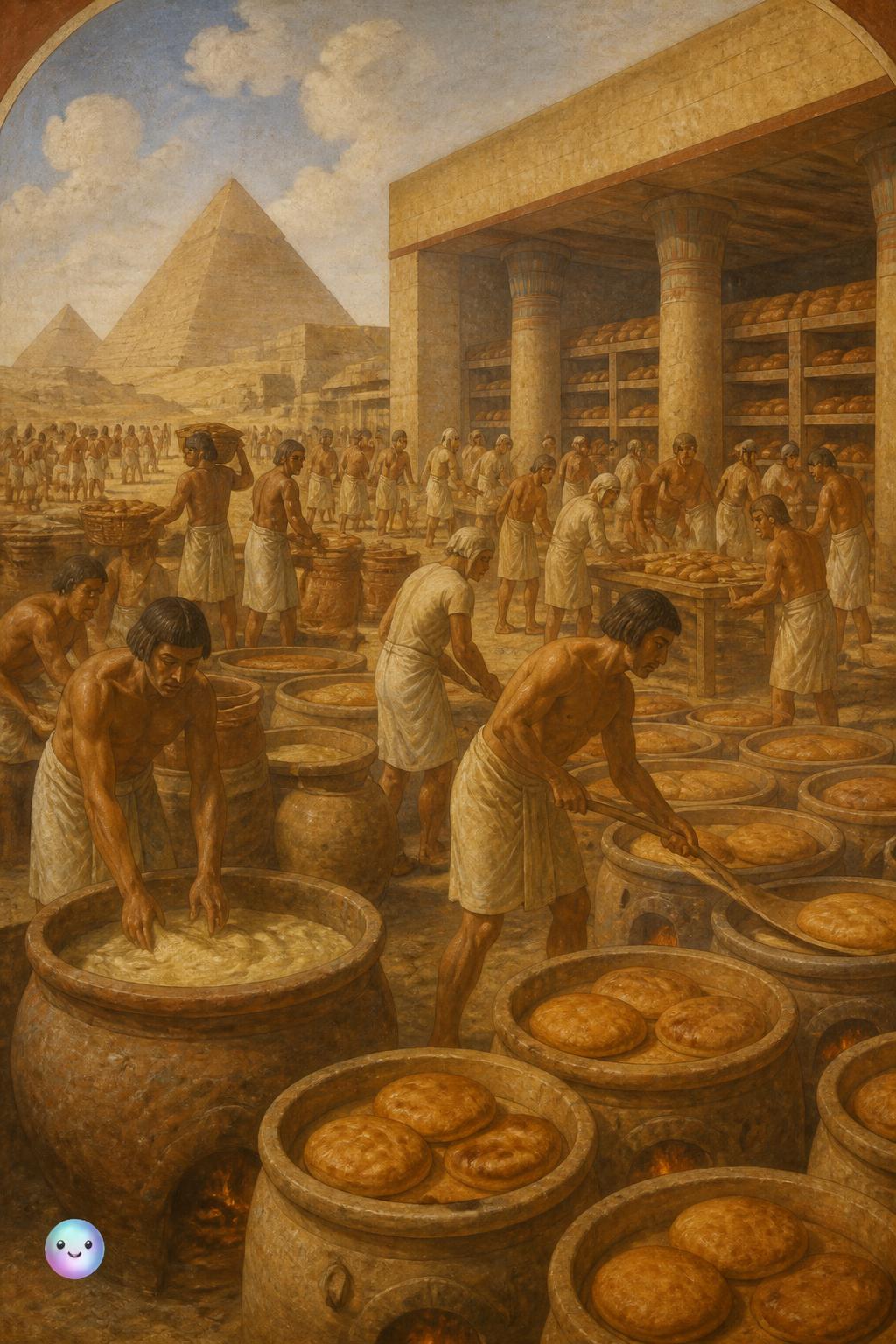
artiteacher Massive bakeries operated around the clock to produce thousands of loaves daily.
A fixed allowance of food, provisions, or other goods, especially during a shortage or war. At Giza, ancient scribes distributed daily rations of bread and beer to thousands of free pyramid builders.
How did the ancient Egyptian economy function during the Old Kingdom pyramid-building era?
What medical evidence was found on the excavated skeletons of Giza pyramid workers?
What did the abundance of cattle bones at the Giza worker village reveal to researchers?