
What is Parrhesia, the Ancient Cynic Value?
Test your knowledge of ancient Greek philosophy with this quiz on the core Cynic value of parrhesia. Can you define this radical practice?
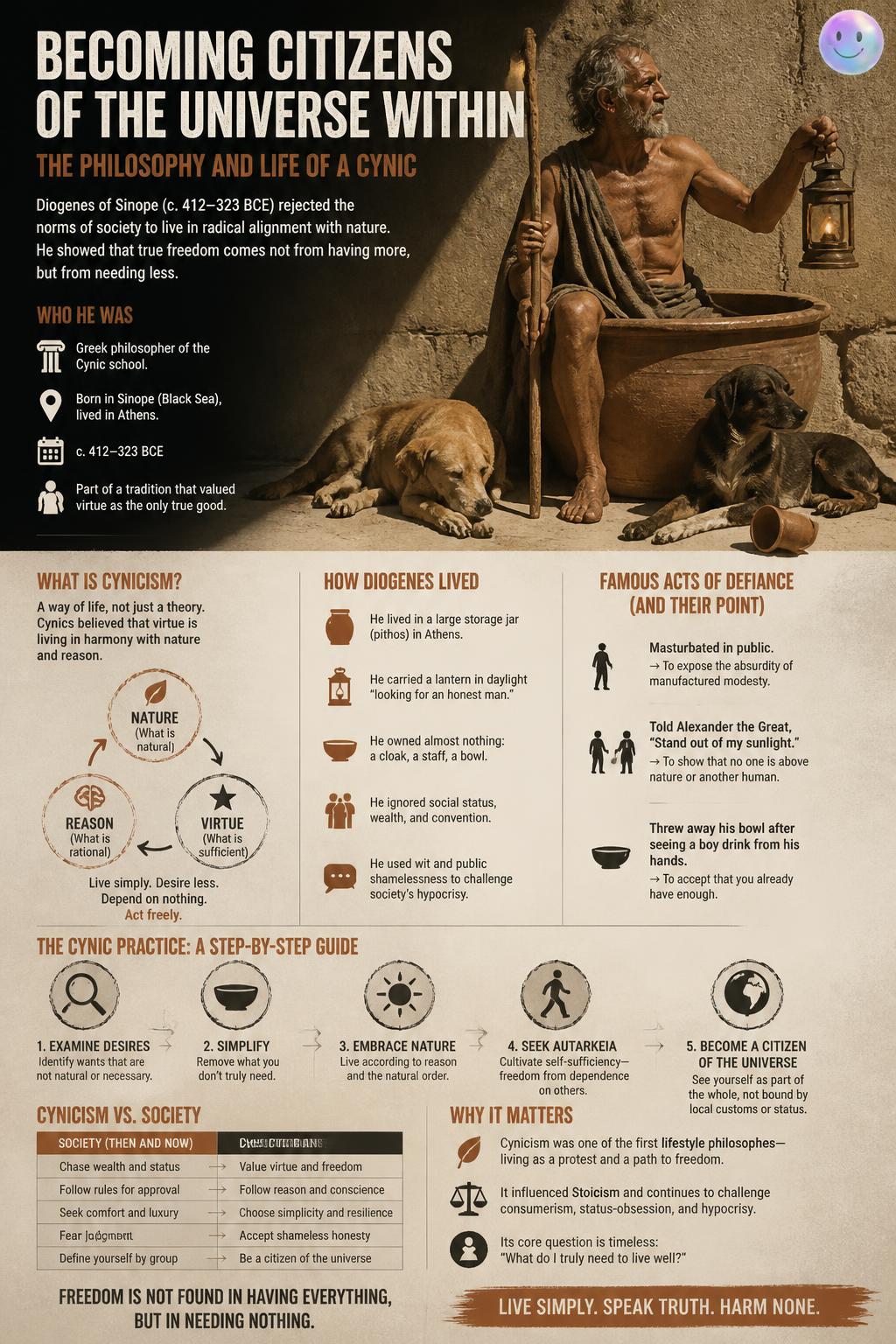
The birth of Cynicism and the tub of Diogenes
Radical acts and legendary encounters
The philosophy of living like a dog
From ancient tubs to modern minimalists

nic Diogenes coined the word cosmopolites, meaning citizen of the cosmos, rejecting national boundaries for universal connection.
nic Ancient Cynics risked death to expose powerful hypocrites, believing fearless honesty was essential for a healthy society.
nic Cynics reduced their physical needs to almost nothing, achieving complete independence from wealth and society's expectations.
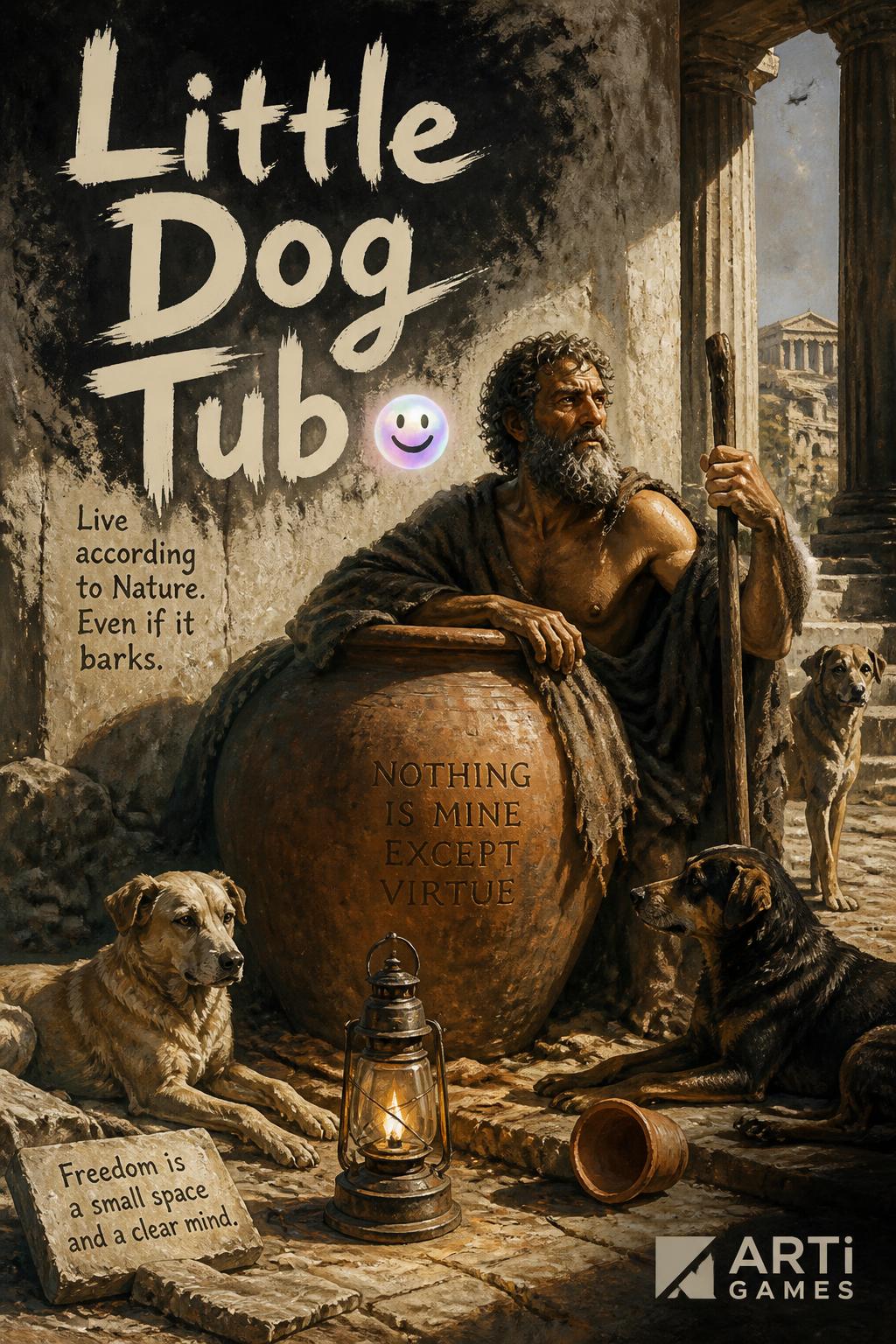
nic Toss extra belongings from your tub to discover how Diogenes found freedom in wanting less.
Dog monument: After Diogenes died, the citizens of Corinth erected a monument of a dog resting on a marble pillar in his honor.
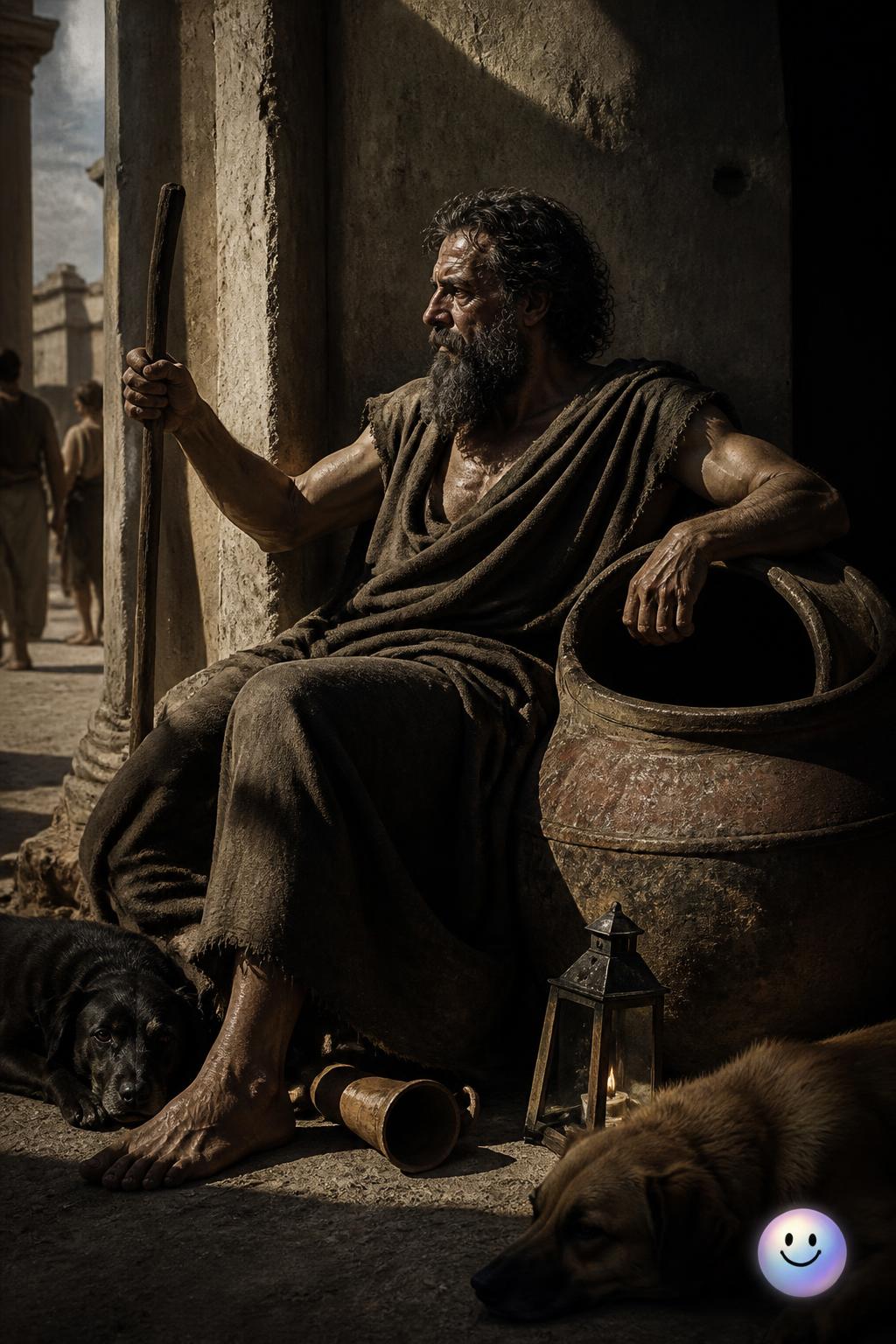
nic Cynics practiced parrhesia, which meant speaking the absolute, unfiltered truth to anyone, regardless of status.
An inclination to believe that people are motivated purely by self-interest. Diogenes of Sinope popularized this philosophy in fourth-century Athens by begging and sleeping in a tub.