
What state of matter makes up the glowing structure of a red sprite?
The orbital view of space lightning
Anatomy of a red sprite
The thunderstorm's secret crown
Chasing ghosts with cameras

artiteacher Fifty miles above Earth, colliding electrons energize nitrogen molecules in the thin air. This high-altitude reaction releases energy as a vibrant crimson light.
artiteacher Rising air pressure squeezes descending sprite filaments. This density change alters how nitrogen molecules release energy, shifting their glow from red to a deep blue-violet.
artiteacher Standard lightning bolts heat surrounding air to fifty thousand degrees Fahrenheit. High-altitude sprites emit light by exciting gas molecules, creating cold plasma with no heat.
artiteacher Electromagnetic pulses create rapidly expanding rings of light called ELVES. Meanwhile, blue jets shoot narrow cones of light directly upward from thunderstorm clouds.

artiteacher Tap the flashing storm to discover why eerie red sprites bloom above thunderstorms.
artiteacher Anatomy of a Red Sprite
Cold plasma blooms where the nitrogen glows, Triggered by the lightning striking far below.
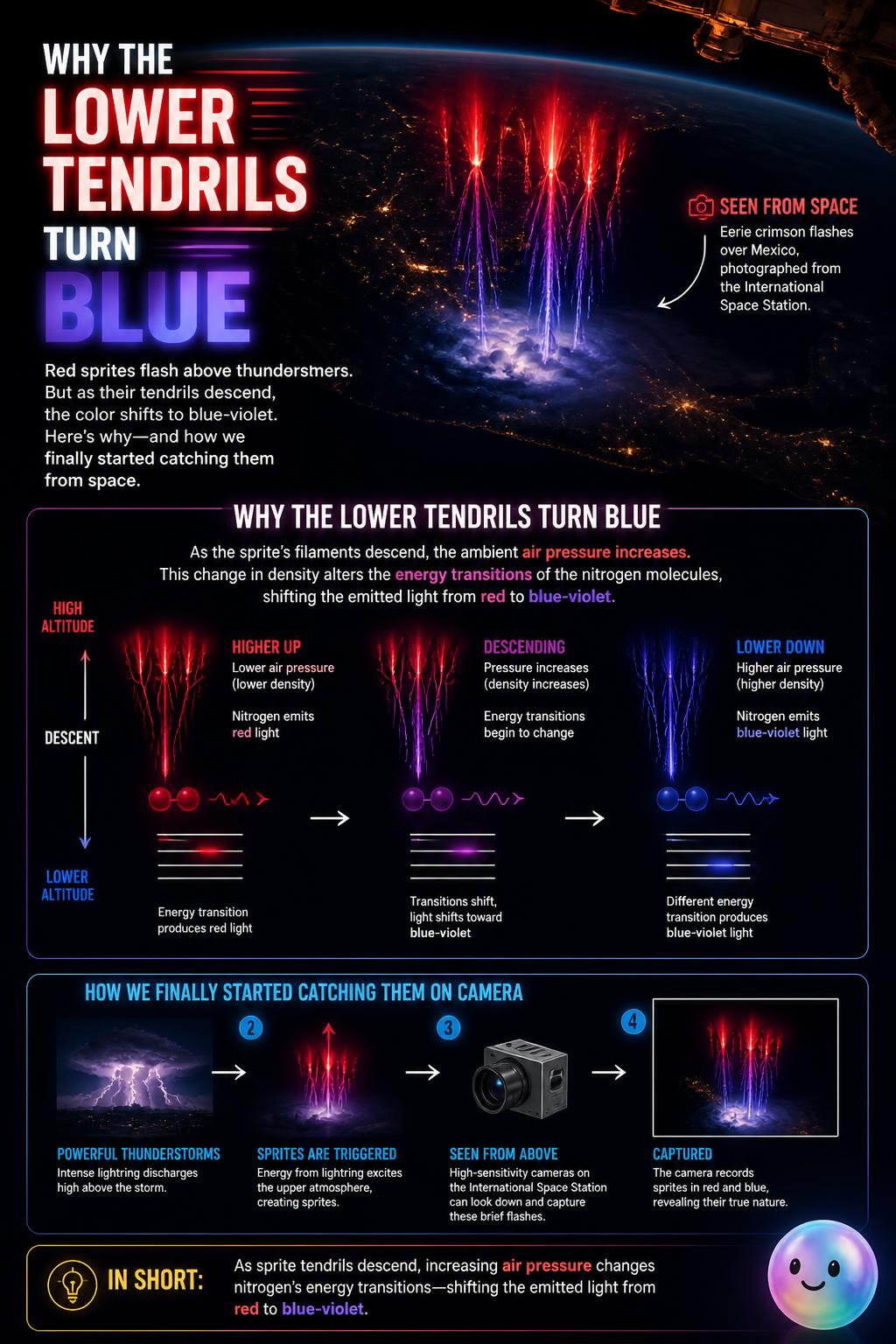
artiteacher Higher air pressure closer to Earth causes the lower tendrils of a sprite to glow blue or purple.
Neon sky: The physics behind a glowing red sprite is identical to the technology used to light up neon signs on Earth.
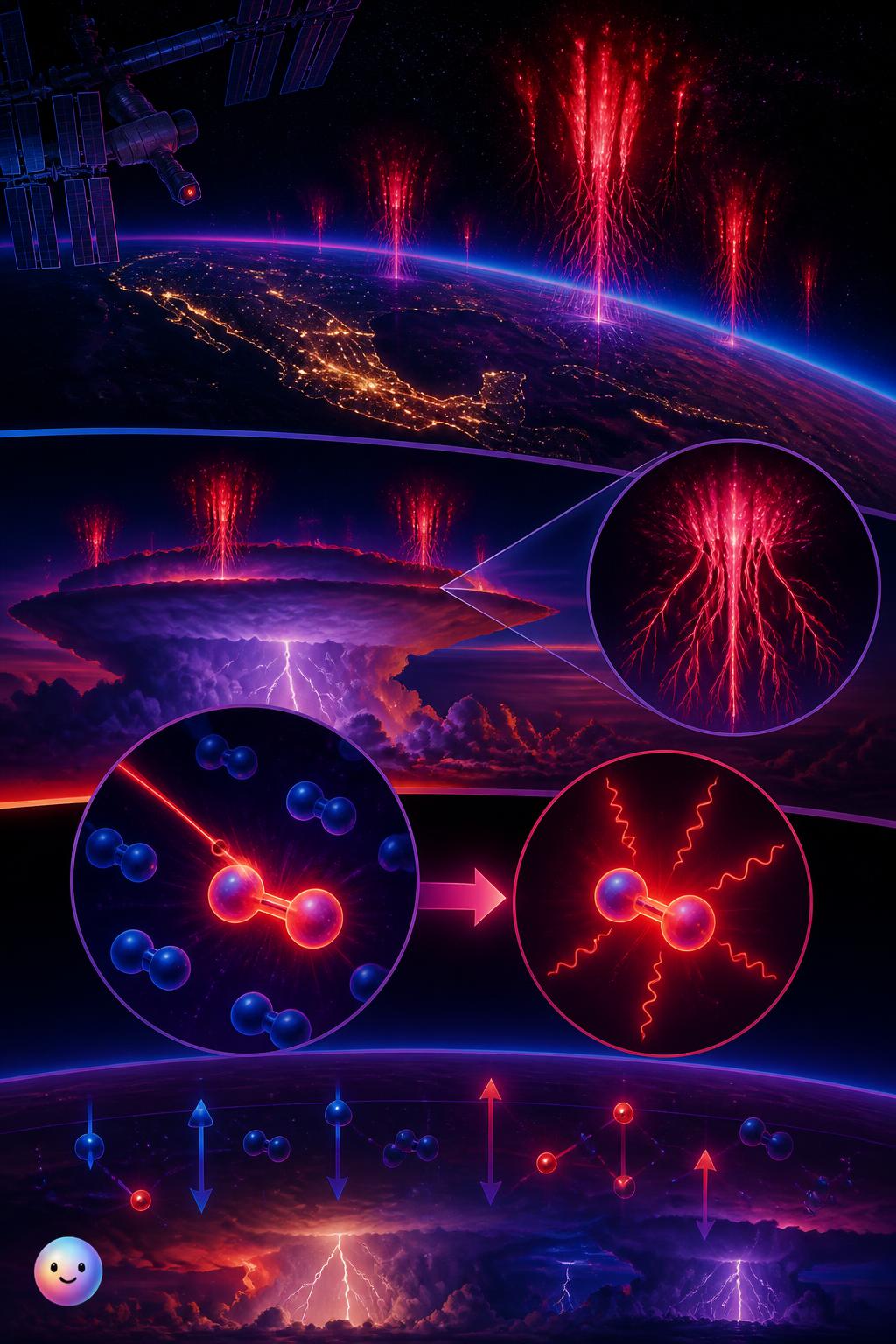
artiteacher The characteristic red color of sprites is created by excited nitrogen molecules in the thin mesosphere.
A faint, fleeting electrical discharge that occurs in the upper atmosphere above a thunderstorm. In July 2025, astronaut Nichole Ayers photographed the phenomenon over Mexico from the International Space Station.
What is the typical thickness of an individual filament or tendril in a red sprite?
Which atmospheric gas is primarily excited to produce the crimson red color of a sprite?
Why do the lower tendrils of a red sprite shift from red to a blue-purple color?
How do the temperatures inside a red sprite compare to a standard lightning bolt?