The engine in your chest
The magic on your wrist
Mastering the five zones
The art of recovery
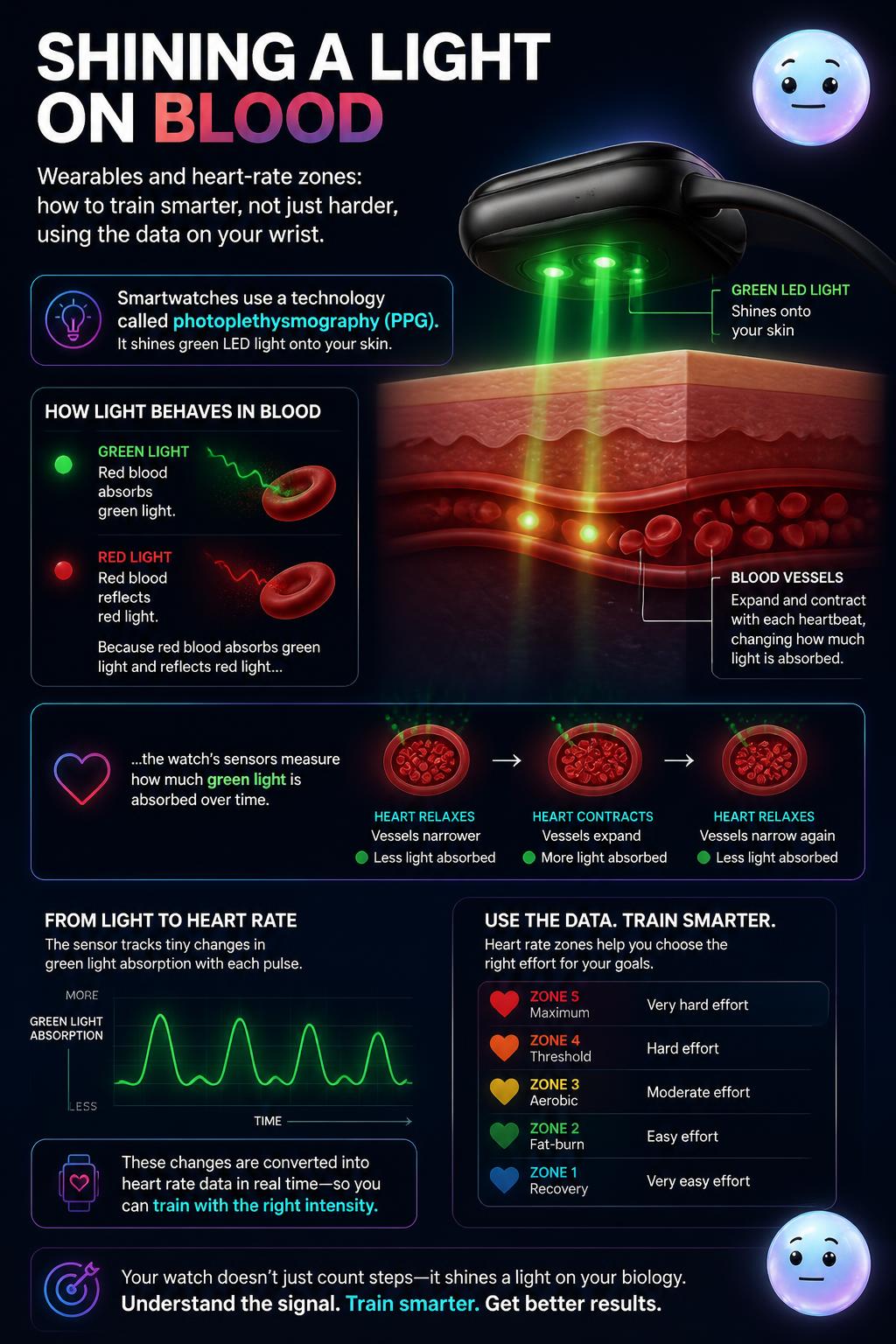
coach Photoplethysmography sensors detect heartbeats because red blood absorbs the watch's green LED light as vessels expand and contract.

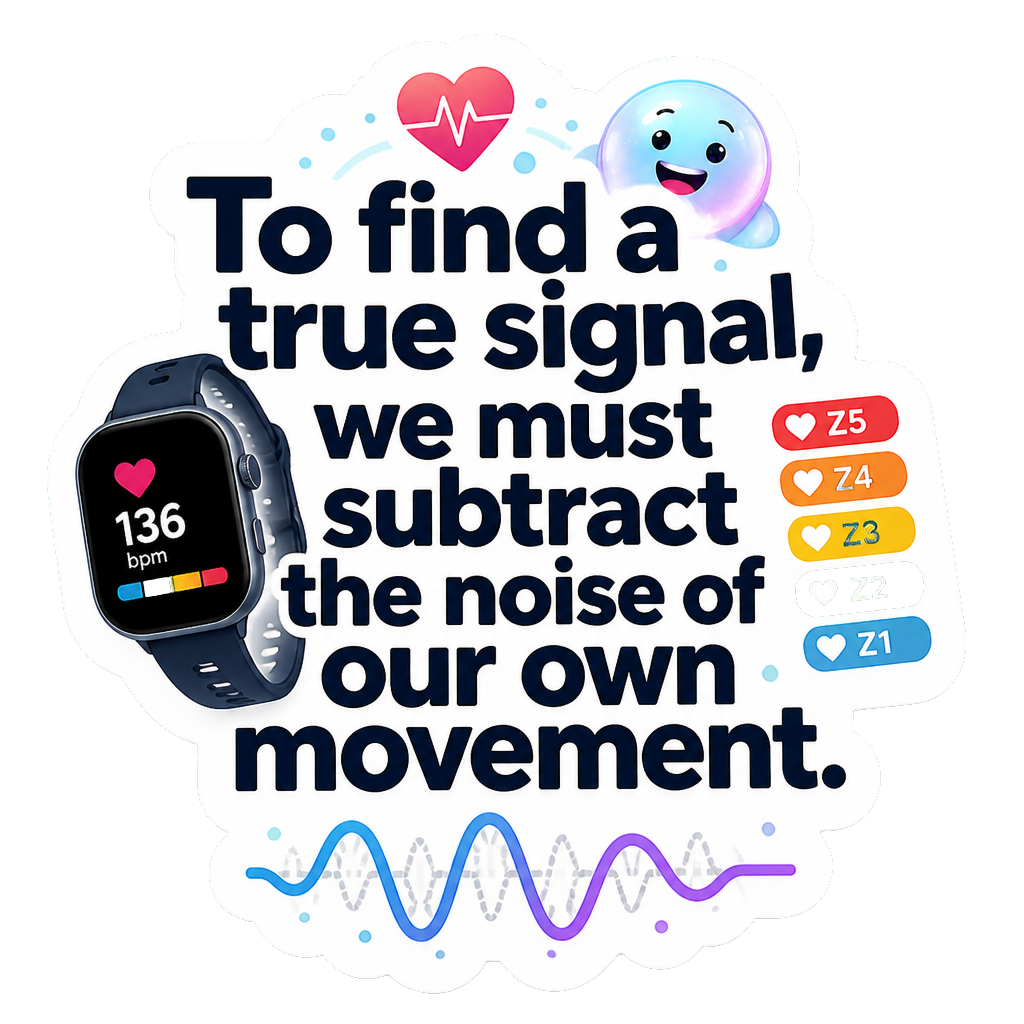
coach Serious athletes choose chest straps over wrist trackers to avoid movement interference.

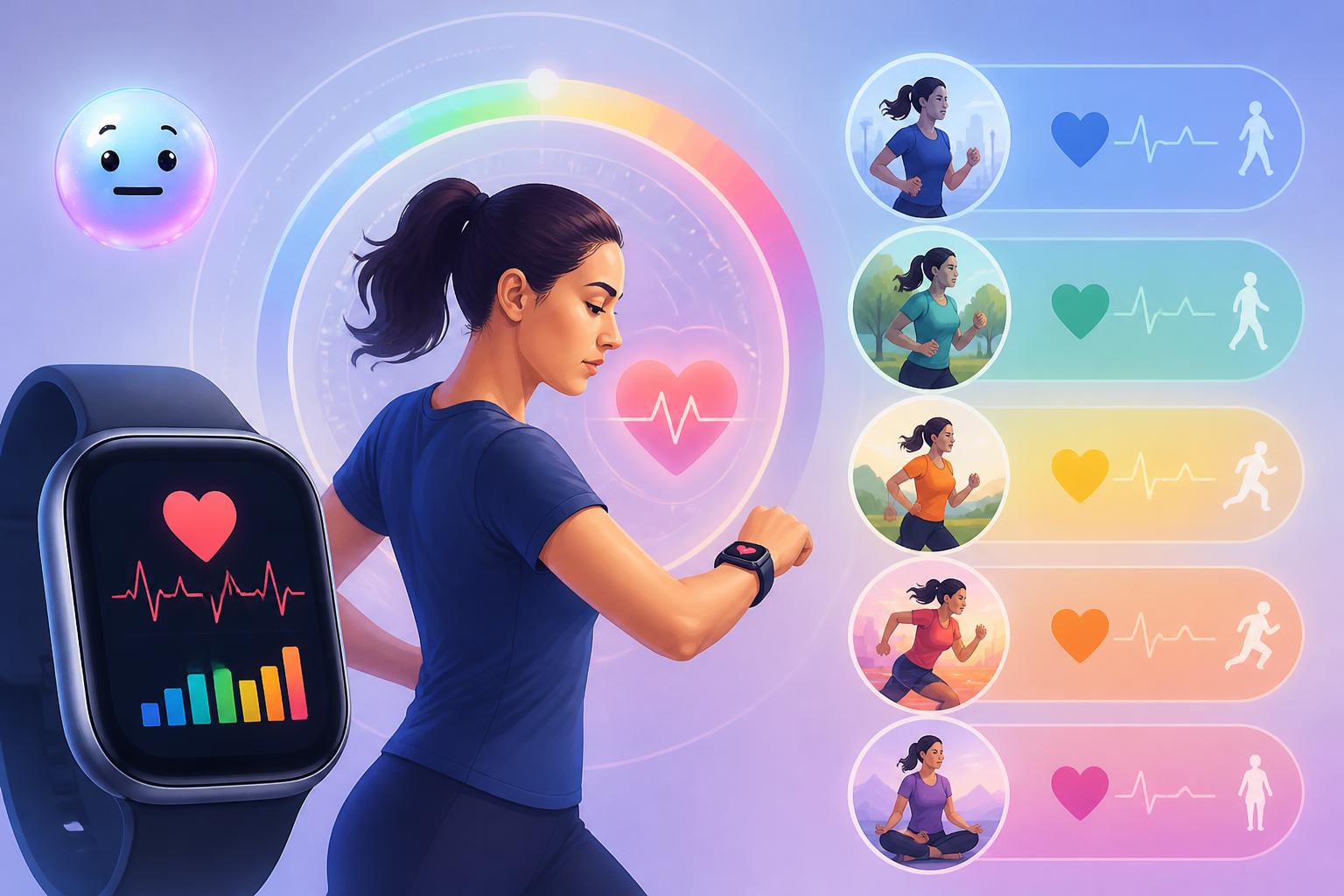
coach Match activities to heart rate zones to discover how to train smarter, not harder.
The color of blood: Blood is red because it reflects red light and absorbs green light, which is why your watch's green LEDs can detect your pulse.
An optical technique used to measure changes in blood volume within subcutaneous tissue. Wearable trackers utilize this technology via green LEDs to measure blood volume changes in the user's wrist.
What is the scientific name of the optical technology smartwatches use to measure heart rate?
Why do smartwatches use green LED lights instead of other colors for active heart-rate tracking?
Why are optical wrist sensors more prone to errors during high-intensity workouts than chest straps?
What type of signal does a chest-strap heart rate monitor measure to track your pulse?
Which light wavelength is often added to modern wearables alongside green light to improve readings across diverse skin tones?
Why can darker skin tones sometimes affect the accuracy of green-light optical heart-rate sensors?
What is the term used for the false heart-rate spikes caused by physical movement during a workout?