Chapter 1
The puzzle pieces beneath our feet
Chapter 2
When mountains blow their tops
Chapter 3
Shaking things up down below
Chapter 4
Coexisting with a restless planet
Ch 2 · When mountains blow their tops

artiteacher Volcanic Climate Cooling
The sulfur haze reflects the solar glow, To cool the climate of the earth below.
artiteacher Deadly pyroclastic flows race down volcanoes during explosive eruptions.
artiteacher Silica levels determine whether volcanoes erupt smoothly or explosively.
BETA
artiteacher Swipe shifting tectonic plates to discover what triggers powerful earthquakes and volcanic eruptions.
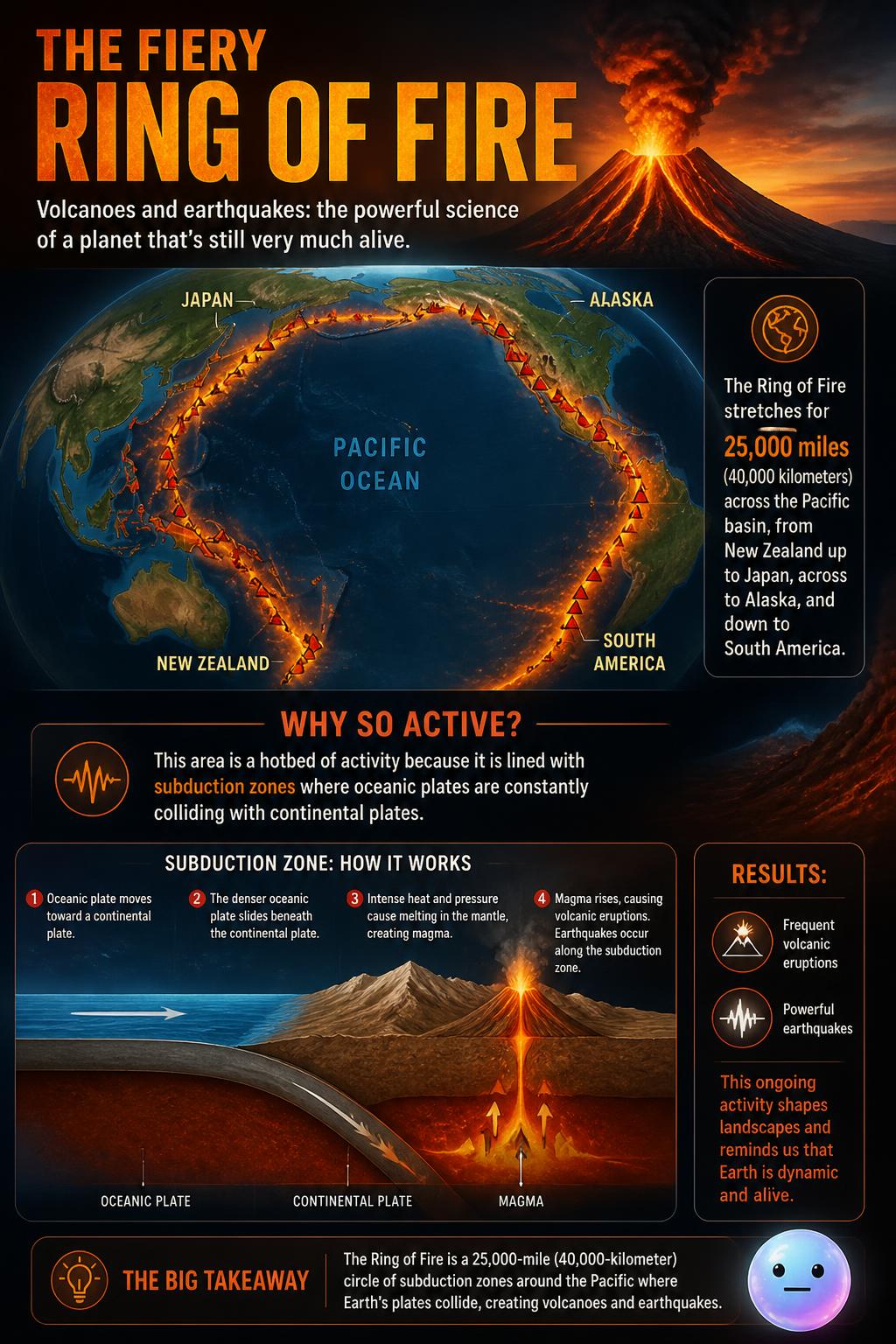
artiteacher Subduction zones connect New Zealand, Japan, Alaska, and South America across the Pacific basin, where plates constantly crash together.
Quiz
Which ocean is almost entirely surrounded by the volcanic loop known as the Ring of Fire?
Quiz
Approximately what percentage of the world's active volcanoes are located within the Pacific Ring of Fire?
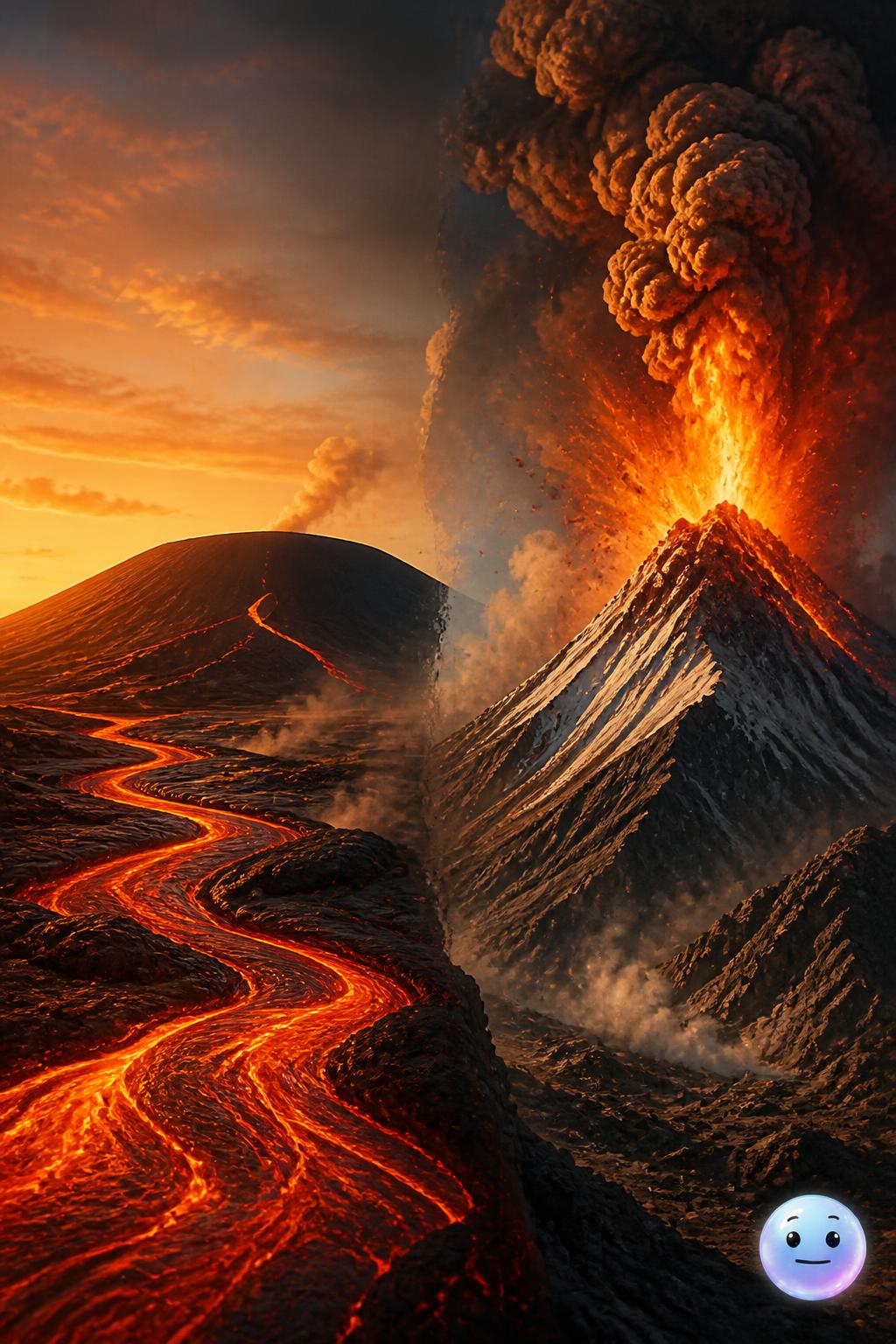
artiteacher Sticky, high-silica magma traps gas to cause explosive eruptions at steep Mount Fuji.
Quiz
What type of volcano, characterized by broad, gently sloping sides, is formed by runny, low-silica basaltic lava?
Quiz
Which mineral compound's abundance determines whether magma is runny and smooth or thick and highly explosive?
Fun Fact
Underwater giants: The largest known volcano on Earth is Tamu Massif, located underwater in the Pacific Ocean, covering an area the size of New Mexico.
Quiz
What is the term for the superheated, fast-moving avalanche of gas, ash, and rock that sweeps down a volcano during an eruption?
Quiz
Which ancient Roman city was buried and preserved by a pyroclastic flow from Mount Vesuvius in 79 CE?
Glossary
caldera (noun)
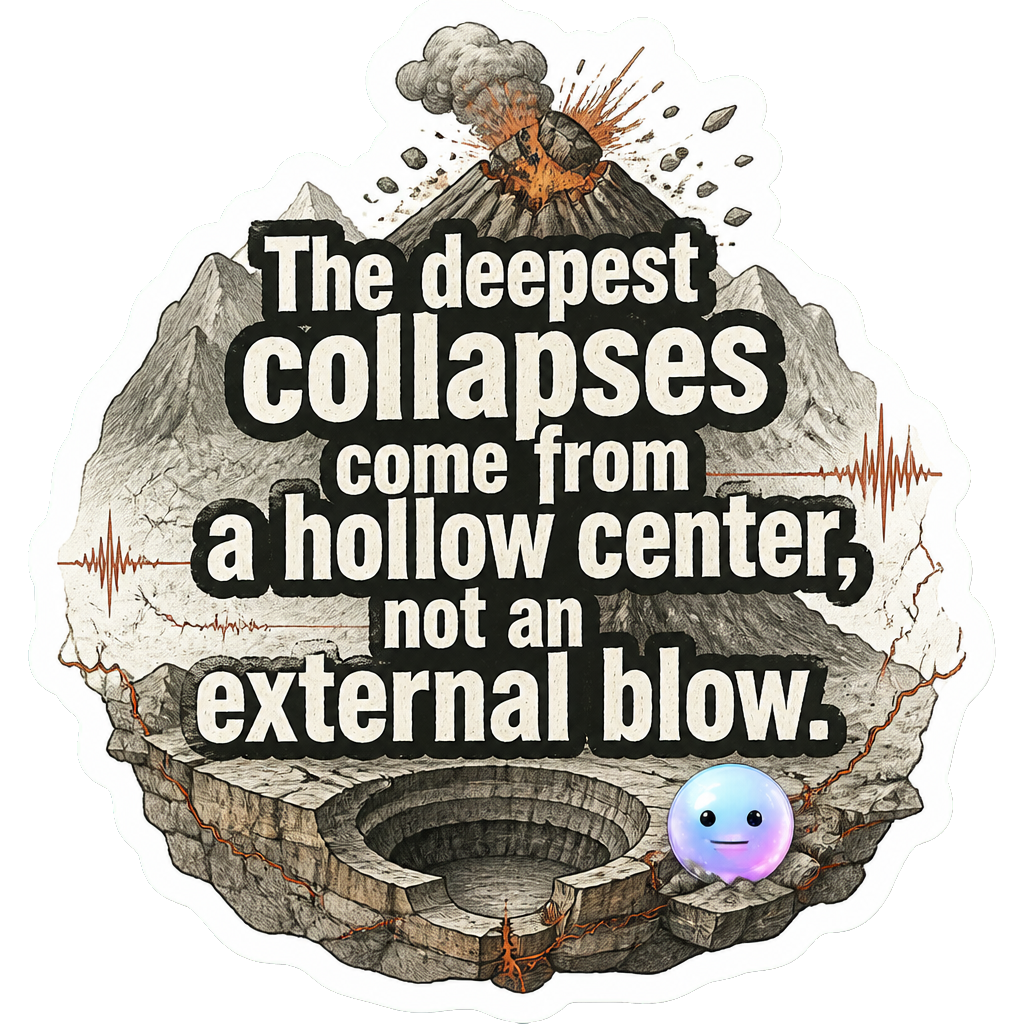
A large volcanic crater formed by the collapse of the central part of a volcano. About 7,700 years ago, Mount Mazama erupted explosively, leaving behind the caldera now known as Crater Lake.
A large volcanic crater formed by the collapse of the central part of a volcano. About 7,700 years ago, Mount Mazama erupted explosively, leaving behind the caldera now known as Crater Lake.
Quiz
Which famous American national park sits directly on top of an ancient volcanic caldera?