BETA
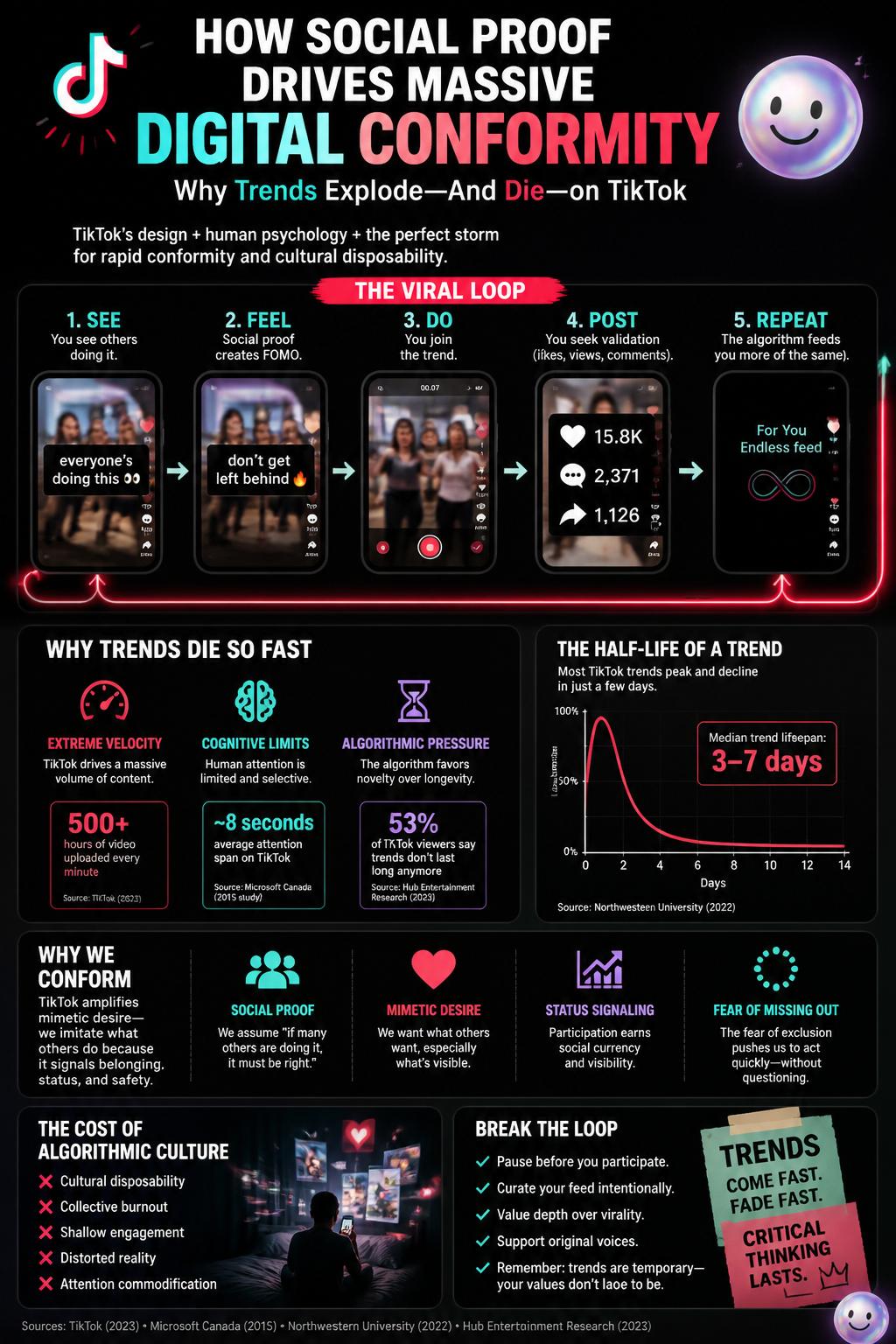
A 2019 Technical University of Denmark study found that global collective attention spans have shrunk. A single trending topic in 2013 lasted 17.5 hours, whereas today it often peaks within minutes.
dash Because unpredictable videos trigger dopamine spikes that keep us scrolling, TikTok trends die in 48 hours.
dash As our attention spans shrink, online trends that once lasted hours now peak within minutes.
dash TikTok's reusable sounds trigger mirror neurons, prompting our brains to instantly imitate them.
dash TikTok Trend Psychology
We all jump on the trends, it's true, But when everyone does, its magic is through!
Attention spans: A 2019 study showed that the average lifespan of a global trend shrank from 17.5 hours to under ten minutes.
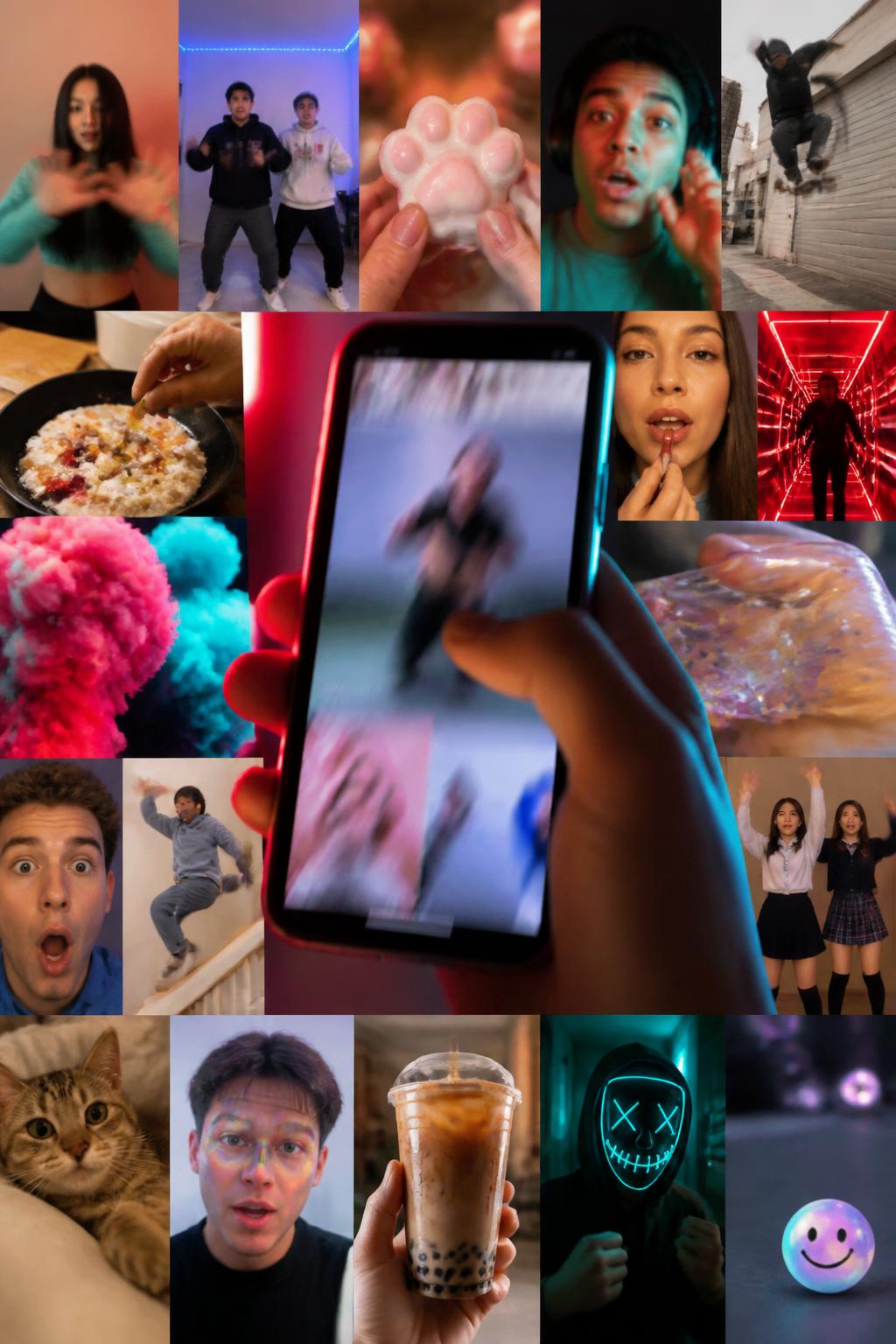
dash Short-form video platforms exploit variable reward schedules to keep users scrolling.
Who coined the term 'social proof' in 1984 to explain why people mimic the behaviors of others?
According to a 2019 study, what has happened to the average lifespan of global collective attention?
What chemical messenger in the brain is released in anticipation of a reward while scrolling social media?
Which psychologist's 1950s work on variable ratio schedules explains why users continue scrolling social feeds?
Which specialized brain cells fire both when we perform an action and when we watch someone else do it?
How does TikTok's reusable audio feature psychologically encourage users to create their own videos?
In 2013, how long did a single trending topic typically maintain public attention on global platforms?