
Would you choose a short exciting life or a long quiet one?
Ponder Seneca's views on time and productivity. Would you prefer a brief, thrilling existence or a peaceful, extended lifespan? Share your choice.
The philosopher in the golden palace
The illusion of a short life
The ancient trap of busyness
Reclaiming your focus

artiteacher Watch this video exploring Seneca's philosophy on the shortness of life, learning why we must guard our time as fiercely as our financial wealth.
artiteacher Seneca wrote that nature gives us plenty of time, but we often throw it away.
artiteacher Seneca ridiculed Romans who delayed living until age sixty, when their minds and lives were nearly over.

artiteacher Explore Seneca's philosophy on time and productivity with The Time Spender, a playful, interactive game about the illusion of a short life.
artiteacher Seneca argued that people who only react to chaos are merely existing, not truly living.
artiteacher The Shortness of Life
We waste our golden hours away on things that never last, But life is plenty long enough if we don't rush so fast.
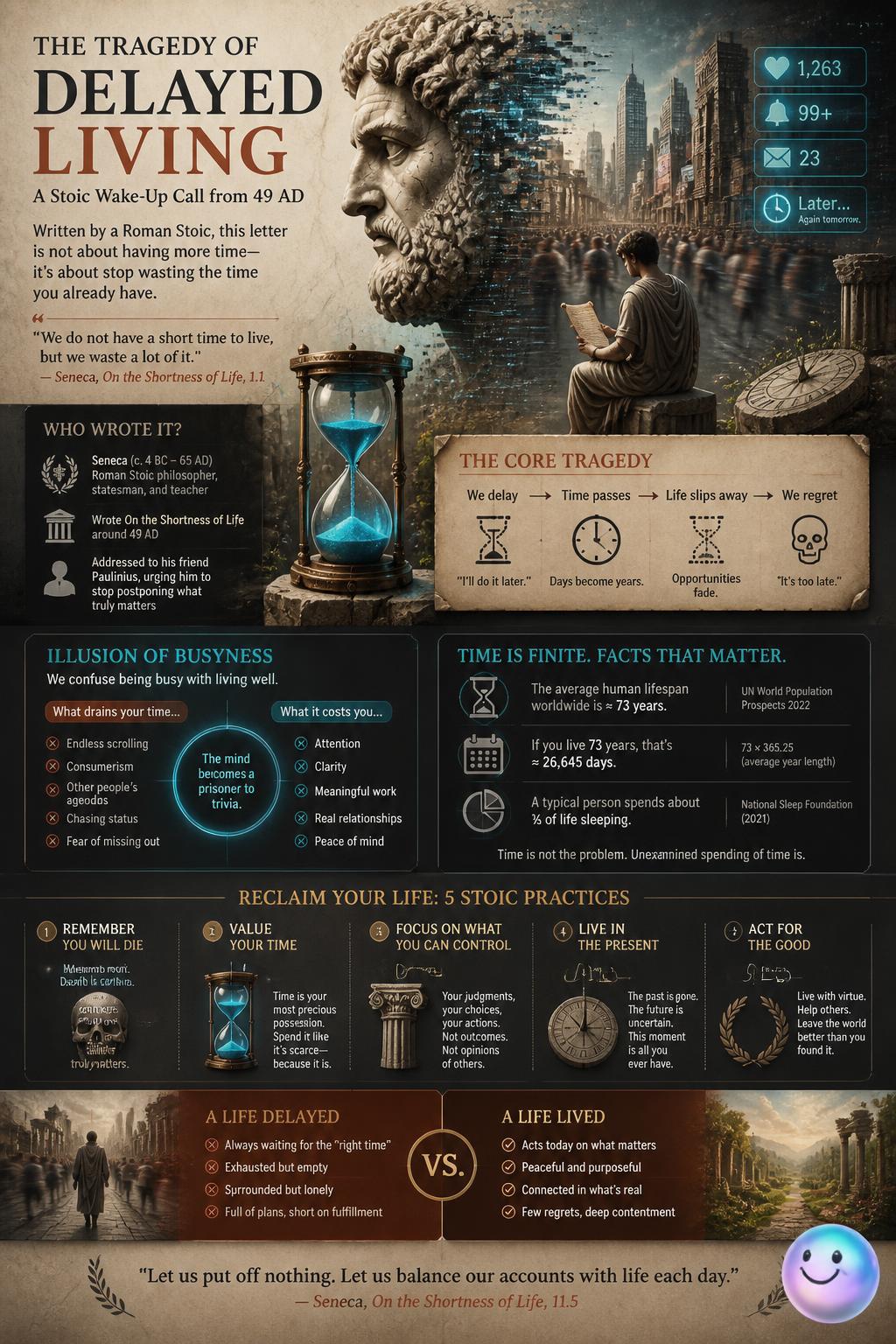
artiteacher Planning to start enjoying life only at retirement age is a dangerous and foolish gamble.
The ultimate essay: Seneca's famous letter 'On the Shortness of Life' was actually a retirement advice essay written to his father-in-law, a Roman grain inspector.
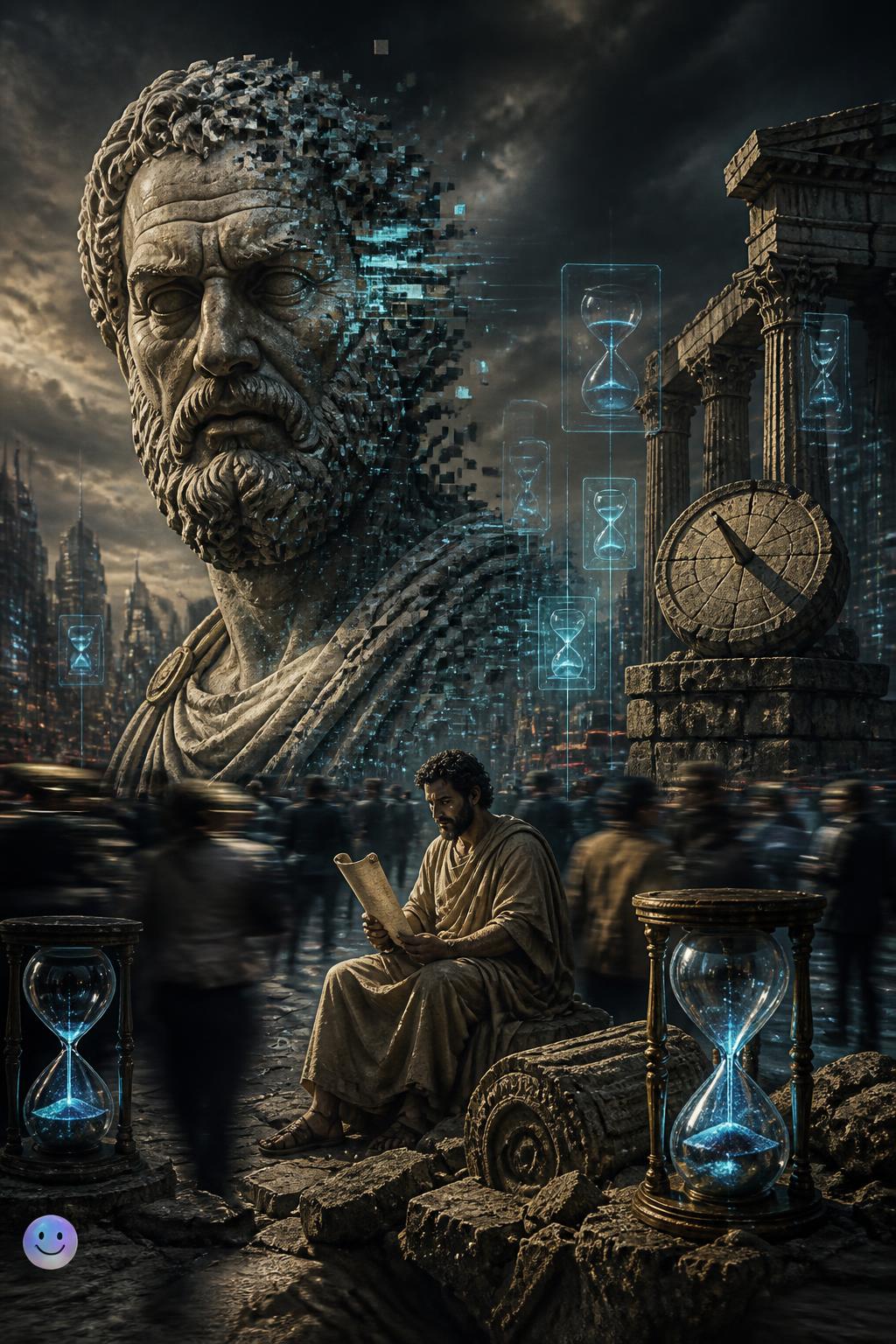
artiteacher People fiercely protect their physical property but freely let others steal their precious time.
The indefinite continued progress of existence and events in the past, present, and future regarded as a whole. Around 49 AD, Seneca advised Paulinus that humans possess plenty of this resource but squander it.
What did Seneca claim is the only non-renewable resource that people freely let others steal?
What did Seneca say is the ultimate tragedy of putting off living until tomorrow?
At what age did many ancient Romans plan to finally retire and study philosophy?
Which of the following did Seneca identify as a major symptom of a wasted life?
What metaphor did Seneca use to describe a person who has aged but not truly lived?