

Chapter 1
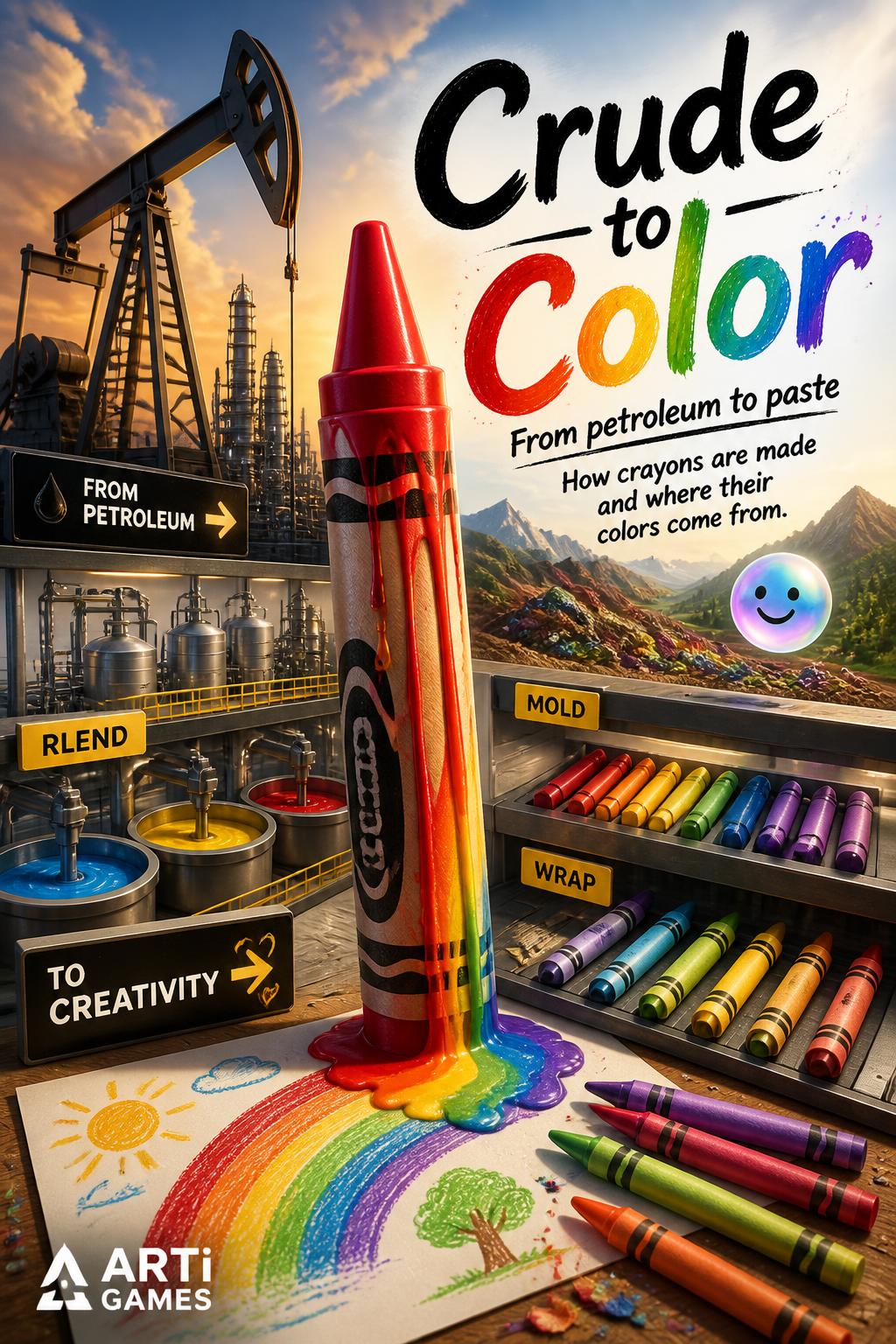
From petroleum to paste
View / Create
Answer
Chapter 2
Nature's ancient paintbox
View / Create
Answer
Chapter 3
The science of synthetic shades
View / Create
Answer
Chapter 4
How crayons conquered the classroom
View / Create
Answer
YOUR GOAL
Master of The secret life of crayons
Ch 1 · From petroleum to paste
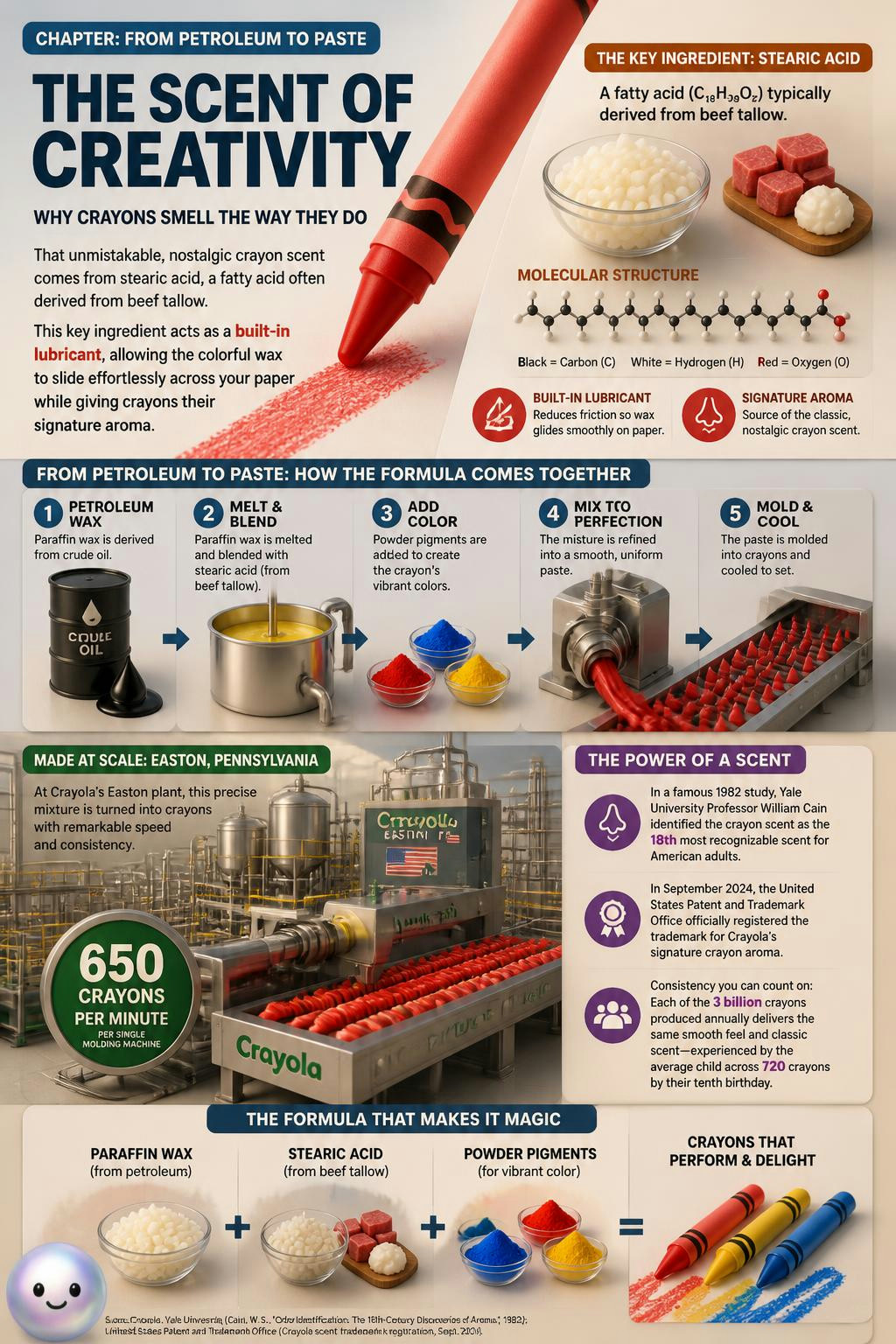
streetspirit Learn how beef tallow-derived stearic acid gives crayons their signature nostalgic smell and smooth glide in this quick educational infographic.
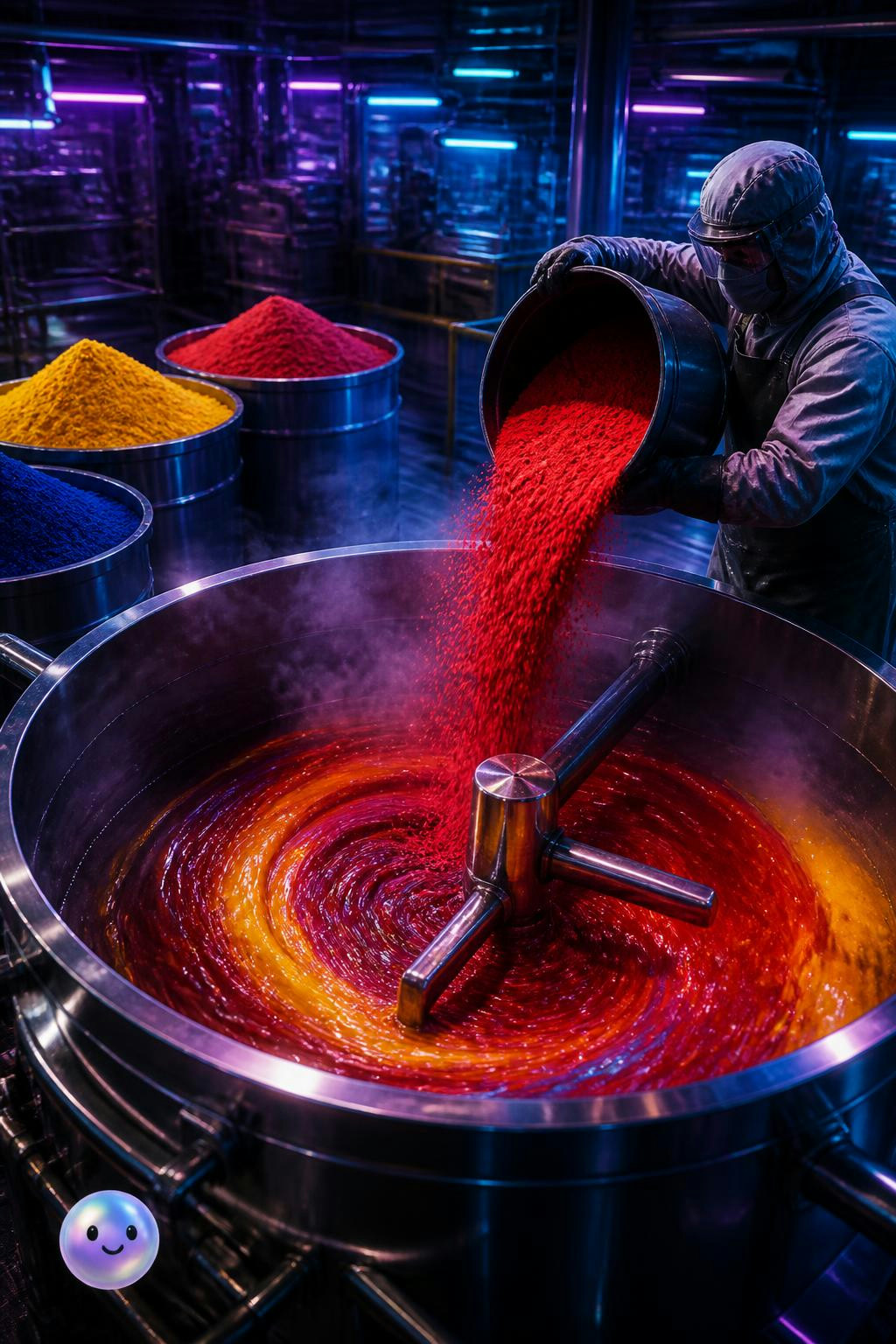
streetspirit Discover how crayons are manufactured by blending fine dry powder pigments directly into hot, melted paraffin wax.
Quiz
Why are crayons manufactured with a double layer of paper wrapped around them instead of just a single layer?
Fun Fact
Crayon smell: The iconic scent of Crayola crayons comes from stearic acid, a beef-tallow derivative added to make the wax glide smoothly.
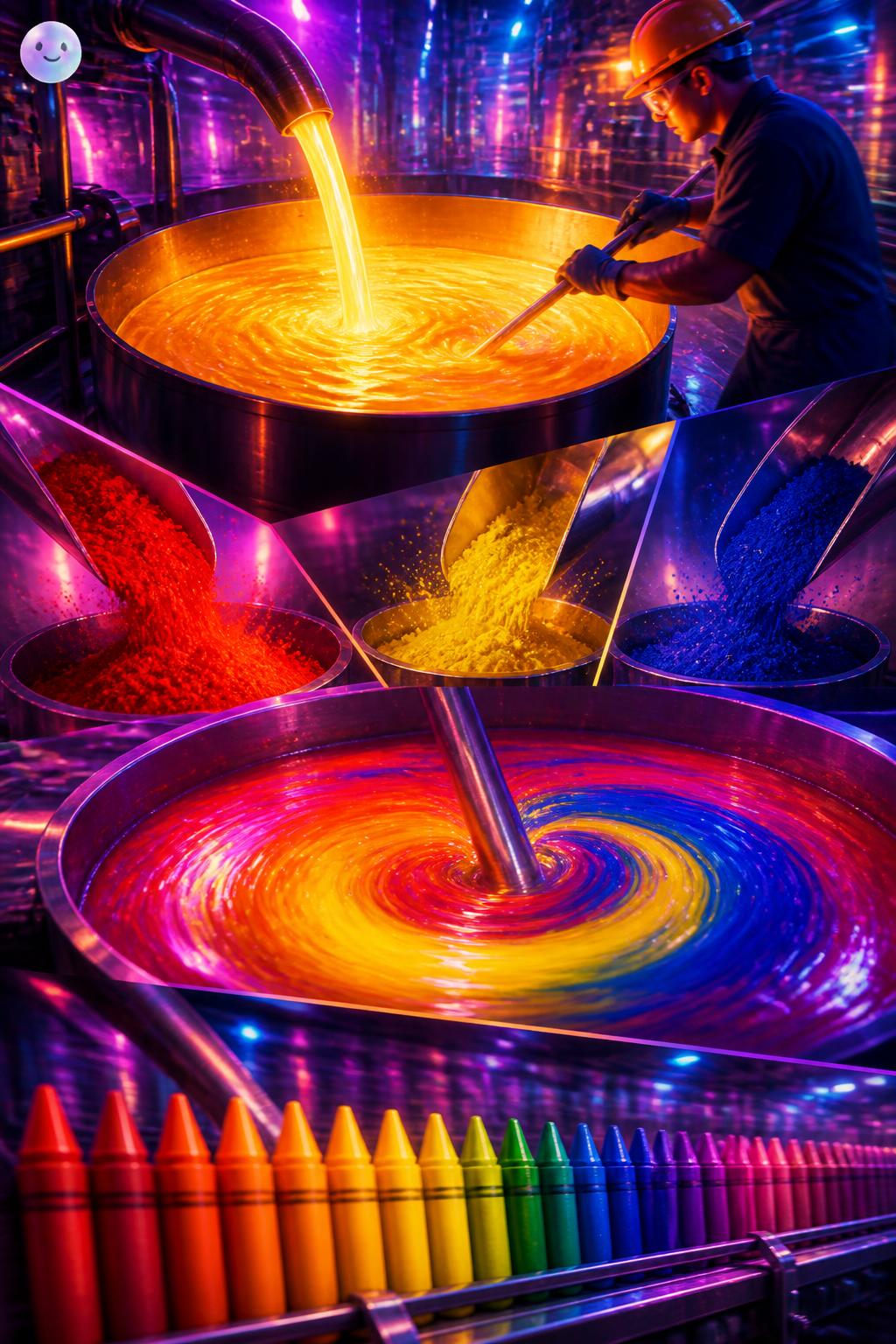
misslily Liquid wax and powdered pigments are blended at high temperatures to create uniform color.
Glossary
paraffin (noun)
A waxy, flammable solid mixture of hydrocarbons obtained from petroleum and used especially in candles. In 1903, Binney and Smith first used this oil-derived substance to manufacture their iconic children's crayons.
A waxy, flammable solid mixture of hydrocarbons obtained from petroleum and used especially in candles. In 1903, Binney and Smith first used this oil-derived substance to manufacture their iconic children's crayons.
Quiz
At what temperature is paraffin wax heated before pigments are added in a crayon factory?
Quiz
What ingredient is added to crayons to give them a smooth glide and their iconic smell?