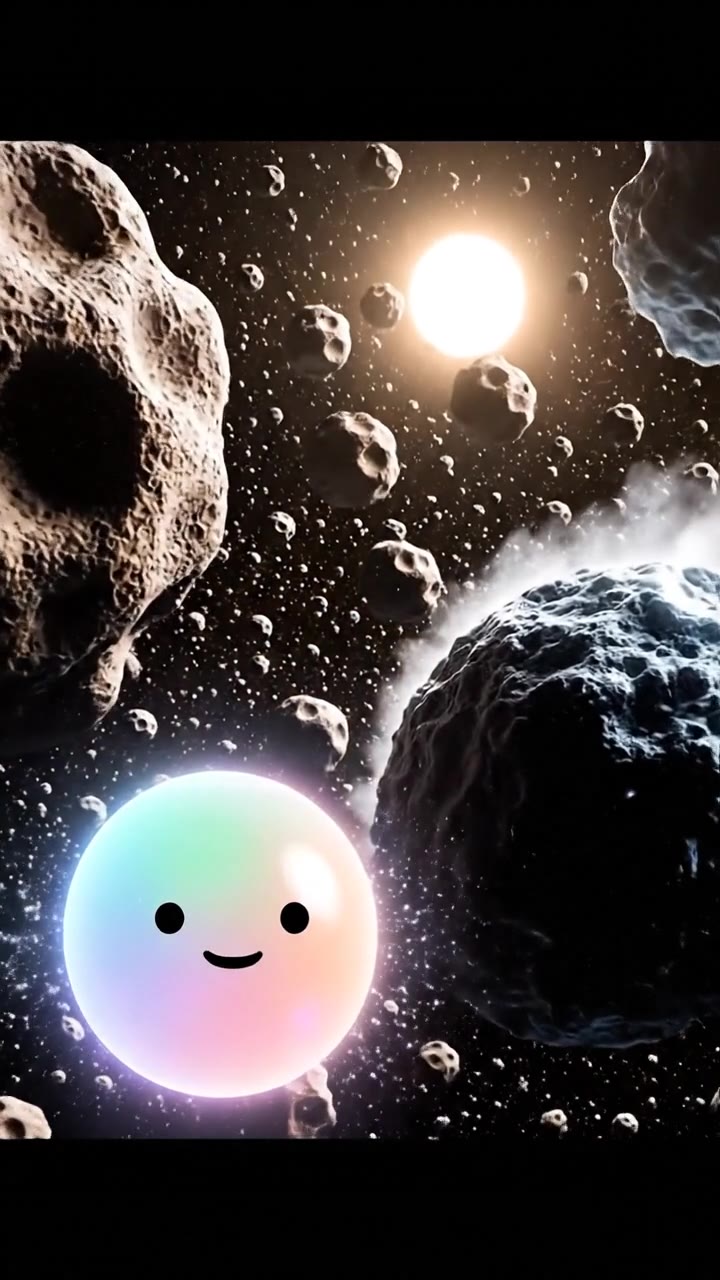
The birth of cosmic leftovers
Around 4.6 billion years ago, a giant cloud of gas and dust collapsed to form our Sun and planets. The leftover crumbs that never quite clumped into planets became asteroids and comets. Because they have remained largely unchanged, they act as pristine chemical time capsules of our solar system's infancy.
Leftovers of cosmic creation
Cosmic visitors and Earthly impacts
Human missions to touch the stars
The future of space rocks

artiteacher Leftovers of cosmic creation
Floating in the dark, floating in the dark, Bennu's got the dust that gave Earth its start.
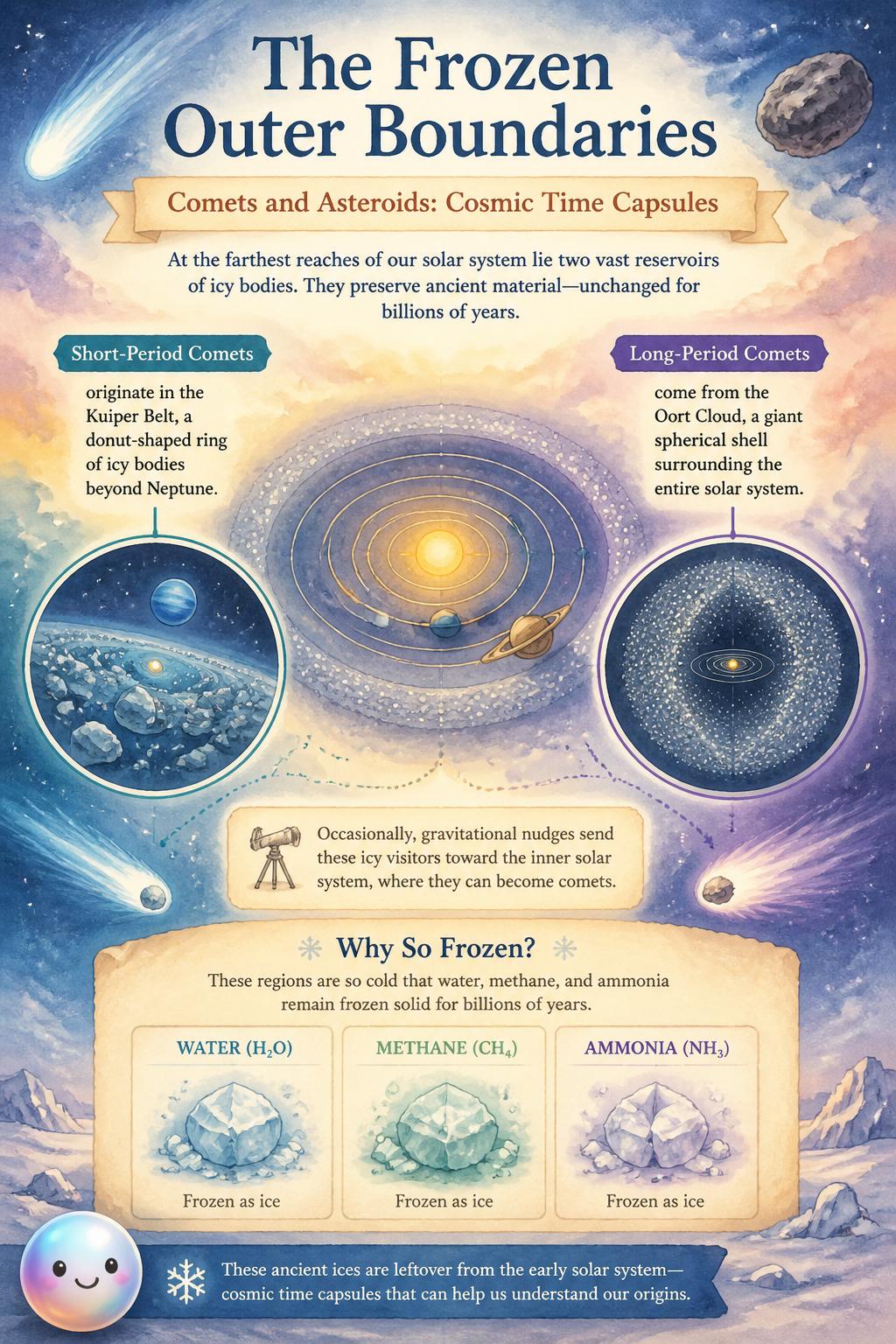
artiteacher Comets spend most of their lives in the cold, distant edges of our solar system.
Comet tails: A comet's tail doesn't trail behind its movement, but always points directly away from the Sun due to solar wind.
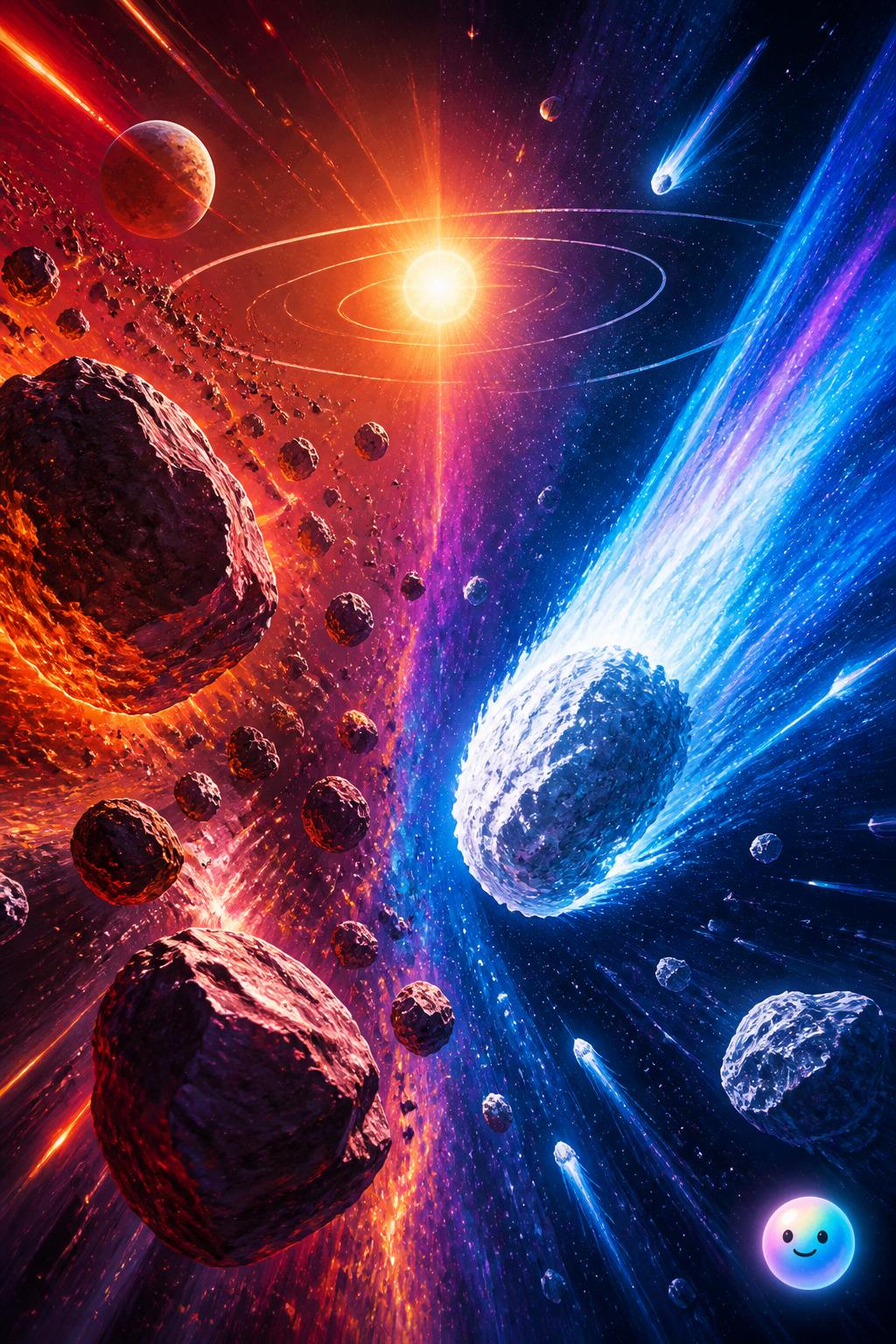
artiteacher Comets and asteroids differ fundamentally in what they are made of and where they formed.
A celestial object consisting of a nucleus of ice and dust that develops a glowing tail when near the sun. In 2014, the Rosetta spacecraft successfully orbited Comet 67P to analyze its ancient, icy material.
What is the largest object in the main asteroid belt, classified as a dwarf planet?
artiteacher Sweep up drifting space dust to learn how comets act as cosmic time capsules.