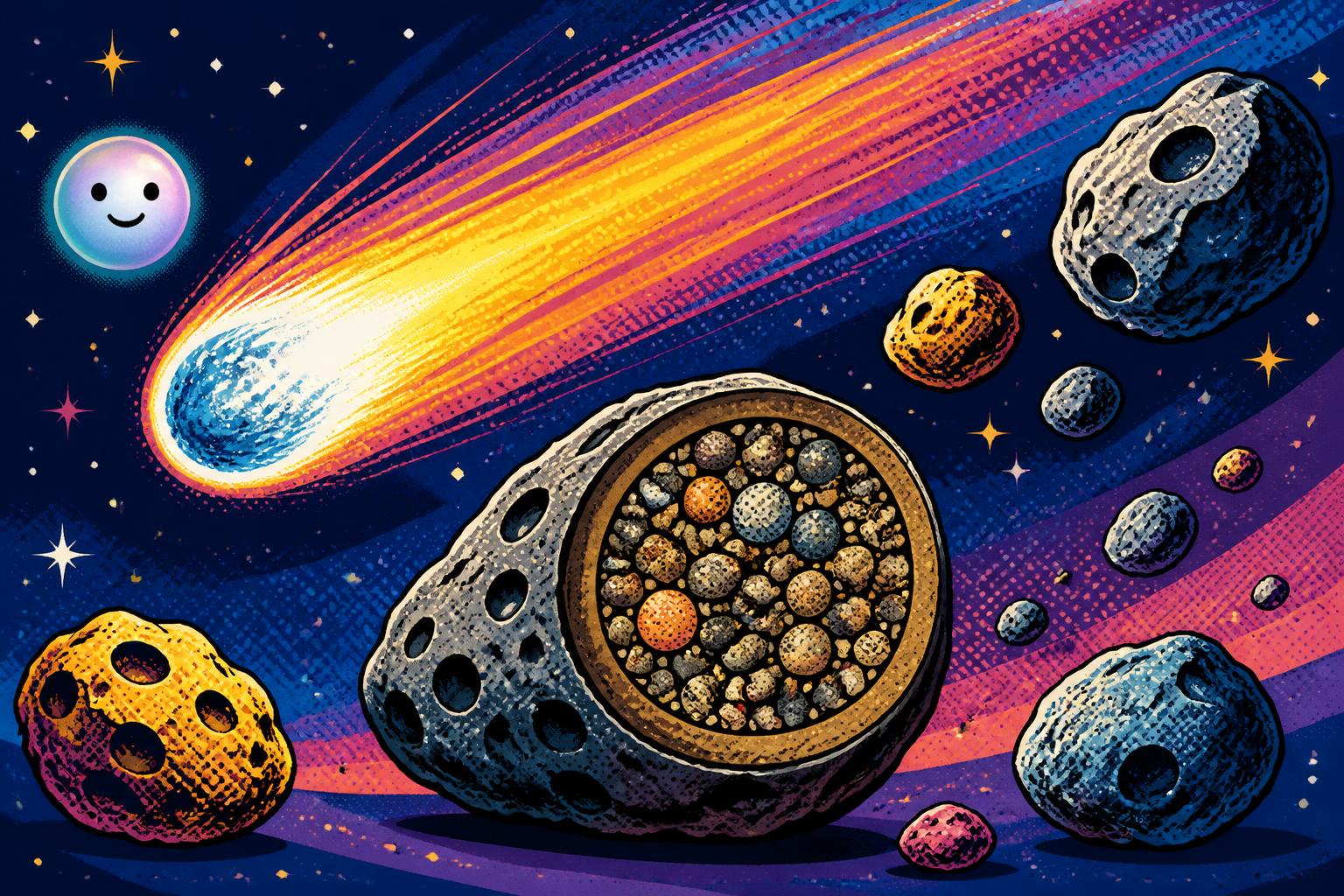
Which cosmic neighborhood sounds more exciting to explore?
Chapter 1
Leftovers of cosmic creation
Chapter 2
Cosmic visitors and Earthly impacts
Chapter 3
Human missions to touch the stars
Chapter 4
The future of space rocks
Ch 1 · Leftovers of cosmic creation

artiteacher Leftovers of cosmic creation
Floating in the dark, floating in the dark, Bennu's got the dust that gave Earth its start.
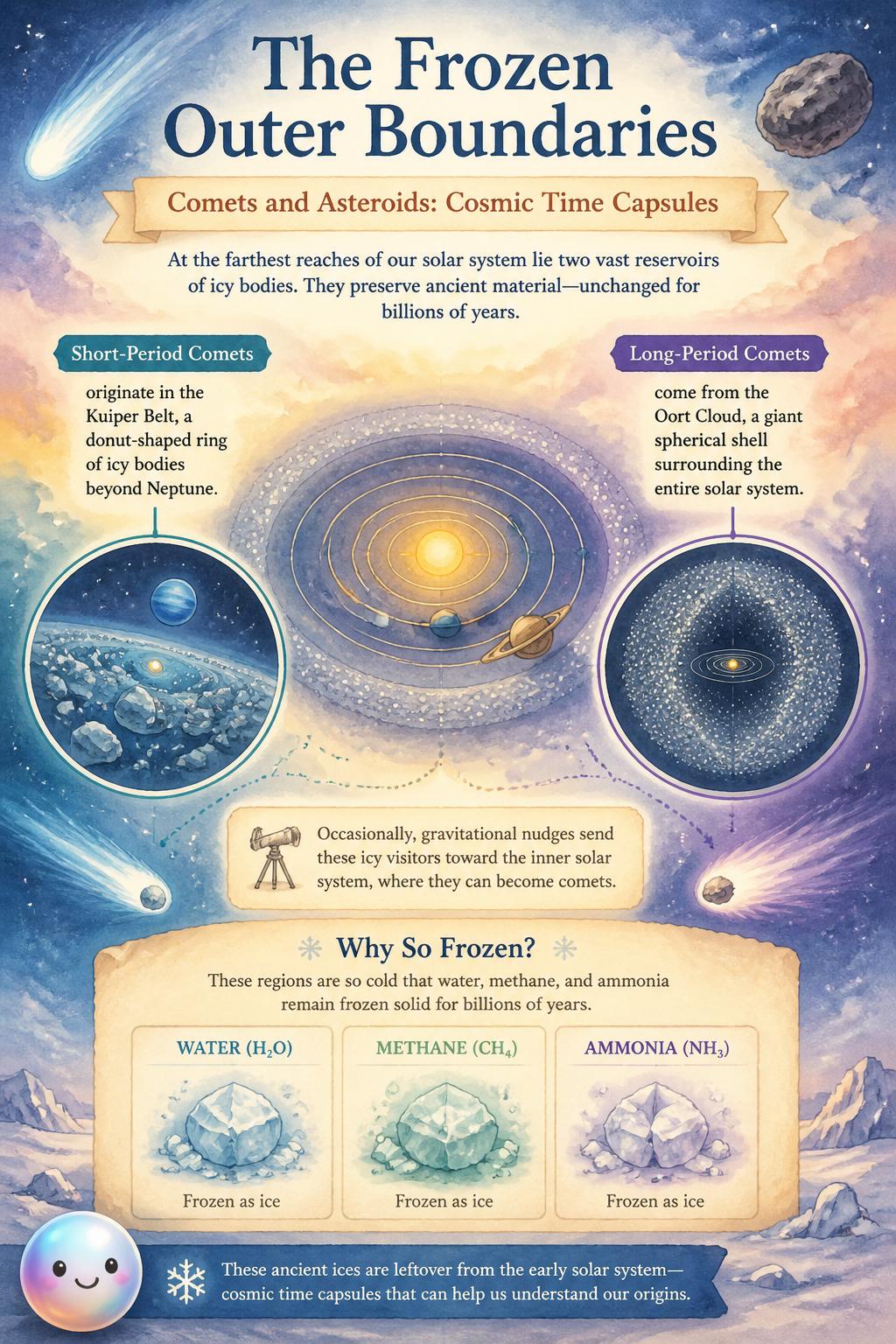
artiteacher Comets spend most of their lives in the cold, distant edges of our solar system.
Fun Fact
Comet tails: A comet's tail doesn't trail behind its movement, but always points directly away from the Sun due to solar wind.
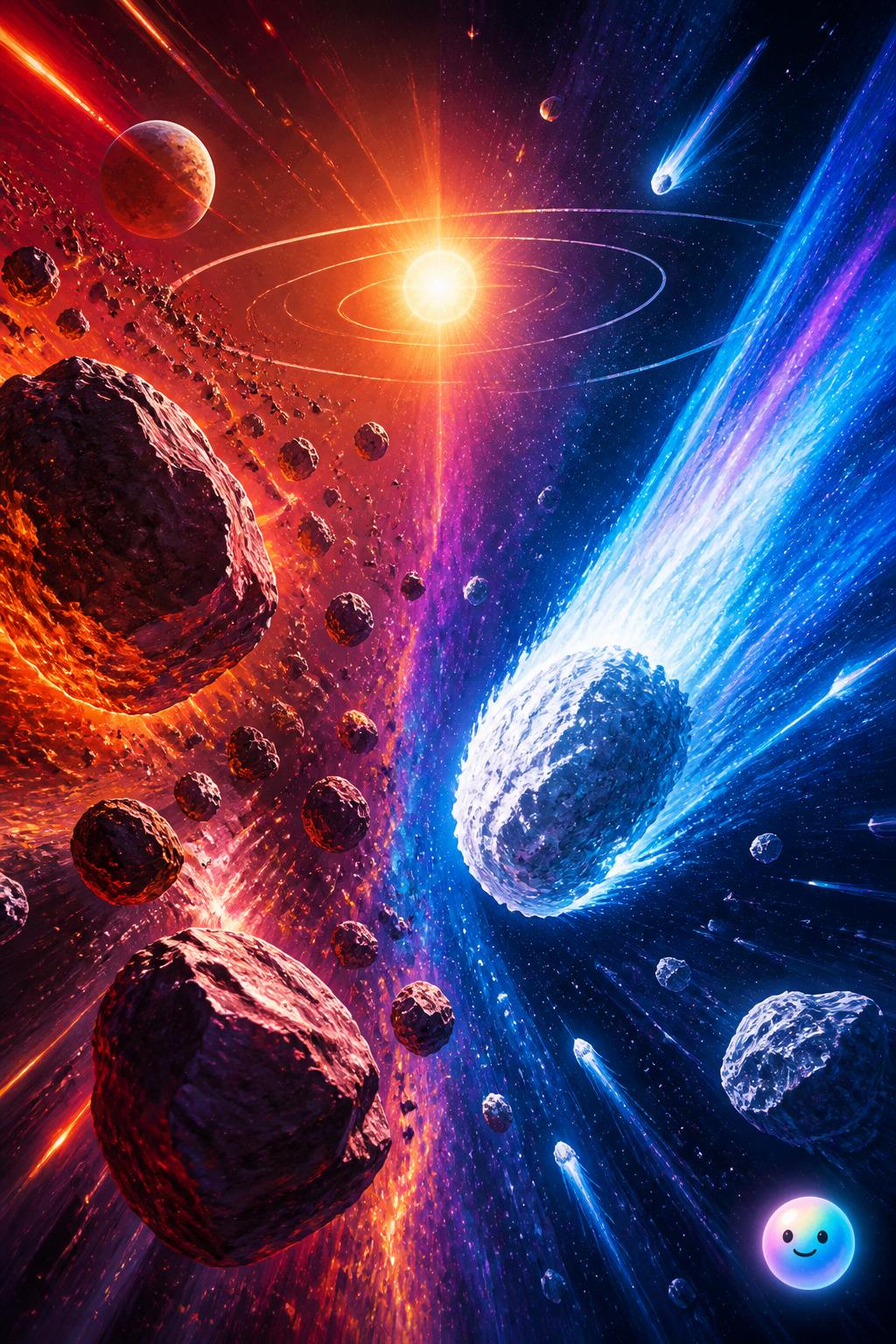
artiteacher Comets and asteroids differ fundamentally in what they are made of and where they formed.
Glossary
comet (noun)
A celestial object consisting of a nucleus of ice and dust that develops a glowing tail when near the sun. In 2014, the Rosetta spacecraft successfully orbited Comet 67P to analyze its ancient, icy material.
A celestial object consisting of a nucleus of ice and dust that develops a glowing tail when near the sun. In 2014, the Rosetta spacecraft successfully orbited Comet 67P to analyze its ancient, icy material.
Quiz
What is the largest object in the main asteroid belt, classified as a dwarf planet?
BETA
artiteacher Sweep up drifting space dust to learn how comets act as cosmic time capsules.