

BETA

First identified by behaviorist Clark Hull in 1932, the goal gradient effect shows that rats run faster at the end of a maze. In humans, this explains why loyalty cards with pre-stamped slots get filled much faster than empty ones.
marcus Closing Strong Habits
Micro-habits, tiny seeds, Plant 'em daily, meet your needs, Momentum grows, you finish strong indeed!
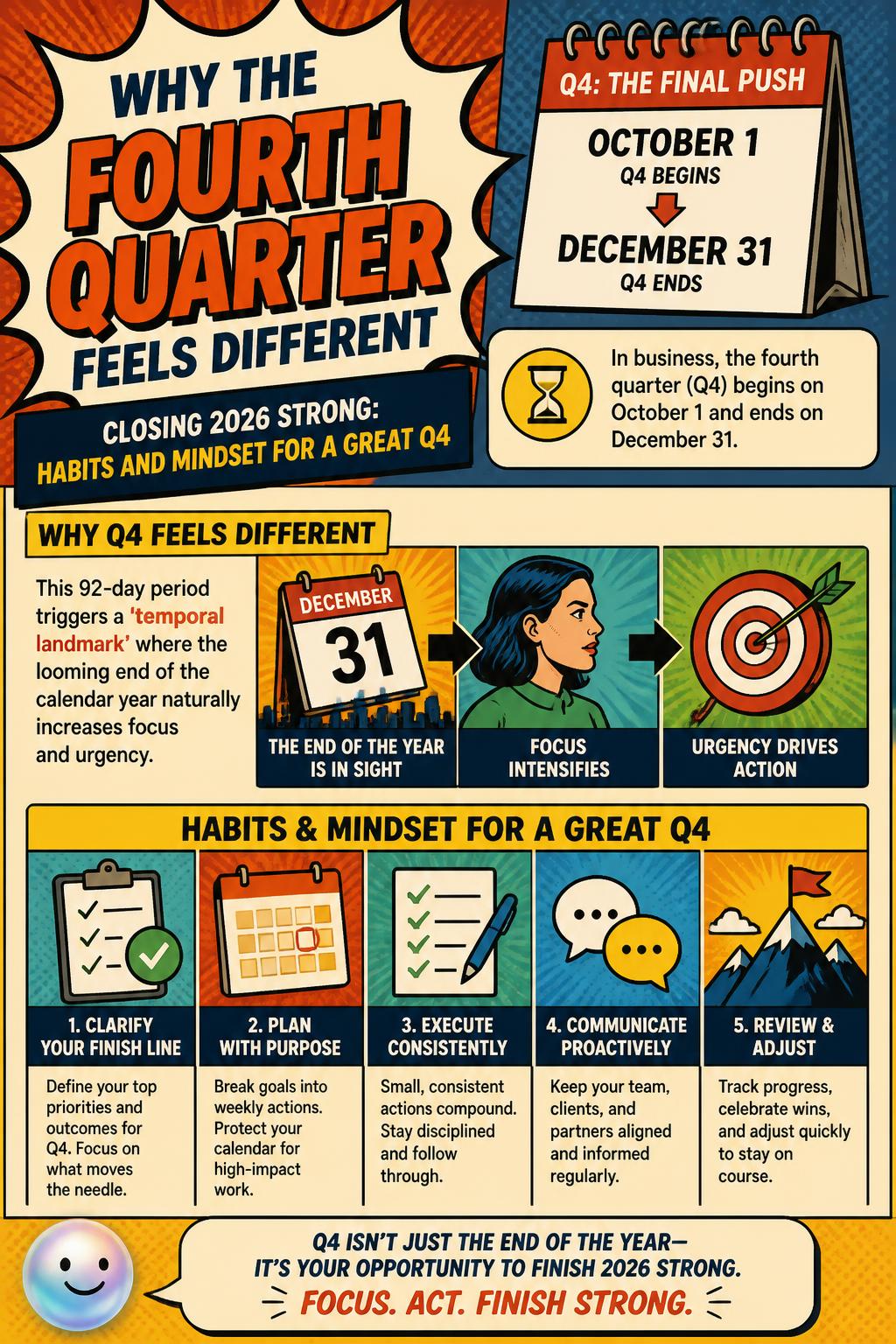
marcus Seasonal shifts and year-end deadlines create a unique psychological environment for productivity.
Maze-running rats: In 1932, psychologist Clark Hull proved that rats run faster as they get closer to their food reward, introducing the concept of the goal gradient effect.

marcus Landmark dates on the calendar act as psychological resets to boost our motivation.
What did the 2014 Harvard Business School study use as the primary reflection tool for participants?
Which behavior is boosted by the 'goal gradient effect' when using a coffee shop loyalty card?
What percentage increase in performance did Harvard researchers find in employees who practiced daily reflection?