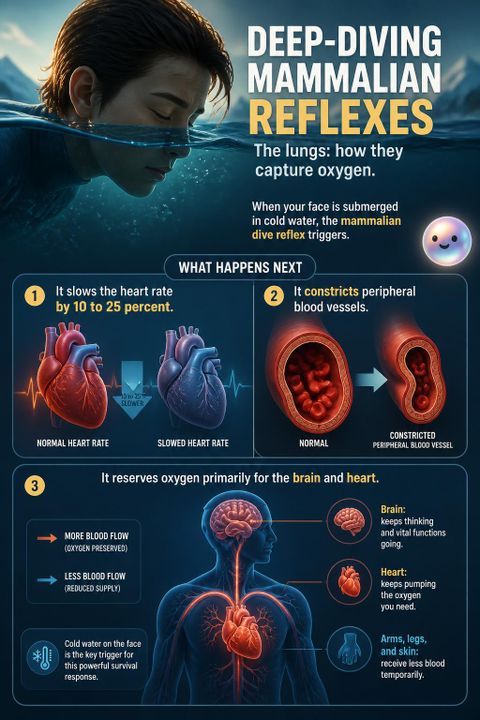
Deep-diving mammalian reflexes
Humans share an ancient survival reflex that conserves oxygen underwater.
The architecture of the airway
The magic of the alveoli
The mechanics of the breath
Adapting to the extremes
The history of discovering respiration

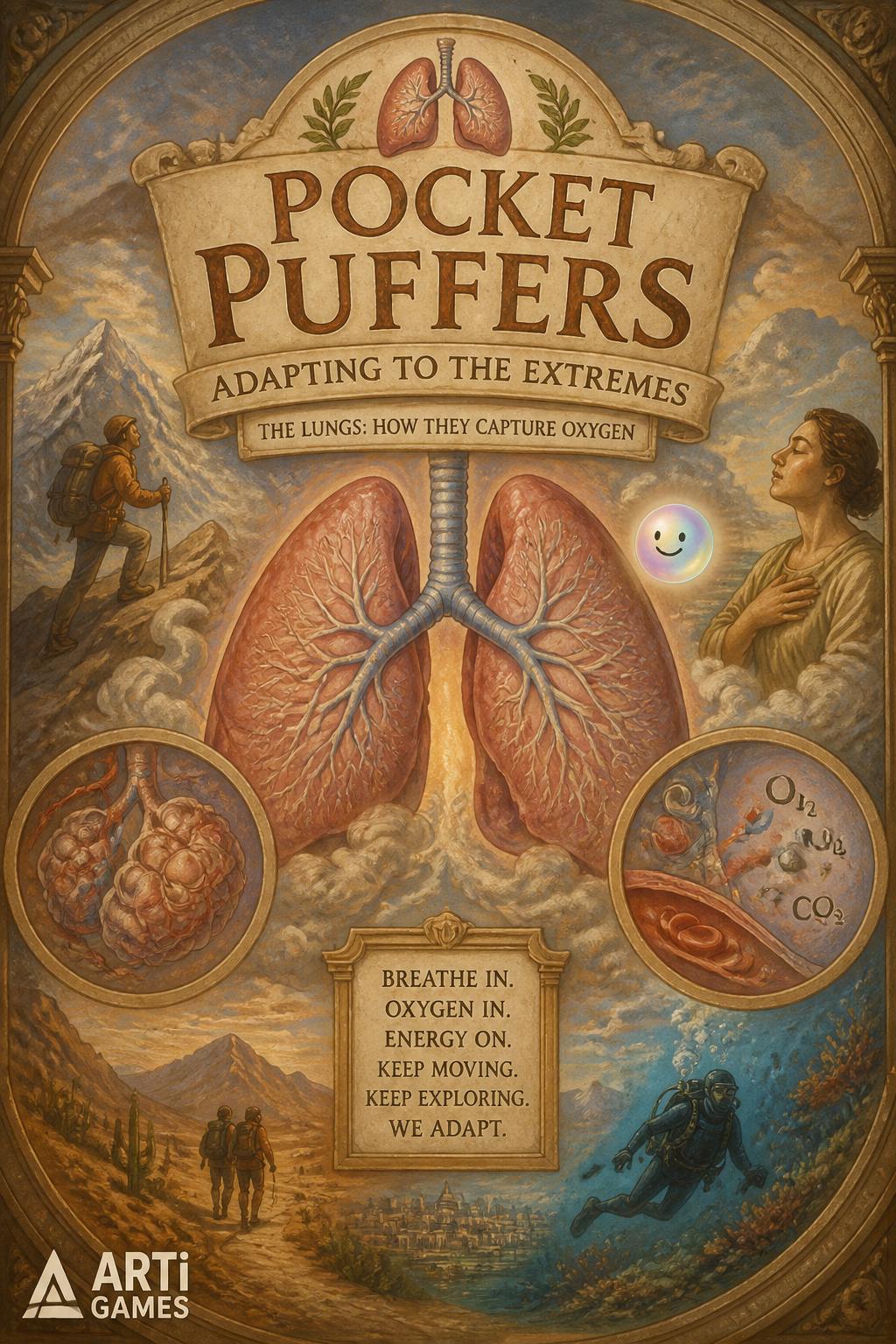
artiteacher Tap the expanding alveoli to discover how your lungs capture oxygen.
artiteacher Adapting to the extremes
Breathe it in! (Breathe it in!) A tennis court of air opens up within!
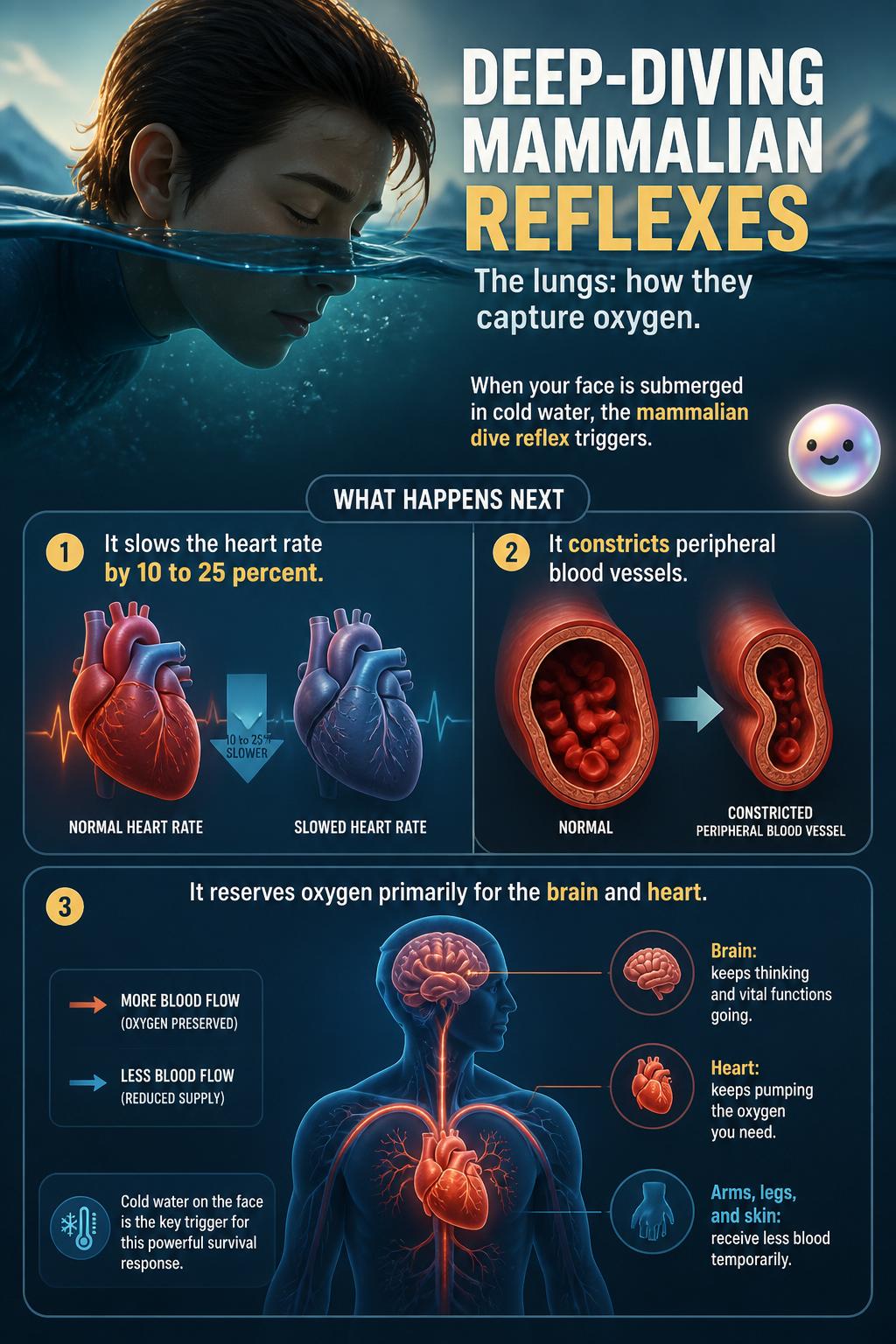
artiteacher Humans share an ancient survival reflex that conserves oxygen underwater.
Snail lungs: Some land snails have a single lung that opens to the outside through a tiny breathing hole called a pneumostome.
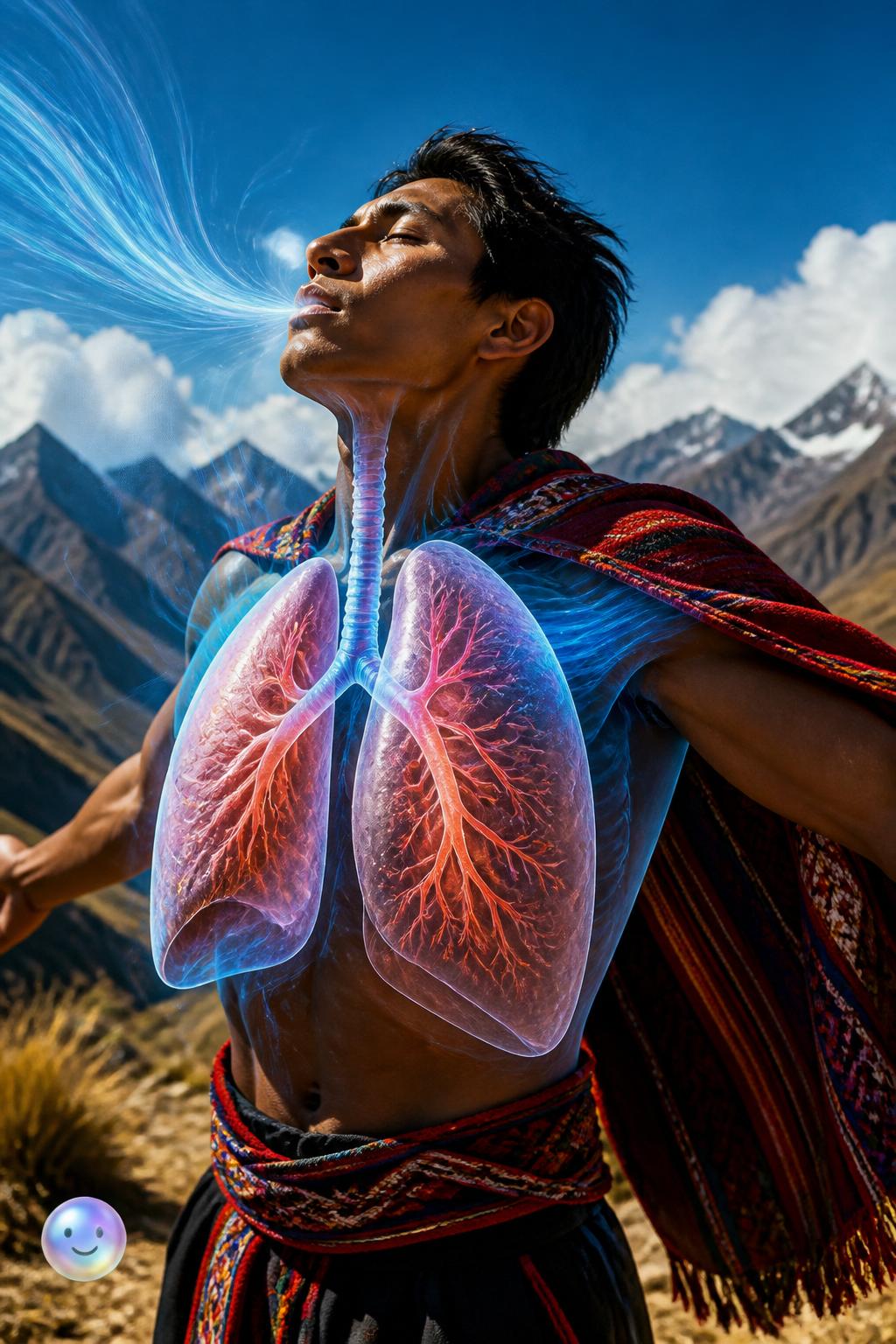
artiteacher Indigenous populations in the Andes developed physical adaptations to high altitudes.
A state in which the body or a region of it is deprived of adequate oxygen supply at the tissue level. In 1978, Reinhold Messner climbed Mount Everest without bottled oxygen, demonstrating human resilience to this condition.
What physical adaptation is common in indigenous Quechua populations of the Andes?
Above what altitude do athletes typically train to trigger natural blood adaptation?
Which hormone is released by the kidneys to stimulate red blood cell production at high altitudes?
Why is thickening of the blood (polycythemia) a risky response to high altitude for lowlanders?
Which organs are prioritized for oxygen delivery during the mammalian dive reflex?